
Water softeners play a key role in protecting your appliances by removing minerals like calcium and magnesium that cause hard water. These minerals create scale buildup inside appliances, which hinders heat transfer and reduces efficiency. Softened water flows more freely, preventing scale formation and lowering appliance wear and tear. This helps your appliances last longer and work more effectively. Keep exploring to learn how water softeners truly benefit your household and save you money over time.
Key Takeaways
- Water softeners remove calcium and magnesium ions that cause mineral buildup inside appliances.
- Softened water prevents scale formation, ensuring efficient heat transfer and water flow.
- Using a water softener reduces appliance wear and extends their lifespan.
- Softened water minimizes clogs and corrosion in plumbing systems.
- Overall, water softeners decrease energy consumption and maintenance costs for household appliances.
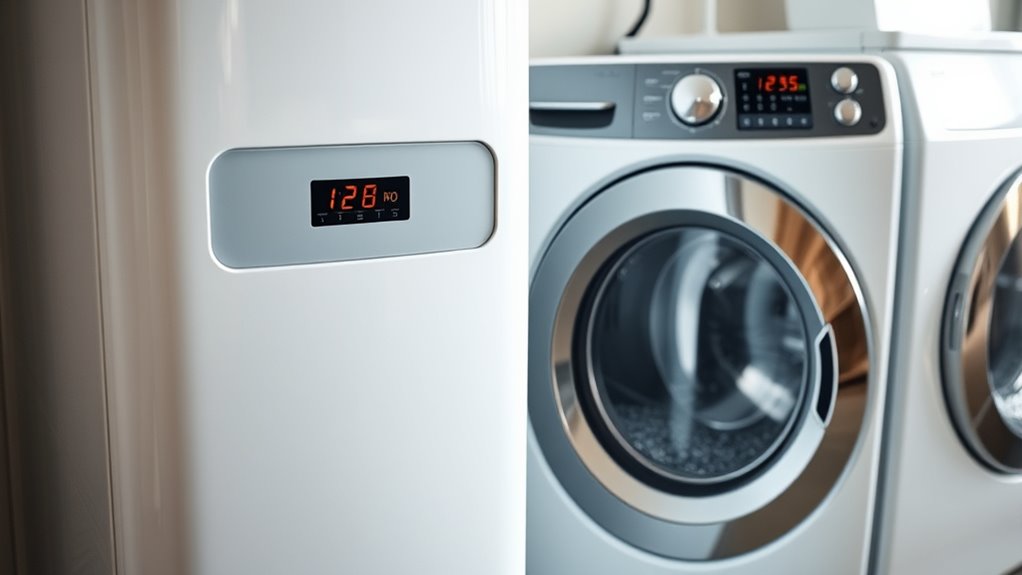
If you have hard water in your home, it can cause mineral buildup that affects your appliances‘ efficiency and lifespan. This mineral buildup, commonly known as scale buildup, occurs when calcium and magnesium deposits accumulate over time inside appliances like dishwashers, washing machines, water heaters, and coffee makers. When scale forms, it creates a barrier that hampers heat transfer, reduces water flow, and forces your appliances to work harder. As a result, your appliances consume more energy, wear out faster, and require costly repairs or replacements sooner than expected. Using water softening systems can help prevent these issues before they start.
By installing a water softener, you can markedly reduce or eliminate scale buildup. Water softeners work by removing the calcium and magnesium ions responsible for hard water, replacing them with sodium or potassium ions. This process results in softened water that flows freely through your plumbing, leaving fewer mineral deposits behind. When your appliances receive softened water, they operate more efficiently because they don’t have to contend with mineral deposits that insulate heating elements or clog pipes. This improved efficiency translates into lower energy bills and less strain on your appliances.
Keeping mineral buildup at bay through a water softener also extends the lifespan of your appliances. Hard water causes gradual damage and corrosion over time, which can lead to leaks, breakdowns, and early failure. When you reduce the amount of scale buildup, you prevent these problems from developing prematurely. Your appliances remain cleaner, operate more smoothly, and require less maintenance. Plus, softened water helps prevent soap scum and mineral deposits from accumulating inside pipes, valves, and fixtures, further protecting your plumbing system.
Moreover, a water softener can positively impact your household’s overall efficiency. You’ll notice that your laundry comes out cleaner, your dishes are spot-free, and your skin and hair feel softer. Less mineral buildup means your appliances won’t need to work as hard to perform their functions, which reduces energy consumption and prolongs their service life. Over time, this can lead to substantial savings on repairs, replacements, and utility bills.
Frequently Asked Questions
How Often Should I Service My Water Softener?
You should service your water softener every 6 to 12 months, depending on your water usage and installation frequency. Regular maintenance includes checking salt levels, inspecting for issues, and troubleshooting tips like cleaning the resin tank or replacing filters. Keep an eye on your softener’s performance, and if you notice hard water or reduced efficiency, it’s time for a thorough service to guarantee it continues protecting your appliances effectively.
Can Water Softeners Remove All Types of Minerals?
Water softeners mainly remove minerals like calcium and magnesium, which cause hardness. However, they don’t eliminate all types of minerals, such as iron, manganese, or other contaminants. Their effectiveness depends on the specific mineral and the system’s design. If you need to remove a broader range of minerals, consider additional filtration options. So, water softener effectiveness varies, and they can’t remove all minerals from your water.
Do Water Softeners Require a Lot of Maintenance?
Water softeners do require some maintenance, but it’s manageable. You’ll need to regularly replenish the salt in the brine tank and occasionally clean the resin to keep it functioning effectively. Checking salt levels monthly helps prevent hard water issues, while resin cleaning ensures minerals don’t build up. With simple upkeep like this, your water softener stays efficient and prolongs the life of your appliances without much hassle.
Are Water Softeners Environmentally Friendly?
You might find it surprising, but water softeners can be environmentally friendly when used properly. Their environmental impact depends on factors like salt use and energy consumption. Some models address recyclability concerns by using eco-friendly materials and efficient regeneration processes. By choosing a water softener with low salt and power use, you reduce your ecological footprint, making it a responsible choice for your home and the planet.
How Do Water Softeners Affect Water Pressure?
Water softeners can slightly reduce your water pressure impact because they add a resin tank that water must pass through. This process may cause a minor decrease in flow rate, especially if the softener isn’t maintained properly. However, a well-maintained softener improves overall softener efficiency, ensuring you don’t experience significant pressure drops. Regular maintenance and choosing the right size softener help optimize flow and prevent pressure issues.
Conclusion
By now, you realize water softeners are your appliances‘ best friends, shielding them from the relentless onslaught of hard water. Without them, your appliances would struggle and wear out faster than a speeding bullet. Investing in a water softener isn’t just smart—it’s like giving your appliances a superpower, ensuring they run smoothly and last longer. Protect your home and appliances today, and watch them perform like champions for years to come.