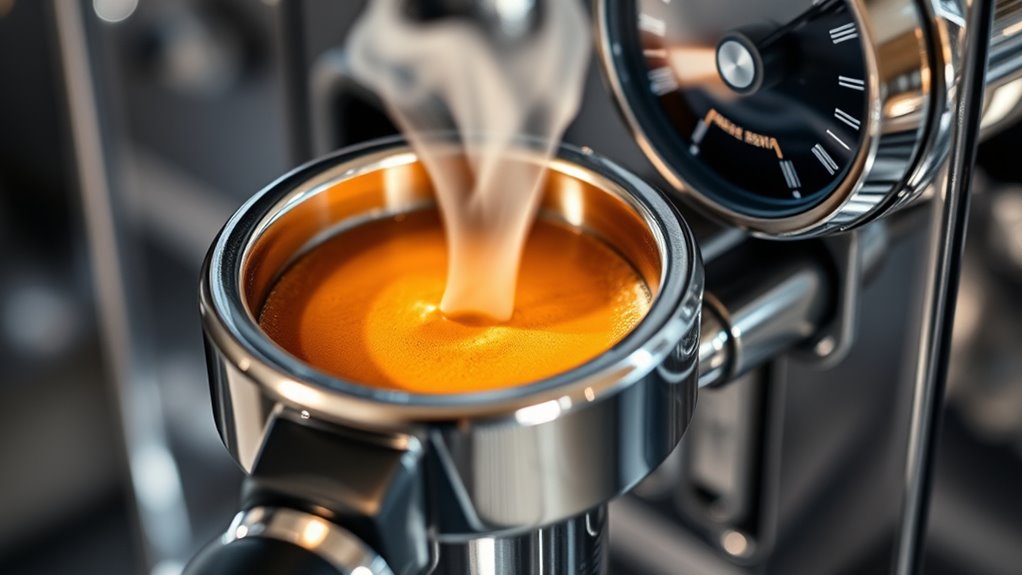

To craft the perfect espresso, you need to understand how pressure and temperature influence extraction. Proper pressure, around nine bars, pushes water through coffee grounds efficiently, ensuring rich flavor and proper crema. Temperature, typically around 90-96°C, helps extract desirable compounds without risking over-extraction or bitterness. Balancing these factors is vital for consistency and flavor. As you explore further, you’ll discover how mastering pressure and temperature can elevate your espresso to professional standards.
Key Takeaways
- Consistent pressure (9 bars) is essential for optimal water flow and proper extraction of espresso flavors.
- Temperature (around 90-96°C) influences solubility and flavor extraction from coffee grounds.
- Higher pressure increases extraction efficiency but must be balanced to prevent over-extraction.
- Proper temperature stability ensures consistent flavor and prevents under- or over-extraction during brewing.
- Adjusting pressure and temperature settings directly impacts espresso strength, flavor, and crema quality.

Espresso machines are sophisticated devices that rely on precise scientific principles to produce the perfect shot of coffee. One of the most critical factors in achieving that ideal espresso is understanding how grind size and brewing time work together. When you prepare your coffee, the grind size determines how quickly water can pass through the coffee grounds, directly affecting brewing time. If your grind is too fine, water struggles to flow, increasing brewing time and risking over-extraction, which can make your espresso bitter. Conversely, a grind that’s too coarse allows water to pass too quickly, resulting in under-extraction and a weak, sour taste. Striking the right balance ensures that the water interacts with the coffee grounds just long enough to extract the rich flavors without turning bitter or sour.
Understanding grind size and brewing time is essential for perfect espresso extraction.
The interplay between grind size and brewing time is rooted in the physics of fluid flow and extraction. The finer the grind, the more surface area is exposed to water, which means extraction happens faster but can become overdone if brewing time isn’t adjusted. On the other hand, a coarser grind slows down extraction, requiring longer brewing times to achieve the desired flavor profile. This delicate balance is where understanding the science behind espresso making becomes essential. You need to experiment with your grind size and timing to match your machine’s pressure and temperature settings, maximizing extraction and flavor. For example, if your shot pulls too quickly, try a finer grind or slightly increase brewing time. If it drags on or tastes flat, coarsen the grind or reduce brewing time.
Brewing time itself is a critical variable influenced by your grind size, machine pressure, and temperature. Maintaining consistent pressure and temperature ensures that the water extracts the ideal amount of flavor compounds from the coffee grounds within the optimal time frame. Typically, a good espresso shot takes about 25-30 seconds to brew. Too short, and you risk under-extraction, resulting in a weak or sour taste. Too long, and over-extraction can lead to bitterness. Adjusting grind size helps you control this timing precisely. The finer the grind, the quicker the water extracts flavors, so you might need to shorten brewing time. Conversely, a coarser grind may require a longer brew to reach full extraction. Additionally, pressure and temperature control are vital aspects that influence extraction efficiency and consistency.
In essence, mastering the science of pressure and temperature in espresso making hinges on your grasp of how grind size and brewing time influence extraction. When you fine-tune these variables, you reveal the full potential of your espresso machine, producing a shot that’s rich, balanced, and perfectly brewed every time.
Frequently Asked Questions
How Does Water Mineral Content Affect Espresso Extraction?
Water mineral content considerably impacts espresso extraction because mineral composition influences water’s taste and ability to dissolve coffee compounds. High mineral influence, especially calcium and magnesium, can enhance extraction, creating a richer flavor. Conversely, water with too many minerals may cause scaling and clogging, affecting machine performance. You should use water with balanced mineral levels to optimize extraction, flavor, and machine longevity, ensuring a smooth espresso experience every time.
What Role Does Tamping Pressure Play in Shot Quality?
Tamping pressure plays a vital role in shot quality by ensuring grind consistency and dose precision. When you apply the right amount of pressure, you create uniform resistance, which promotes even extraction. Too much tamping can lead to over-extraction, while too little results in under-extraction. Focus on consistent tamping to maintain balanced flavors, improve shot stability, and achieve richer, smoother espresso every time you pull a shot.
How Do Different Bean Roasts Influence Ideal Brewing Pressure?
Different bean roasts influence your ideal brewing pressure because lighter roasts need higher pressure for proper extraction balance, while darker roasts extract well at lower pressures. You should adjust your machine settings based on the roast, ensuring the flavor is balanced and vibrant. Experimenting with pressure helps you optimize each roast’s unique qualities, resulting in a richer, more satisfying espresso. Always pay attention to how the bean roast responds during extraction.
Can Pressure and Temperature Settings Be Customized for Different Coffee Types?
You can definitely customize pressure and temperature settings for different coffee types, like adjusting the grind size and brew timing to match each bean. Imagine fine-tuning these controls like a chef perfecting a recipe, ensuring each shot flows smoothly. By experimenting with higher or lower pressure and temperature, you reveal unique flavors, aroma, and body—making every cup tailored and delightful for your chosen coffee.
How Do Cleaning and Maintenance Impact Machine Pressure Stability?
Cleaning and maintenance are vital for maintaining your espresso machine’s pressure stability. Regular cleaning prevents buildup that can affect calibration accuracy, ensuring consistent pressure during extraction. Additionally, routine maintenance helps identify and replace worn components that may cause pressure fluctuations. By staying on top of these tasks, you keep your machine performing at its best, producing ideal espresso shots and extending its lifespan.
Conclusion
Now that you understand the dance of pressure and temperature, you hold the key to revealing espresso’s true potential. Think of your machine as a symphony conductor, where each element plays its part in creating harmony. When you master these forces, you craft a liquid masterpiece that sings with rich flavor and vibrant aroma. Remember, every shot you pull is a brushstroke on your canvas—turning simple beans into a work of art.