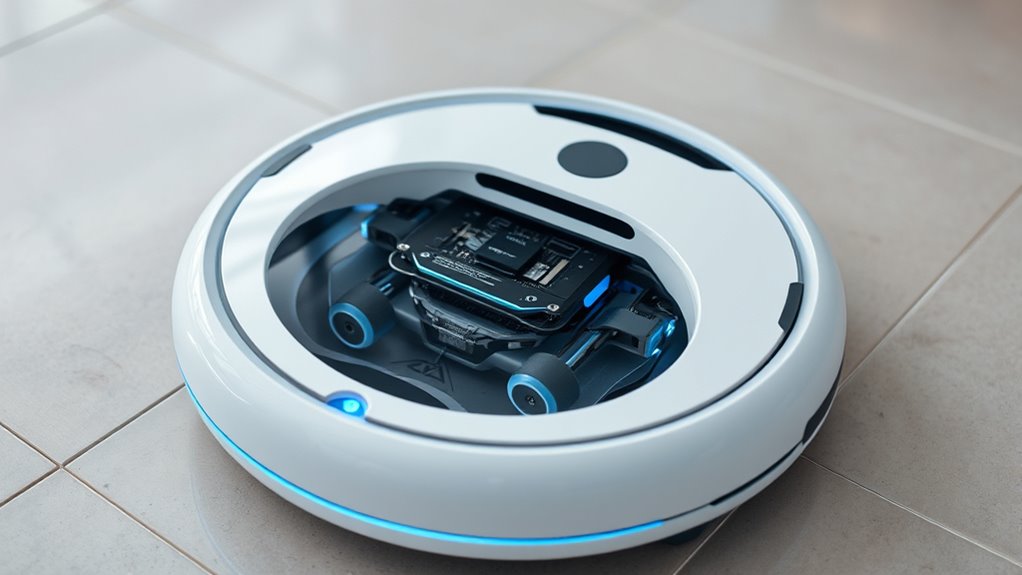

Robotic mops use powerful suction motors combined with advanced navigation systems to clean your floors efficiently. They rely on sensors, cameras, and mapping algorithms to move intelligently around furniture and obstacles, ensuring thorough coverage. The technology balances suction strength with energy efficiency, enabling longer cleaning sessions. By seamlessly integrating navigation and suction, these devices deliver automated, effective cleaning results with minimal effort. Keep exploring to discover how these smart features work together to keep your home spotless.
Key Takeaways
- Robotic mops utilize advanced sensors, cameras, and mapping algorithms for precise navigation and obstacle avoidance.
- They combine strong suction motors with efficient energy use to ensure deep cleaning on various surfaces.
- Integrated navigation systems enable targeted cleaning, zone control, and optimized route planning.
- The technology allows seamless coordination between suction power and movement for comprehensive floor coverage.
- Continuous advancements improve adaptability, efficiency, and the ability to handle challenging stains and textured surfaces.
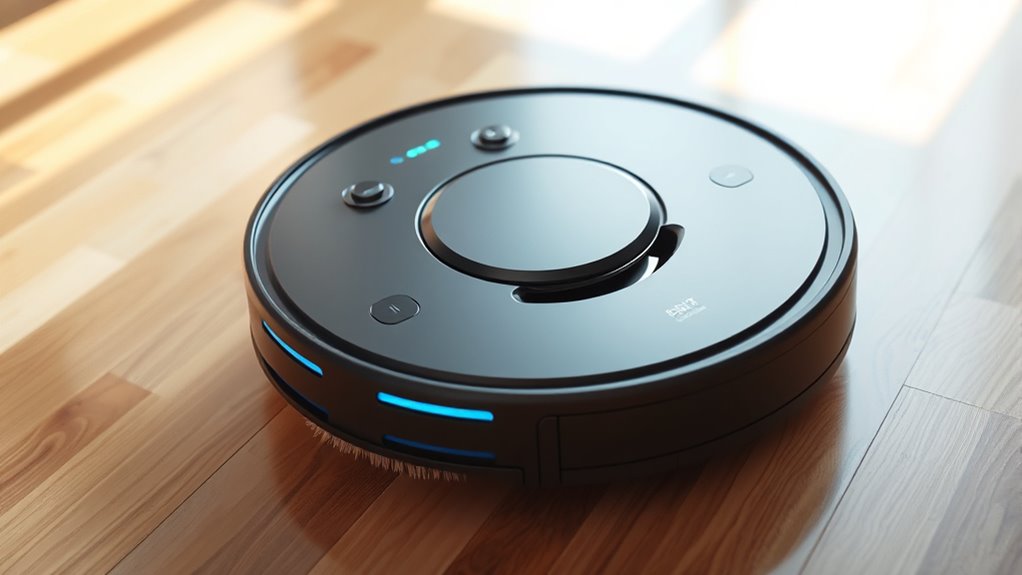
Have you ever wondered how robotic mops are transforming home cleaning? It’s all thanks to innovative technology that allows these devices to operate efficiently and independently. One of the key features that sets robotic mops apart is their suction power. Strong suction ensures they pick up dirt, dust, and debris effectively, even on stubborn stains or textured surfaces. The more powerful the suction, the better your floors get cleaned without you lifting a finger. Manufacturers equip these robots with motors designed to generate ideal suction, striking a balance between performance and energy consumption. This way, your floors stay spotless, and the robot can run longer on a single charge.
Robotic mops excel with powerful suction for thorough cleaning and longer battery life.
But suction power alone isn’t enough for a truly smart cleaning experience. That’s where navigation systems come into play. These systems are the brains behind the robot’s ability to move intelligently around your home. Advanced navigation uses a combination of sensors, cameras, and mapping algorithms to create a virtual map of your space. It helps the robot recognize obstacles like furniture, walls, and even small objects, so it can navigate around them smoothly. This prevents the robot from getting stuck or missing spots, ensuring thorough coverage of every inch of your floors. Some models even adapt in real-time, adjusting their cleaning routes if they detect new obstacles or changes in the environment.
Navigation systems also enable features like targeted cleaning and zone control. You can designate specific areas for deep cleaning or restrict the robot from entering certain rooms. This level of control makes your cleaning routine more tailored and efficient. Plus, with smart navigation, the robot can plan the most efficient route, saving time and battery life. This means fewer interruptions and longer cleaning cycles, so you get more out of each session.
Together, suction power and navigation systems create a seamless cleaning experience. The suction ensures your floors are thoroughly cleaned, while the navigation technology guarantees that the robot moves intelligently, avoiding obstacles and covering every corner. These features work in concert to make robotic mops not just convenient gadgets, but essential tools for maintaining a clean, healthy home with minimal effort. As technology continues to evolve, expect even smarter navigation and more powerful suction, making home cleaning easier and more effective than ever before. Incorporating advanced algorithms further enhances the robot’s ability to adapt and optimize its cleaning patterns, ensuring maximum efficiency.
Frequently Asked Questions
How Long Do Robotic Mop Batteries Typically Last?
Your robotic mop’s battery lifespan usually ranges from 1 to 3 years, depending on usage and maintenance. It typically endures around 300 to 500 charging cycles before performance declines. To maximize battery life, avoid overcharging and let it fully discharge periodically. Proper care guarantees your mop maintains ideal cleaning ability and prolongs its battery lifespan, saving you money and hassle in the long run.
Can Robotic Mops Handle Pet Hair Effectively?
Robotic mops can handle pet hair effectively, especially models designed for pet owners. They often include specialized brushes and suction features for pet hair removal. To prevent hair entanglement, look for models with hair prevention technology, such as tangle-free brushes or automatic brush cleaning. Regular maintenance and choosing a robotic mop with strong suction power guarantee efficient pet hair removal and smooth operation, keeping your floors clean and hair-free.
Are Robotic Mops Compatible With Smart Home Systems?
Yes, robotic mops are compatible with smart home systems, allowing you to integrate them seamlessly. You can control and schedule cleaning sessions through smart home integration platforms like Alexa or Google Assistant. Plus, many models offer voice command compatibility, so you can start, pause, or stop cleaning just by speaking. This makes managing your cleaning routine more convenient and hands-free, fitting effortlessly into your smart home ecosystem.
What Are the Maintenance Requirements for Robotic Mops?
You need to regularly empty the mop’s water tank and clean the brushes to keep it working efficiently. Check and update your cleaning schedules to guarantee maximum performance. Keep an eye on the battery life; if it starts holding less charge, consider replacing the battery. Also, wipe sensors and charging contacts to prevent issues. Proper maintenance extends your robotic mop’s lifespan and keeps your floors spotless.
How Do Robotic Mops Detect and Avoid Obstacles?
Robotic mops detect and avoid obstacles through sensor navigation and obstacle detection technology. These devices use cameras, infrared sensors, or ultrasonic sensors to scan their surroundings, identifying objects in their path. When an obstacle is detected, the mop adjusts its route automatically, avoiding collisions and ensuring thorough cleaning. This smart navigation system helps the robotic mop efficiently cover your floors while preventing damage to furniture or walls.
Conclusion
Now that you know how robotic mops are like tiny, tireless dancers gliding across your floors, it’s clear they bring a new rhythm to cleaning. Their advanced sensors and smart features choreograph a spotless performance without your constant oversight. So, let these clever machines be your floor’s best friends, turning a chore into a choreographed dance of technology. With robotic mops leading the way, your home stays fresh and sparkling effortlessly—welcome to the future of cleaning.