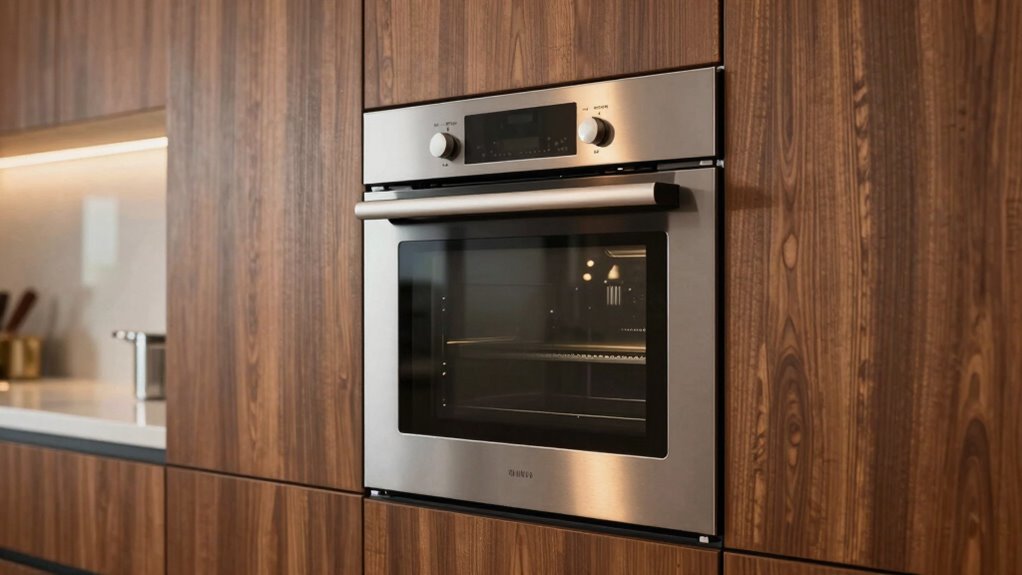

To keep your back happy while using a wall oven, install it at eye level or slightly below—about 36 to 48 inches from the floor. This height lets you easily monitor and remove hot dishes without bending too much or stretching awkwardly. Proper placement reduces strain and the risk of burns, making everyday cooking safer and more comfortable. Keep going, and you’ll find helpful tips to find the perfect height for you.
Key Takeaways
- Install the oven at eye level or slightly below for easy access and safe handling of hot dishes.
- Follow manufacturer guidelines to position the oven within the recommended height range.
- Proper height placement reduces the need for bending, minimizing back strain during use.
- Consider individual height and countertop height to customize ergonomic comfort.
- Avoid positioning the oven too high or low to prevent fatigue and potential injury.
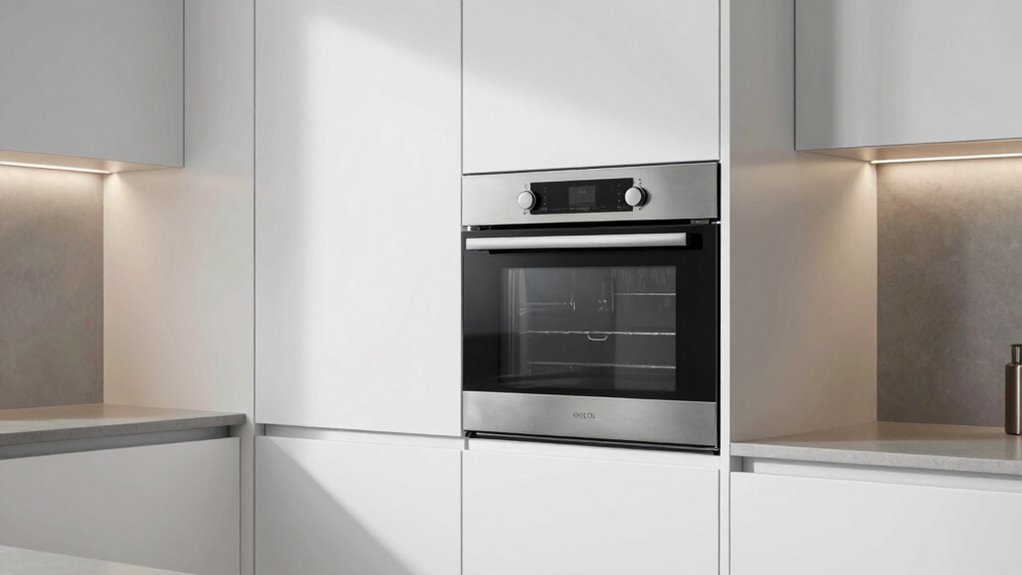
Choosing the right wall oven height is essential for safe, comfortable, and efficient cooking. When you position your oven at an appropriate height, you reduce strain on your back, shoulders, and arms, making daily tasks much more manageable. An ergonomic design considers your natural reach and posture, helping you avoid awkward bending or stretching. This not only makes cooking more pleasant but also minimizes the risk of injury over time. To achieve this, you need to pay close attention to installation guidelines that specify *ideal* height ranges. These guidelines are often based on standard countertop heights and average user ergonomics, ensuring your oven is accessible without forcing you into uncomfortable positions.
When you follow proper installation guidelines, you set yourself up for a more comfortable cooking experience. Typically, a wall oven installed at eye level or slightly below allows you to monitor and access dishes easily. This positioning means you don’t have to bend down or reach up excessively, which can cause fatigue or strain. If your oven is too high, you might struggle to remove hot dishes safely, increasing the risk of spills or burns. Conversely, if it’s too low, you could find yourself bending over frequently, which can lead to back pain over time. The key is to find a height that aligns with your natural standing position, making it effortless to view and handle your cookware.
Incorporating ergonomic principles into your oven’s installation involves more than just height. It also includes considering the depth of your cabinets and ensuring there’s enough clearance for opening doors comfortably. When following installation guidelines, measure carefully and consult the manufacturer’s recommendations. Many brands provide specific height ranges based on standard countertop heights and user needs, so take advantage of these resources. Proper placement also means accounting for your own height and typical cooking posture, which varies from person to person.
Frequently Asked Questions
Can Wall Oven Height Affect Cooking Performance?
Yes, wall oven height can affect cooking performance. When you consider ergonomics considerations, placing the oven at an ideal height ensures you can easily access and monitor your food without strain. It also enhances aesthetic appeal, creating a sleek look that complements your kitchen design. Proper height minimizes bending or stretching, making cooking more comfortable and efficient. So, choosing the right wall oven height improves both functionality and the overall look of your space.
Are There Different Height Standards for Residential and Commercial Ovens?
You’ll find that residential ovens are typically installed at a height of 30 to 36 inches for ergonomic design, while commercial ovens often have different standards based on purpose and user needs. notably, a study shows proper oven placement can reduce strain and injury. Knowing these height standards helps you choose the right wall oven placement, ensuring comfort and efficiency whether at home or in a commercial setting.
How Does Wall Oven Height Influence Safety During Use?
You enhance safety by choosing an ergonomic wall oven height that minimizes strain and prevents injury. When the oven is at a comfortable level, you avoid overreaching or awkward movements that could cause accidents. Proper height also allows you to see inside clearly, reducing risks of spills or burns. Prioritizing ergonomic design guarantees safer, easier use, protecting your back and preventing injuries during regular cooking or cleaning.
Is Adjustable Height an Option for Wall Ovens?
Yes, adjustable height is an option for wall ovens. With a custom installation, you can set the oven at an ergonomic height that suits your needs, making cooking safer and more comfortable. This flexibility helps prevent strain and back pain, especially if you prefer to keep the oven at eye level or at a height that minimizes bending. An adjustable wall oven enhances convenience and guarantees a tailored, user-friendly kitchen experience.
What Are the Best Practices for Installing a Wall Oven at the Correct Height?
You should install your wall oven at eye level for maximum ergonomic comfort and installation ease. Aim to position it so you don’t have to bend, reach, or strain—your back will thank you! Measure carefully, considering your height and countertop clearance, and use adjustable brackets if available. This simple step prevents back pain and makes cooking a breeze, transforming your kitchen into a truly comfortable space.
Conclusion
Choosing the right wall oven height isn’t just about style—it’s about comfort and safety. By following the comfort rule, you’ll avoid back strain and make cooking feel like a breeze, even if you’re channeling your inner pioneer in a Victorian kitchen. Remember, the perfect height lets you work efficiently and enjoy your space. So, set it right, and let your culinary adventures unfold smoother than a well-tuned piano in a cozy parlor.