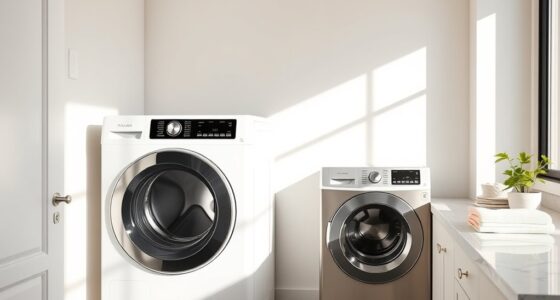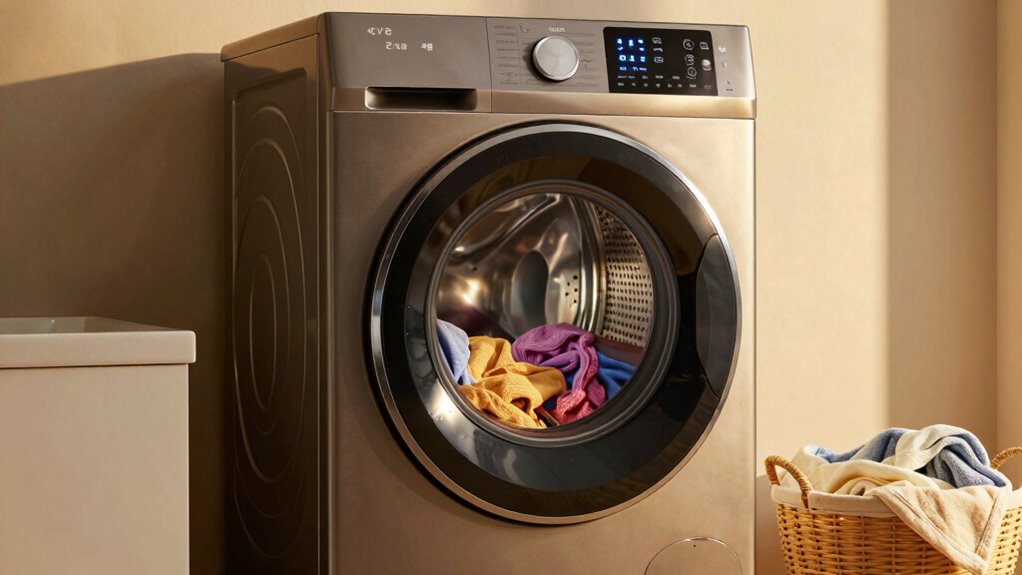

Heat pump dryers are energy-efficient because they recycle heat within the unit, drying clothes gradually with gentle, low-temperature cycles. This slower process uses less energy and helps extend the life of your garments. While they take longer than traditional dryers, they save money on utility bills and are better for the environment. To understand why they’re so efficient and worth the wait, keep exploring how their advanced technology works.
Key Takeaways
- Heat pump dryers use gentle, low-temperature cycles that extend drying time to protect fabrics.
- They recycle heat within the unit, reducing the need for continuous heating, which slows the drying process.
- The energy-efficient cycle focuses on gradual moisture removal, resulting in longer drying durations.
- Longer cycles contribute to energy savings and lower utility bills over time.
- Proper installation and understanding of operation maximize efficiency and ensure optimal drying performance.
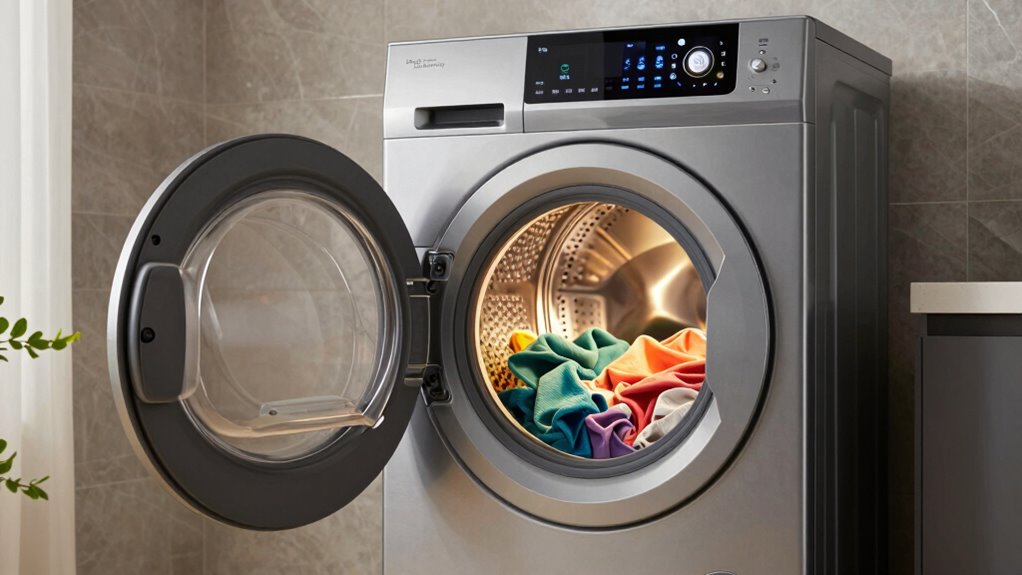
Heat pump dryers are an energy-efficient alternative to traditional tumble dryers, using a refrigeration cycle to dry clothes more sustainably. Unlike standard models that rely on heated air, heat pump dryers recycle heat within the unit, making them considerably more efficient. This process not only reduces your energy consumption but also helps lower your utility bills over time. When considering a heat pump dryer, you’ll want to understand the installation requirements, as they can differ from traditional dryers. These machines often need a dedicated electrical outlet with a higher voltage, and some models may require a drain connection for the condensed water. It’s crucial to check the specific requirements of the dryer you’re interested in, so you can prepare your space accordingly. Proper installation ensures the dryer functions at its best and maintains energy efficiency, which is one of its main benefits.
Since heat pump dryers take longer to dry clothes compared to traditional models, understanding their operation can help set realistic expectations. They use a low-temperature, gentle drying process that gradually removes moisture from your garments. This longer cycle is a trade-off for better energy efficiency, as the machine recycles heat rather than constantly generating new heated air. You might notice that your clothes come out slightly damp at the end of a cycle, but they’ll be dry enough to fold or hang. This slower process can be especially beneficial for delicate fabrics, extending their lifespan. While it does mean waiting a bit longer, the energy savings and gentler drying process make it a worthwhile trade-off.
In terms of installation, you’ll want to verify your laundry space can accommodate the unit’s requirements. Many heat pump dryers are designed to fit into standard laundry rooms, but they may need additional ventilation or a specific electrical setup. Some models are ventless, which simplifies installation, but others might need an exhaust or condensation drain. If you’re unsure about the installation process, consulting a professional installer can help you avoid mistakes that could compromise the dryer’s energy efficiency or performance. Proper installation not only guarantees that your dryer operates safely but also maximizes its energy-saving potential. By investing a little time upfront to understand the installation requirements, you’ll enjoy the long-term benefits of a more sustainable, cost-effective drying solution that preserves your clothes and the environment.
Frequently Asked Questions
Do Heat Pump Dryers Work Well With All Fabric Types?
Yes, heat pump dryers work well with most fabric types, thanks to their gentle drying process. They offer good fabric compatibility, especially for delicate clothes, by reducing heat exposure. While they excel in drying efficiency for everyday fabrics, some heavy or bulky materials may take longer. Overall, you can trust a heat pump dryer to safely and effectively dry a wide range of fabrics, saving energy and preventing damage.
How Noisy Are Heat Pump Dryers Compared to Traditional Models?
Compared to traditional dryers, heat pump dryers are generally quieter, creating a gentle hum rather than a loud roar. You’ll notice the sound levels are lower, like a soft whisper instead of a shouting match. This quieter operation means you can run laundry at any time without disturbing your peace. While some may still produce a slight noise, the overall noise comparison makes heat pump models a more peaceful choice.
Can Heat Pump Dryers Be Used in Very Cold Environments?
Yes, heat pump dryers can be used in cold climates, but you might face some installation challenges. In very cold environments, their efficiency can drop because the ambient temperature affects heat exchange. You should guarantee proper insulation and possibly a heated room to maintain ideal performance. Consulting an expert for installation helps address these challenges, ensuring your dryer functions well even in cold climates.
What Is the Typical Lifespan of a Heat Pump Dryer?
Your heat pump dryer can last around 10 to 15 years, which is like having a faithful friend by your side for ages. Its lifespan depends on usage, maintenance, and build quality. Because they’re highly energy-efficient, you’ll save on power bills and reduce your environmental impact over time. Proper upkeep guarantees it runs smoothly for years, making it a smart, eco-friendly investment that keeps giving back long after you’ve brought it home.
Are Maintenance Requirements Different for Heat Pump Dryers?
Yes, maintenance requirements for heat pump dryers are a bit different. You need to regularly clean the filter to maintain energy efficiency and prevent airflow issues. Unlike traditional dryers, you should also check the heat pump’s coils and refrigerant levels periodically. Proper maintenance ensures your dryer runs efficiently, extends its lifespan, and keeps energy consumption low. Staying on top of filter cleaning and coil checks helps you enjoy peak performance and energy savings.
Conclusion
So, as you consider a heat pump dryer, remember it might take longer, but the savings and efficiency could surprise you. The technology’s promise of lower energy bills and gentler drying is compelling, yet there’s more beneath the surface. Will the extended drying time be worth the payoff? Only time will tell. Stay curious—your perfect laundry solution could be closer than you think, hiding just behind the curtain of what you’ve yet to discover.