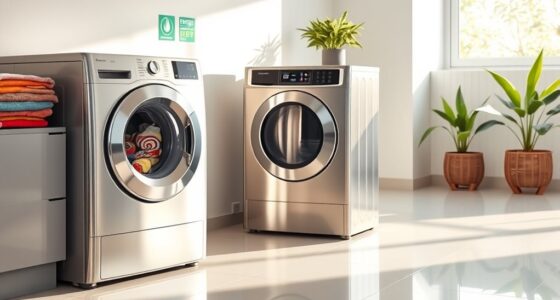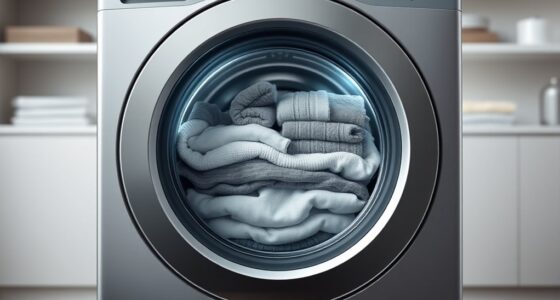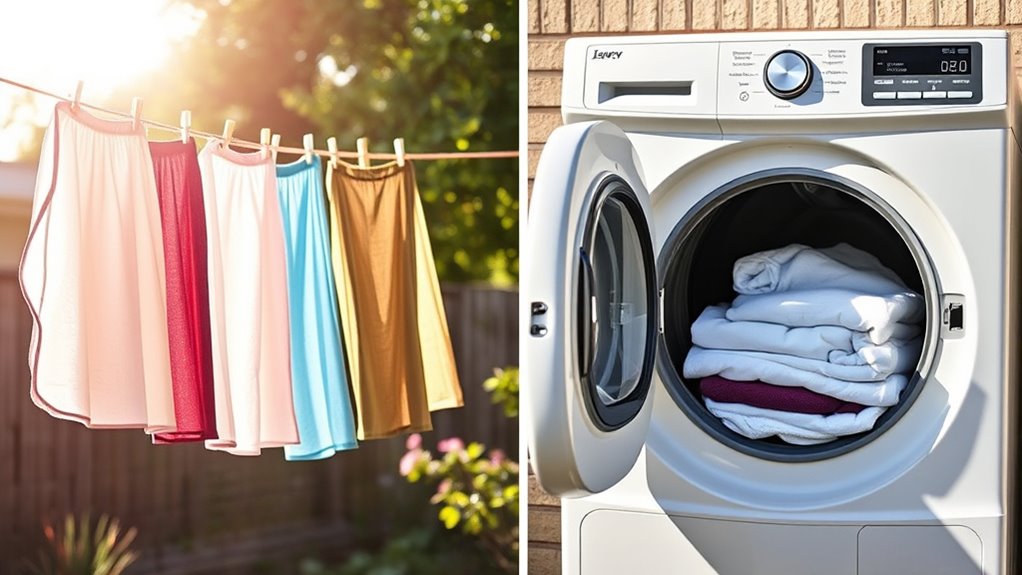

If you air-dry clothes, you’ll extend their lifespan by reducing wear and tear from high heat and tumbling, while also saving energy and money. It’s eco-friendly and gentle, especially for delicate fabrics, but it takes more time and space. Using a dryer is faster and more convenient, perfect for busy days, but it can cause fabric damage and increases energy costs. To discover how to balance both methods effectively, keep exploring options and tips.
Key Takeaways
- Air-drying is gentler on fabrics, extending clothing lifespan, while dryers may cause quicker wear and tear.
- Air-drying consumes no electricity, making it more eco-friendly and cost-effective than using a dryer.
- Dryers offer quick, convenient drying suitable for busy schedules, whereas air-drying requires space and more time.
- Weather conditions and indoor space influence the effectiveness of air-drying, which can be impractical in humid or rainy environments.
- Balancing convenience and sustainability involves choosing air-drying for delicate items and using the dryer for faster results.
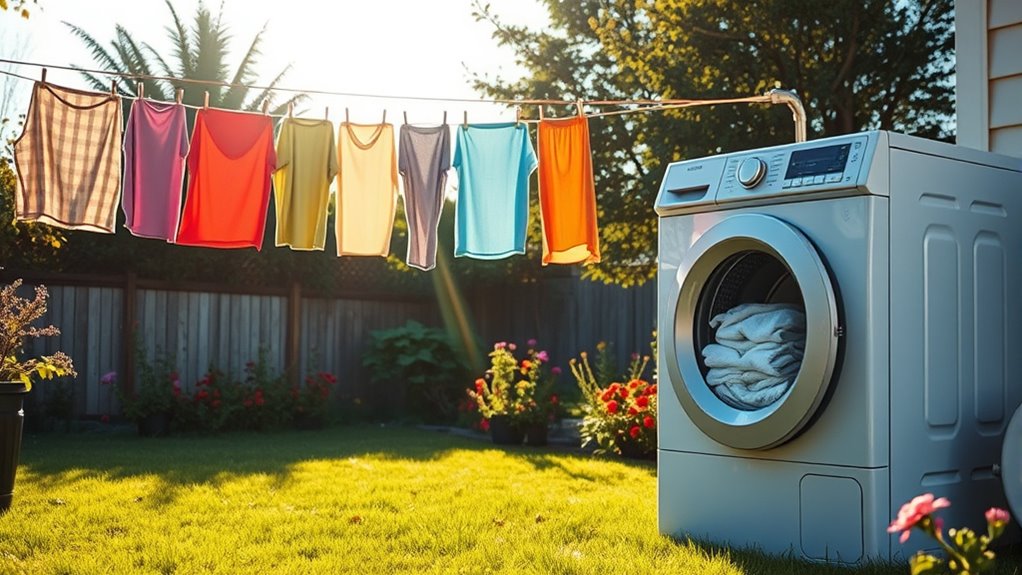
Deciding whether to air-dry your clothes or use the dryer depends on your priorities, but understanding the benefits and drawbacks of each method can help you make an informed choice. When it comes to clothing longevity, air-drying can be gentler on fabrics, reducing wear and tear caused by high heat and tumbling. Over time, this can help your clothes stay in better shape longer, saving you money on replacements. Air-drying also minimizes the risk of shrinkage or fading, especially for delicate or high-maintenance fabrics. On the other hand, using a dryer provides convenience and speed, which is especially helpful on busy days or in cold, damp weather. However, frequent use of the dryer can accelerate fabric aging, leading to frayed seams or thinning fibers, ultimately shortening the lifespan of your clothing.
Air-drying prolongs clothing life and reduces fabric damage over time.
Energy efficiency is another important factor to ponder. Air-drying requires no electricity, making it a cost-effective and eco-friendly choice. By simply hanging your clothes outdoors or indoors, you eliminate energy consumption altogether. This not only reduces your utility bills but also lessens your carbon footprint. Conversely, electric dryers consume significant energy, especially if used multiple times a week. Modern dryers are more efficient than older models, but they still contribute to higher energy bills and environmental impact. If you’re aiming to cut down on energy use, air-drying offers a straightforward solution. Additionally, air-drying can be advantageous during power outages or in situations where conserving electricity is a priority.
While air-drying is beneficial for clothing longevity and energy efficiency, it does have some limitations. It requires space and time, which might not be practical for everyone, especially in small apartments or during rainy seasons. Clothes may also take longer to dry thoroughly, increasing the risk of mildew if not hung properly or if the environment is humid. Using a dryer can be a quick fix for damp laundry, but it also involves ongoing costs and potential fabric damage over time. If speed is your main concern, the dryer wins, but if you’re mindful of clothing care and environmental impact, air-drying offers compelling advantages.
Another aspect to consider is the impact of educational toys on developing patience and responsibility in children, which can be integrated into routines like laundry practices to promote life skills. Ultimately, your choice depends on your lifestyle, values, and the types of clothing you wear. Balancing convenience with sustainability, you might opt to air-dry some items while using the dryer for others. Understanding how each method affects clothing longevity and energy efficiency helps you make decisions that align with your priorities and keep your wardrobe in great shape for years to come.
clothes drying rack indoor outdoor
As an affiliate, we earn on qualifying purchases.
As an affiliate, we earn on qualifying purchases.
Frequently Asked Questions
How Does Air-Drying Affect the Longevity of Clothes?
Air-drying your clothes can extend their longevity because it reduces wear and tear from the tumbling process. Plus, it helps preserve fabric softening agents and colors, keeping your clothes looking fresh longer. You also save energy by skipping the dryer’s electricity, which benefits both your wallet and the environment. Overall, air-drying is a gentle, eco-friendly method that keeps your clothes in better shape over time.
Can Air-Drying Prevent Shrinking Compared to Using a Dryer?
Think of air-drying as a gentle breeze that keeps your clothes from shrinking. Unlike the dryer’s relentless heat, air-drying preserves fabric care, preventing fibers from tightening and warping. With proper drying techniques, your clothes stay true to size and shape, avoiding the unwanted embrace of shrinkage. So, yes — air-drying acts as a safeguarding wind, protecting your garments from shrinking and prolonging their life.
Is Air-Drying Effective in Removing Stubborn Odors?
Air-drying can be effective in odor elimination, especially if you hang clothes outdoors where fresh air helps remove stubborn smells. While it might not eliminate all odors, it retains more fragrance than tumble drying, which can sometimes strip scents away. To boost odor removal, consider pre-treating clothes with a natural deodorizer or adding a splash of vinegar during washing. Overall, air-drying is a gentle way to keep your clothes smelling fresh.
How Does Humidity Impact the Air-Drying Process?
Humidity effects the air-drying process like a sluggish river, slowing down your clothes’ journey to dryness. When humidity is high, moisture in the air hinders evaporation, making your laundry take longer and reducing air drying efficiency. Conversely, low humidity acts like a breezy day, helping water escape quickly. To speed things up, dry on a breezy, sunny day or in a well-ventilated space for ideal air drying results.
Are There Specific Fabrics Better Suited for Air-Drying?
Certain fabric types, like cotton and linen, are better suited for air-drying because they typically have shorter drying times and handle the process well. Delicate fabrics such as silk or wool may take longer to dry and risk damage if not handled carefully. You’ll find that sturdy fabrics dry faster, while lightweight or textured materials might need extra time or better air circulation. Always check fabric care labels for best drying advice.
energy-efficient clothes dryer
As an affiliate, we earn on qualifying purchases.
As an affiliate, we earn on qualifying purchases.
Conclusion
Choosing between air-drying and using the dryer depends on your priorities. Air-drying saves energy and prolongs your clothes’ lifespan, while dryers offer quick convenience. Did you know that air-drying can reduce household energy consumption by up to 75%? By making the switch, you not only save money but also help the environment. So next time, consider hanging your clothes to dry—it’s a simple step toward a greener, more sustainable lifestyle.
delicate fabric drying hangers
As an affiliate, we earn on qualifying purchases.
As an affiliate, we earn on qualifying purchases.
compact indoor clothes drying rack
As an affiliate, we earn on qualifying purchases.
As an affiliate, we earn on qualifying purchases.