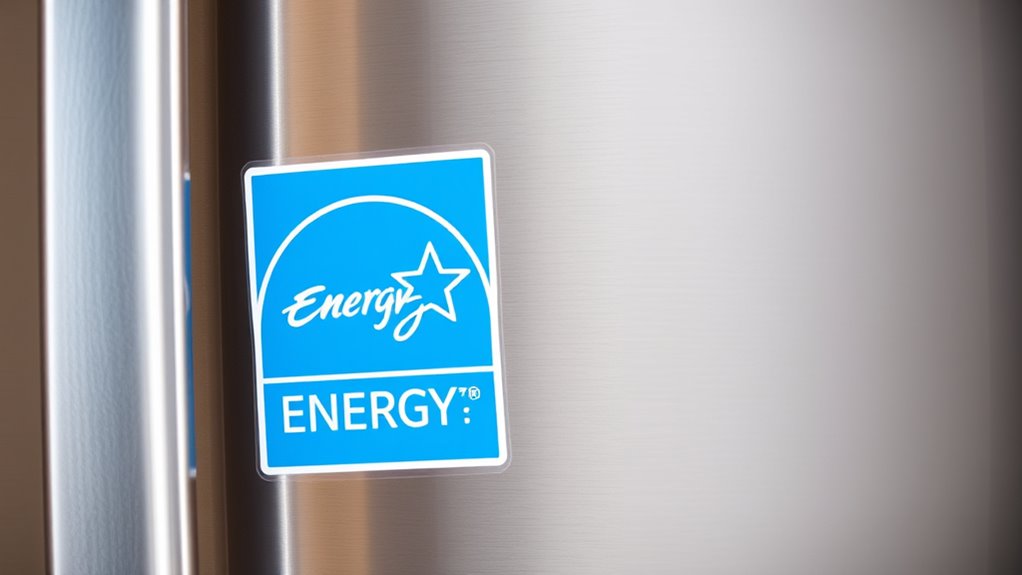

To understand ENERGY STAR labels, look for the iconic star logo and the words “ENERGY STAR.” Check the estimated annual energy consumption in kilowatt-hours—it shows how much energy the appliance uses in a year. Lower numbers mean higher efficiency. Compare different models using these figures, and note any additional metrics like EER or AFUE for better insights. Continue exploring to learn how these labels help you choose more energy-efficient, cost-saving appliances.
Key Takeaways
- Look for the prominent ENERGY STAR logo and branding on the label.
- Check the estimated annual energy consumption (kWh) to compare efficiency.
- Review additional metrics like EER, CEF, or AFUE for specific performance details.
- Use lower energy consumption figures as a guide to choose more efficient appliances.
- Consider the label as an indicator of quality, environmental impact, and cost savings.

Energy efficiency labels like ENERGY STAR help you quickly identify appliances that save money and reduce environmental impact. When shopping for new appliances, understanding these labels is essential for making smart choices that benefit both your wallet and the planet. The ENERGY STAR label indicates that an appliance meets strict energy efficiency standards set by the Environmental Protection Agency (EPA) and the Department of Energy (DOE). This means the appliance uses less energy than conventional models, which translates into lower utility bills and a smaller carbon footprint. Recognizing what the label signifies empowers you to select products that align with your goal of conserving resources and minimizing environmental impact.
The label itself is straightforward but packed with useful information. It typically features the ENERGY STAR logo, a stylized star with the words “ENERGY STAR” prominently displayed. Beneath or nearby, you’ll find details like the estimated annual energy consumption, which is usually expressed in kilowatt-hours (kWh). This figure gives you a clear comparison point between different appliances. The lower the energy consumption, the more energy-efficient the product is. Sometimes, the label also includes an energy efficiency ratio or other metrics specific to the appliance type, such as the Combined Energy Factor (CEF) for dishwashers or the Annual Fuel Utilization Efficiency (AFUE) for furnaces. Understanding energy efficiency standards helps you make informed decisions about appliance selection.
To interpret the label effectively, focus on the energy consumption figures and how they compare across similar models. Appliances with higher energy efficiency have lower consumption figures, meaning they’re designed to do the same job using less power. This not only helps you cut down on energy costs but also lessens your environmental impact by reducing greenhouse gas emissions associated with electricity generation. Keep in mind that the ENERGY STAR designation isn’t just about energy savings; it also signifies that the product has met rigorous performance and quality standards. So, choosing ENERGY STAR appliances ensures you’re getting a reliable, high-performing product that aligns with your eco-conscious goals.
Frequently Asked Questions
How Often Are ENERGY STAR Labels Updated?
Energy Star labels are typically updated annually to reflect the latest standards in renewable energy and appliance efficiency. This guarantees you get accurate, current information about a product’s performance and energy savings. By checking these updates regularly, you can choose appliances that meet the newest efficiency benchmarks, helping you reduce energy consumption and support renewable energy efforts. Stay informed so you make the best, most eco-friendly choices for your home.
Do ENERGY STAR Ratings Vary by Appliance Brand?
Ever wonder if ENERGY STAR ratings differ by appliance brand? They generally maintain rating consistency across brands, allowing for fair brand comparisons. While some variation might occur due to specific features or models, the program’s standards guarantee a level playing field. So, you can confidently compare ratings, knowing that the ENERGY STAR label signifies similar energy efficiency levels regardless of the brand. Isn’t it reassuring to have reliable, standardized info at your fingertips?
Can ENERGY STAR Labels Be Faked or Misrepresented?
You might wonder if ENERGY STAR labels can be faked or misrepresented. While counterfeit labels do exist, manufacturers and retailers are closely monitored to prevent mislabeling practices. Always check for genuine certification marks and verify product details through official ENERGY STAR resources. Be cautious of suspicious labels, and report any suspected mislabeling to protect yourself from false claims. This way, you guarantee you’re choosing truly energy-efficient appliances.
Are There Different ENERGY STAR Versions for Different Appliances?
Yes, there are different ENERGY STAR versions for various appliances because each appliance type has unique standards. You’ll notice label variations reflecting those appliance standards, ensuring the label accurately represents the specific product’s energy efficiency. Always check the label details to confirm it matches the appliance type and model, helping you make informed, eco-friendly choices. Different versions help maintain consistent, reliable energy efficiency benchmarks across all appliance categories.
How Do ENERGY STAR Labels Impact Long-Term Savings?
Energy Star labels help you save money long-term by reducing energy costs through efficient appliances. When you choose Energy Star-rated products, you spend less on electricity and heating bills over time. Plus, these appliances offer environmental benefits by lowering energy consumption, which reduces greenhouse gas emissions. Your smart choice not only saves you money but also contributes to a healthier planet, making Energy Star labels valuable for your wallet and the environment.
Conclusion
Now that you know how to read and understand ENERGY STAR labels, you’re equipped to make smarter choices. But remember, what these labels reveal is just the beginning. Behind every label lies a story about efficiency, savings, and the impact on our planet. Will you take the next step to choose wisely? The power to make a difference is in your hands—are you ready to open it? The future of your home—and the planet—starts with that decision.