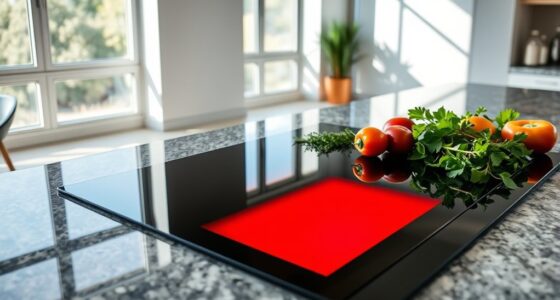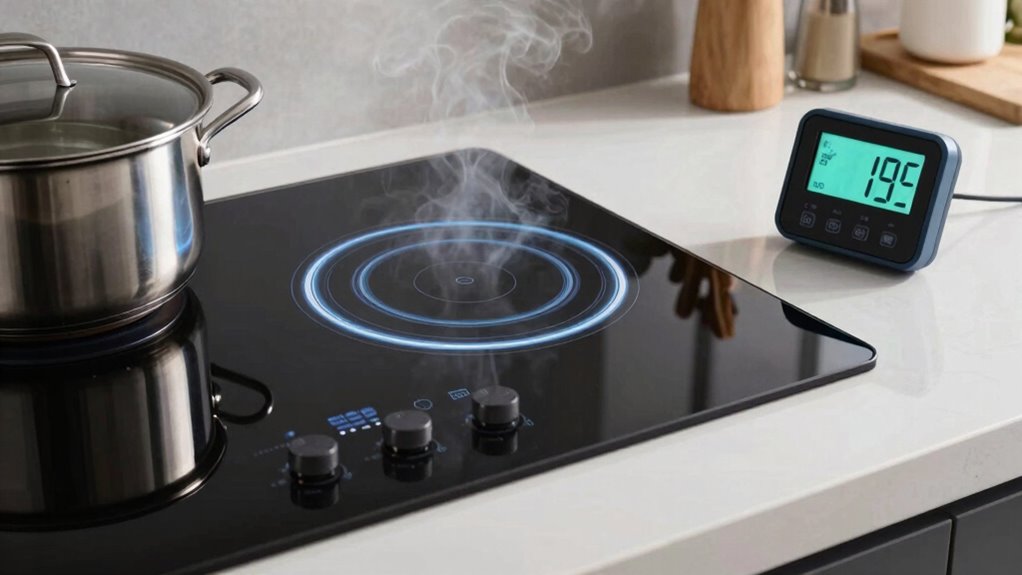

Induction cooking actually lowers your power bill by heating cookware directly through electromagnetic fields, making it more efficient than gas or traditional electric stoves. It reduces energy wastage because most of the power goes straight into cooking, with faster heat-up times and precise temperature control. This targeted method keeps your kitchen cooler and conserves energy. If you want to uncover even more about how induction can save you money, there’s plenty more to explore.
Key Takeaways
- Induction cooking is highly efficient, converting most electrical energy directly into heat with minimal waste.
- Faster heating and precise temperature control reduce overall cooking time and energy consumption.
- Compatibility depends on ferromagnetic cookware; non-compatible pots can use induction interface disks.
- Induction stoves focus heat locally, decreasing kitchen heat and cooling needs, lowering energy use.
- Overall, induction cooking can lower your power bill due to its efficiency and faster cooking times.

Many people believe that induction cooking is complicated or unsafe, but these common myths are simply not true. One of the biggest misconceptions is that induction stoves waste electricity or are more expensive to run than traditional options. In reality, induction cooking can lead to significant electricity savings because it heats cookware directly through electromagnetic fields, reducing energy loss. Unlike gas or electric coil stoves that heat the air around the cookware or the stovetop itself, induction units transfer energy efficiently, ensuring that most of the power goes directly into cooking your food. This targeted heating means you use less electricity overall, cutting down your power bill over time.
Induction cooking saves energy by heating cookware directly, reducing power bills and making it efficient and safe.
Another concern often raised is whether your existing cookware is compatible with induction stoves. Many assume they need to buy new pots and pans, which can feel inconvenient or costly. The truth is, most cookware made from ferromagnetic materials—such as cast iron or some stainless steel—works perfectly with induction cooktops. To quickly verify if your current cookware is compatible, you can perform a simple test with a magnet. If the magnet sticks firmly to the bottom of your pots and pans, they’ll work with induction. This compatibility means you don’t have to replace all your cookware immediately, making induction cooking a practical choice for many households.
The compatibility issue is often exaggerated, and the good news is that many modern cookware brands now explicitly state whether their products are induction-ready. Additionally, if you own non-magnetic cookware like aluminum or glass, you can still use them with an induction stove by purchasing an induction-compatible interface disk. These disks act as a bridge, allowing non-ferrous cookware to heat up efficiently on induction cooktops. So, your options remain flexible, and you don’t have to overhaul your entire kitchen just to benefit from induction technology.
When it comes to electricity savings, induction stoves are designed to optimize power use, which can lead to lower energy consumption compared to traditional electric or gas stoves. Because induction heats faster and maintains precise temperature control, you spend less time cooking and less energy overall. Plus, the heat stays localized, so your kitchen stays cooler, reducing the need for additional cooling and further saving energy.
Frequently Asked Questions
Does Induction Cooking Require Special Cookware?
Yes, induction cooking requires special cookware that meets magnetic requirements. You need to check cookware compatibility by ensuring your pots and pans are ferromagnetic—meaning they attract a magnet. If they do, you’re good to go. Otherwise, you’ll need to buy new cookware. This magnetic requirement is essential for induction stoves to heat efficiently, so verifying compatibility beforehand saves you time and money.
How Safe Is Induction Cooking Compared to Gas?
Induction cooking is quite safe compared to gas because it uses an electric field and magnetic safety measures to prevent accidents. You won’t worry about open flames or gas leaks, and the cooktop only heats when compatible cookware is placed on it. Plus, the magnetic safety features ensure that the surface cools quickly if touched, reducing burn risks. Overall, induction offers a safer, more controlled cooking experience.
Can Induction Stoves Work During Power Outages?
Sure, your induction stove isn’t going to work during a power outage unless you’ve got a backup power source like a generator or an uninterruptible power supply. So, if the lights go out and you’re craving that perfectly cooked meal, you’re out of luck unless you’ve prepared in advance. Remember, induction stoves depend on electricity, making backup power essential for cooking during those unexpected power outages.
Is Induction Cooking Environmentally Friendly?
Yes, induction cooking is environmentally friendly because it reduces electric waste by using energy efficiently. Unlike traditional stoves, it heats only the cookware, minimizing heat loss and lowering overall energy consumption. This means you contribute less to environmental impact, as less electricity is needed for cooking. Plus, if your electricity comes from renewable sources, induction cooking becomes an even greener choice, helping you lower your carbon footprint.
How Does Induction Impact Overall Kitchen Energy Efficiency?
Induction cooking skyrockets your kitchen’s energy efficiency, making your old stove look like a sluggish turtle. It delivers energy savings by transforming almost all the electricity into heat, thanks to its stellar thermal efficiency. This means your meals cook faster and use less power, turning your kitchen into an energy-saving powerhouse. Say goodbye to wasted energy and hello to a smarter, quicker, more efficient cooking experience that leaves traditional stoves in the dust.
Conclusion
Think of induction cooking like a fast, efficient sports car—you might worry it’s using more fuel, but in reality, it gets you there quicker with less waste. Now that the myth’s busted, you can enjoy the sleek, modern power of induction without worry. Embrace it like upgrading to that stylish, eco-friendly ride—faster, smarter, and more budget-friendly. So go ahead, cook confidently, knowing your power bill isn’t riding shotgun to your kitchen adventures.