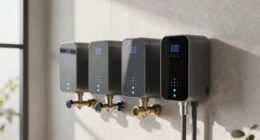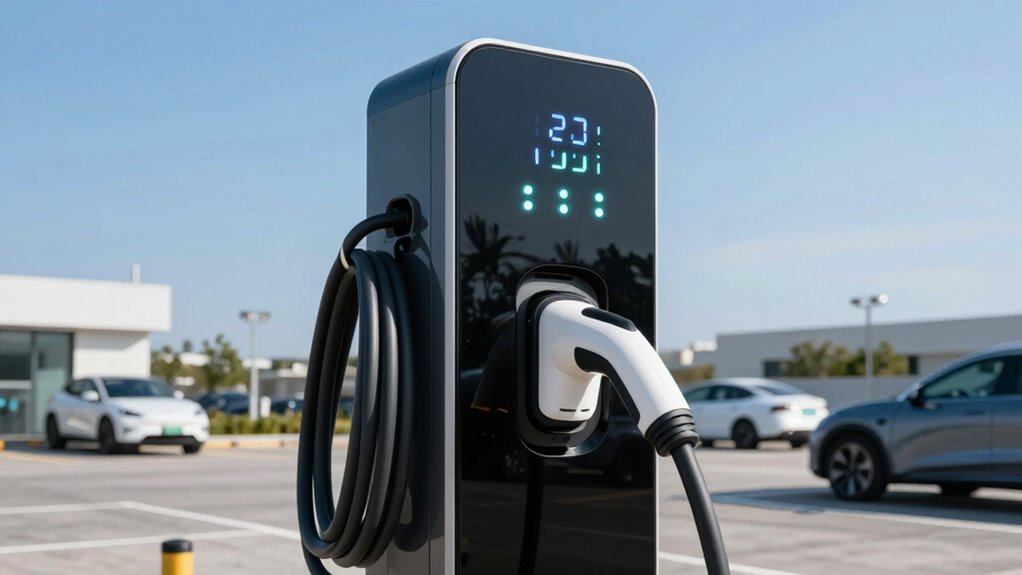

Choosing a higher amperage charger might seem like the fastest way to charge your EV, but it’s not always better. If your home’s electrical system can’t handle the extra load, it can cause safety issues or require costly upgrades. Faster charging doesn’t necessarily mean more efficient, especially if your system isn’t prepared. Understanding your home’s capacity and how amperage affects charging speed helps you make a smarter choice — keep exploring to learn more.
Key Takeaways
- Higher amps boost charging speed but may strain your home’s electrical system, risking safety issues or costly upgrades.
- Not all homes can support high-amp chargers without electrical system assessments and potential wiring or breaker upgrades.
- Slower chargers with lower amps often meet daily needs and reduce the risk of electrical overload.
- Choosing the right amperage depends on your vehicle’s charging requirements and your home’s electrical capacity.
- Proper installation and professional advice ensure safety, efficiency, and optimal performance without unnecessary power demands.
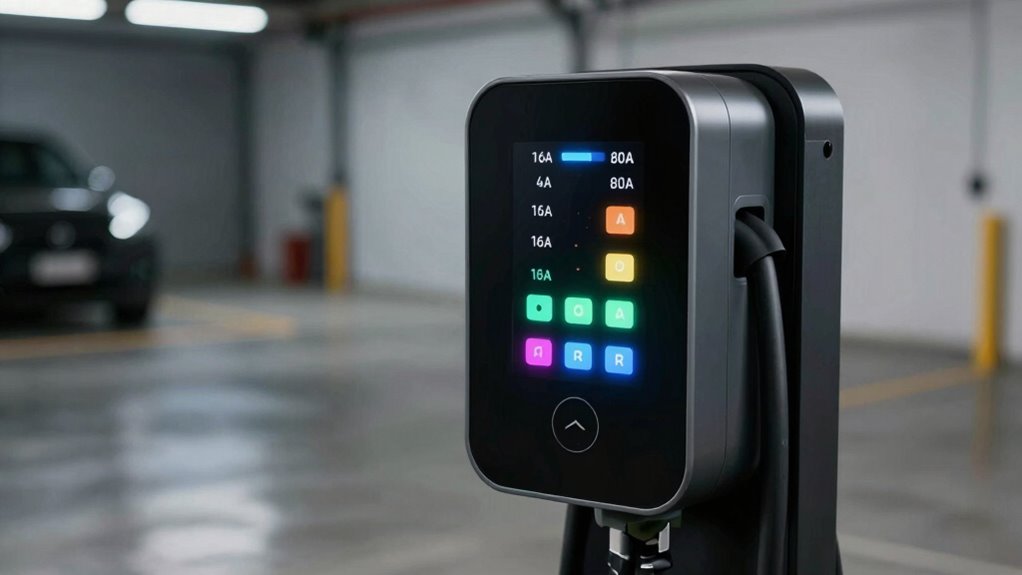
Ever wondered how the amperage of an EV charger impacts your charging speed and overall experience? The answer lies in understanding how charger installation and power capacity work together. When choosing an EV charger, the amperage rating directly affects how quickly your vehicle charges, but it’s not just about going as high as possible. Higher amps mean more power, which can shorten your charging time, but it also requires careful consideration of your home’s electrical system. A higher amperage charger needs a dedicated circuit capable of handling that load, and this is where charger installation becomes vital. If your electrical system isn’t prepared, installing a high-amperage charger can lead to costly upgrades or safety issues. That’s why understanding your home’s power capacity is indispensable before opting for a faster charger.
The power capacity of your electrical system dictates what kind of charger you can safely install. Many homes have a limited electrical supply, often around 100 amps, which must support everything from lighting to appliances. Adding a high-amp EV charger demands that you evaluate whether your existing wiring and breaker panel can handle the increased load. If your system is undersized, installing a powerful charger might require upgrades—things like a new breaker, thicker wiring, or even a service panel upgrade. Proper charger installation ensures that your setup is both safe and efficient, preventing electrical issues down the line. It’s tempting to pick the highest amperage available, but if your electrical system can’t support it, you won’t gain much in charging speed, and you risk damaging your system or causing safety hazards.
Additionally, consulting a whole-home backup power system can help ensure your electrical capacity is sufficient for high-amp chargers, especially during power outages or peak usage times. You should also consider your actual charging needs and habits. If you typically plug in overnight, a lower amperage charger might be enough, providing a good balance between speed and safety. Conversely, if you need faster top-ups during the day, a higher-amp charger could be beneficial—assuming your electrical capacity allows it. Keep in mind that faster charging doesn’t always mean better; it can put more stress on your electrical system and may require more frequent maintenance or upgrades. Evaluating your home’s power capacity and working with a professional during charger installation helps you find that sweet spot—achieving faster charging without risking safety or incurring unnecessary costs. In the end, understanding how amperage impacts your EV charging experience empowers you to make smarter choices tailored to your home’s capabilities.
Frequently Asked Questions
Can I Upgrade My EV Charger Amps Later?
Yes, you can upgrade your EV charger amps later, but you need to check charger compatibility and installation considerations first. Make sure your electrical system can handle the increased power, and consult a professional to assess if your circuit and wiring are suitable for the upgrade. Upgrading may involve changing the breaker or wiring, so proper planning ensures safety and maximum performance without any issues.
Do Higher Amps Mean More Energy Efficiency?
Higher amps don’t necessarily mean more energy efficiency. A larger charger size with higher amps can deliver power faster, but it may also increase overall power consumption without improving efficiency. You should consider your vehicle’s charging needs and the capacity of your electrical system. Sometimes, a lower-amp charger is more efficient, reducing unnecessary energy use while still meeting your charging requirements effectively.
Are There Safety Concerns With High-Amp Chargers?
A word to the wise: safety first. High-amp chargers can pose electrical risks if not properly installed or maintained. You might think faster charging is always better, but charger safety is vital. Make sure your charger meets safety standards and is installed by a professional. Ignoring electrical risks could lead to overheating, fires, or damage. Always prioritize safety to avoid trouble down the road and keep your charging experience secure.
How Does Charger Amps Affect My Home’s Electrical System?
Charger amps directly influence your home’s electrical wiring and power capacity. If you install a high-amp charger, it draws more current, which can strain your existing electrical system if it isn’t rated for that load. You might need to upgrade your wiring or breaker to safely handle the increased power demand. Always verify your home’s capacity first to prevent overloads and ensure safe, efficient charging.
Is a Higher-Amp Charger Compatible With All EVS?
Think of your EV as a guest with its own preferences. A higher-amp charger isn’t always compatible with all EVs because of charger compatibility and amp limitations. Some vehicles can handle faster charging, but others may need lower amps to avoid damage. Always check your EV’s specifications and your home’s electrical capacity. It’s like choosing the right key—you want to guarantee it fits without forcing.
Conclusion
Understanding EV charger amps is like tuning a guitar—you want the right balance to hit the perfect note. Faster isn’t always better, as pushing for high amps might strain your system or reduce battery lifespan. By choosing the right amperage, you make certain a safe, efficient charge that suits your needs. Think of it as watering a plant—you don’t want to overdo it, or you might do more harm than good. Find the sweet spot for your EV.