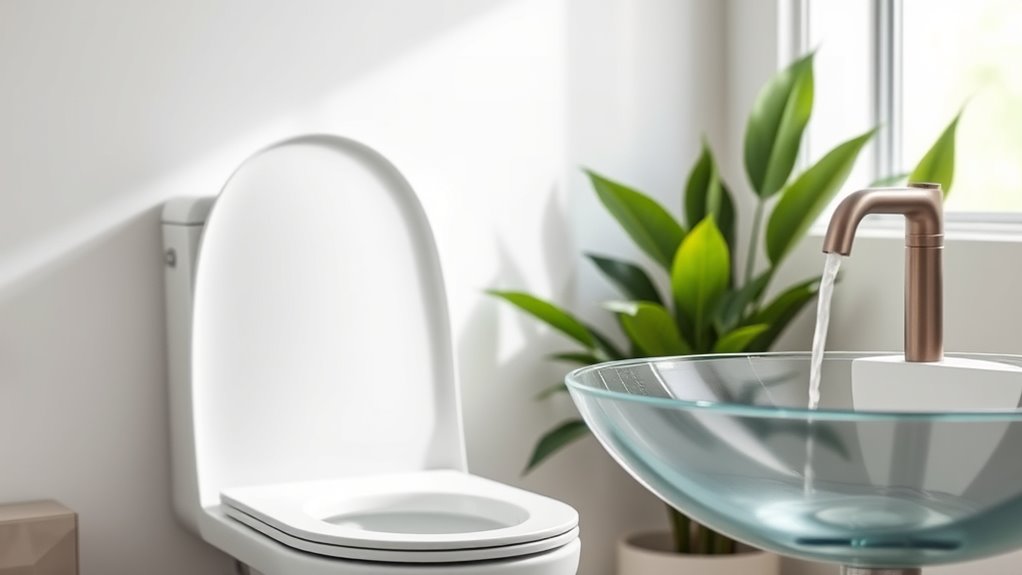

Switching to dual-flush toilets and low-flow fixtures helps you save water and reduce costs while supporting environmental sustainability. These eco-friendly options cut your water use without sacrificing performance, easing strain on municipal systems and lowering your bills. They also promote responsible water management in your home, making your property more efficient and eco-conscious. Want to discover more ways these fixtures benefit your household and the environment? Keep exploring to learn all the advantages.
Key Takeaways
- Dual-flush toilets and low-flow fixtures significantly reduce household water consumption, promoting conservation amid water scarcity.
- These fixtures lower water bills and offer long-term cost savings, making them a smart investment.
- They enhance plumbing efficiency by delivering appropriate water amounts for each use, optimizing performance.
- Using eco-friendly fixtures decreases environmental impact through reduced water wastage and energy use.
- Properly selected low-flow fixtures maintain water quality and flow, ensuring comfort without sacrificing performance.

As water conservation becomes increasingly important, dual-flush toilets and low-flow fixtures offer effective solutions for reducing water use without sacrificing performance. These fixtures are designed to maximize plumbing efficiency, ensuring you use only the water necessary for each flush or usage. By choosing these eco-friendly options, you not only help conserve a crucial resource but also lower your water bills. This makes them a practical investment for homeowners looking to improve sustainability while maintaining comfort and convenience. Additionally, selecting fixtures with the appropriate flow rates can optimize your water quality and flow rate for maximum efficiency and performance.
Frequently Asked Questions
How Do Dual-Flush Toilets Save Water Compared to Traditional Toilets?
You save water with dual-flush toilets because they give you the option to use a smaller flush for liquid waste and a larger one for solids. This targeted approach considerably reduces water consumption, promoting water conservation. As a result, you’ll notice cost savings on your water bills over time. Plus, using less water helps protect the environment, making dual-flush toilets an eco-friendly and economical choice for your home.
Are Low-Flow Fixtures Compatible With Older Plumbing Systems?
Low-flow fixtures are generally compatible with older plumbing systems, but you might face some retrofit challenges. You need to check plumbing compatibility to make certain proper installation and avoid leaks. Sometimes, older pipes may not handle the reduced water flow efficiently, requiring adjustments or upgrades. You’ll want to contemplate these retrofit challenges early on to make sure your low-flow fixtures work smoothly and conserve water effectively.
What Is the Maintenance Difference Between Dual-Flush and Standard Toilets?
You’ll find that maintenance frequency for dual-flush toilets is similar to standard toilets, needing regular checks for leaks and blockages. However, cleaning requirements are slightly different; dual-flush models may have more intricate mechanisms, so you might spend extra time cleaning the flush buttons or mechanisms. Overall, both types require routine cleaning, but dual-flush toilets could need a little more attention to guarantee the flush components stay in good condition.
Do Low-Flow Fixtures Affect Water Pressure in the Home?
Low-flow fixtures generally don’t affect your water pressure if your plumbing system is compatible, thanks to modern design improvements. They promote water conservation by using less water per flush or flow rate, but if your home has low water pressure, you might notice a slight decrease. To guarantee ideal performance, check plumbing compatibility before installing low-flow fixtures, and consider upgrading your pipes if necessary to maintain steady water pressure.
Are There Any Federal or State Incentives for Installing Water-Efficient Fixtures?
You might find that federal and state rebate programs and tax incentives warmly welcome your efforts to install water-efficient fixtures. These programs reward your eco-friendly choices, helping you save money while protecting precious water resources. By taking advantage of rebates and incentives, you turn a simple upgrade into a meaningful contribution to sustainability. So, explore your local options—they’re designed to support your commitment to a greener, more efficient home.
Conclusion
Switching to dual-flush toilets and low-flow fixtures can save you money and conserve water. Imagine installing a dual-flush toilet in your home, reducing water use during daily flushes by over 50%. Not only will you cut down on your water bill, but you’ll also help protect the environment. Making this simple upgrade means you’re contributing to a sustainable future while enjoying the benefits of efficient, modern plumbing. It’s a smart choice for both your wallet and the planet.