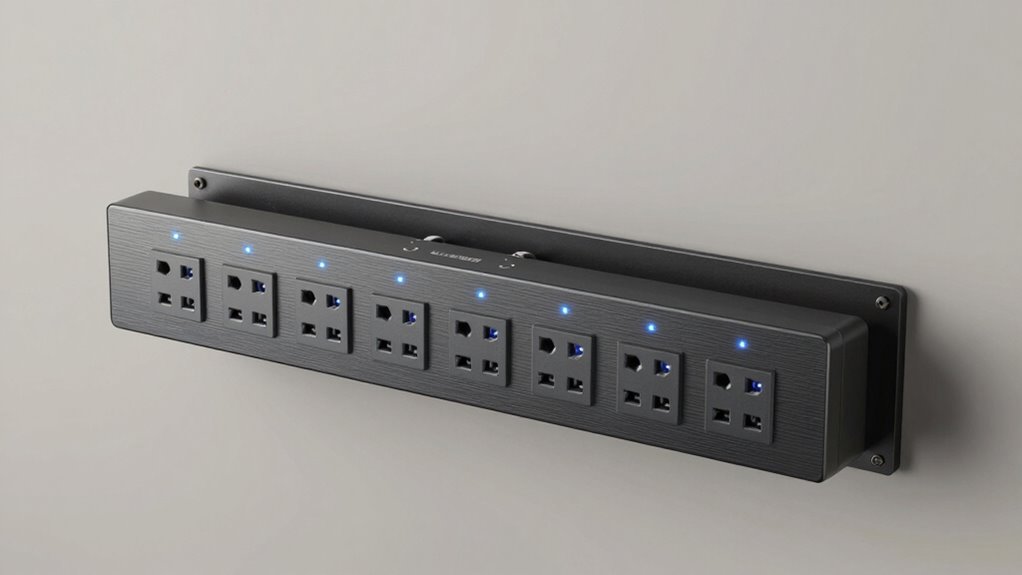

Upgrading your electrical panel with a surge protector offers thorough protection for all your electronics, preventing damage from sudden power surges caused by lightning, faulty wiring, or appliances turning on. It acts as a barrier, absorbing or redirecting excess energy across the entire system, reducing long-term risk and damage. Installing a panel-level surge protector is a smart investment that saves you money and preserves your devices. Keep exploring to discover how this upgrade can keep your home safe and electronics secure.
Key Takeaways
- Upgrading to a panel-level surge protector provides comprehensive, whole-home protection against damaging power surges.
- It shields all electronic devices simultaneously, preventing damage from external power fluctuations.
- Centralized surge protection reduces wear on wiring and circuit components over time.
- Modern panel protectors include indicators and automatic shutdowns for ongoing system alerts.
- This upgrade offers long-term savings by extending appliance lifespan and minimizing costly repairs.
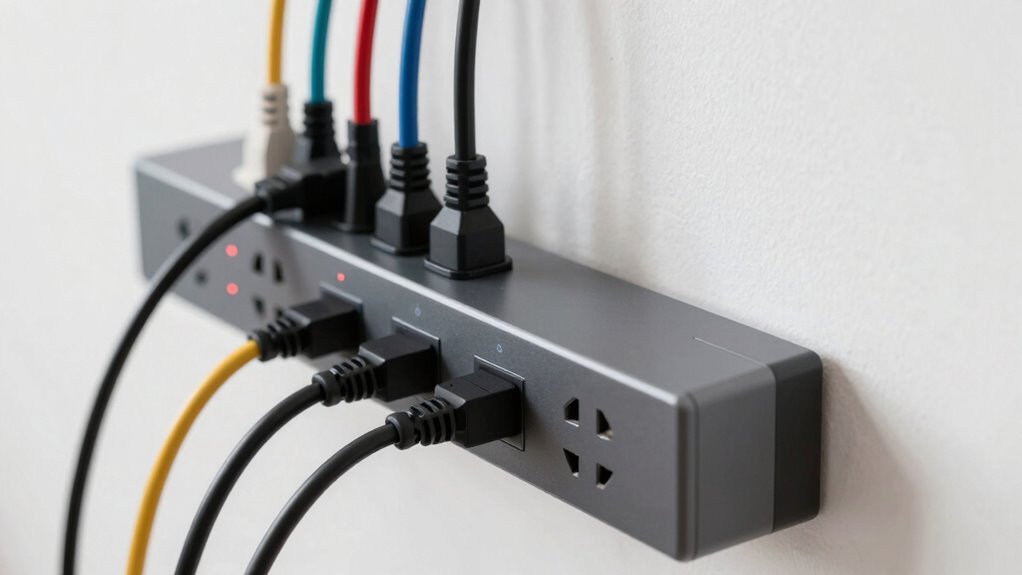
Ever wonder what could happen to your electronic devices during a power surge? A sudden spike in electrical current can cause serious damage, frying your gadgets or rendering them useless. That’s where surge protectors come into play, serving as a essential line of defense to safeguard your valuable electronics. Installing a surge protector isn’t just about convenience; it’s about guaranteeing electrical safety and protecting your investment. When a power surge occurs—whether from lightning strikes, downed power lines, or switching heavy appliances on and off—the excess voltage travels through your wiring, seeking a path to ground. Without proper protection, this surge can overload the delicate circuits inside your devices, causing permanent damage or data loss. A quality surge protector acts as a buffer, absorbing or redirecting that excess energy away from your electronics, so you can avoid costly repairs or replacements.
Power surges can damage electronics; surge protectors act as a vital defense to prevent costly harm.
Upgrading your electrical panel with a surge protection device is one of the most effective ways to defend your entire home. Unlike individual surge protectors that only cover specific devices, a panel upgrade provides all-encompassing electrical safety across all outlets and circuits. This centralized approach ensures that whenever a power surge strikes, your entire electrical system is better equipped to handle it. It’s a proactive step that minimizes risk, especially during thunderstorms or electrical grid fluctuations. Furthermore, installing a surge protection panel is a smart investment that can extend the lifespan of your appliances and electronics, saving you money in the long run. Think of it as an insurance policy for your home’s electrical system, providing peace of mind that your devices are shielded from unpredictable power fluctuations.
Beyond protecting your gadgets, a surge protector helps maintain the integrity of your electrical system. Power surges can cause wear and tear over time, degrading wiring and circuit components. By integrating proper surge protection at the panel level, you reduce the cumulative risk of damage, helping your home’s electrical safety standards stay intact. Modern surge protection panels are designed with advanced features like indicator lights and automatic shutdowns, alerting you to issues before they escalate. This way, you’re not just reacting to problems—you’re actively preventing them. Additionally, understanding the importance of home theatre projectors and their sensitivity to power fluctuations highlights the need for reliable surge protection to keep your home cinema setup running smoothly.
In the end, upgrading your electrical panel with surge protection isn’t just a smart choice; it’s an essential step toward safeguarding your home and electronics. Power surges are unpredictable and can happen at any moment, but with the right protection in place, you can minimize their impact. It’s a straightforward investment that pays off by preserving your devices, maintaining electrical safety, and offering you peace of mind. Don’t wait until it’s too late—upgrade your panel today and give your electronics the protection they deserve.
Frequently Asked Questions
How Do Surge Protectors Protect Against Lightning Strikes?
When lightning strikes, surge protectors protect your electronics through lightning grounding and surge suppression. They redirect excess voltage caused by a lightning strike safely into the ground, preventing it from damaging your devices. Surge suppression components absorb and block sudden voltage spikes, ensuring your electronics stay safe. By having surge protectors, you minimize the risk of costly damage during thunderstorms, keeping your devices protected and functioning properly.
Can Surge Protectors Prevent Damage From Power Surges During Storms?
Yes, surge protectors can prevent damage from power surges during storms. They work by diverting excess electrical energy caused by lightning strikes or electrical fluctuations away from your devices. Different surge protector types, like whole-house systems or point-of-use models, integrate with your electrical wiring to provide protection. Installing a quality surge protector guarantees your electronics are shielded during storms, reducing risk of damage and costly replacements.
Are All Surge Protectors Equally Effective for Electronics?
Like choosing a knight for a quest, not all surge protectors offer the same protection levels. You might think any protector suffices, but quality standards vary widely. Higher-quality surge protectors adhere to strict standards, giving you better protection for your electronics. Cheaper options may fail when you need them most. To truly safeguard your devices, invest in a surge protector that meets top quality standards, ensuring your electronics stay safe during storms or power fluctuations.
How Often Should I Replace My Surge Protector?
You should replace your surge protector every 3 to 5 years or sooner if it shows signs of wear. Pay attention to indicator lights—if they go out or turn red, it’s time for a lifetime replacement. Regularly inspecting and replacing your surge protector guarantees your electronics stay safe from power surges. Don’t wait for damage; proactive replacement keeps your devices protected and functioning properly.
Do Surge Protectors Work With All Types of Electrical Systems?
Think of surge protectors as chameleons—they adapt to different electrical systems. Yes, they work with most electrical setups, but you need to check electrical compatibility first. Different surge protector types suit various applications, so make certain you choose one designed for your system’s voltage and amperage. By selecting the right surge protector type, you safeguard your electronics effectively, no matter your electrical system’s quirks.
Conclusion
Think of a surge protector as your home’s shield, much like a firefighter ready to douse unexpected flames. I once saw a friend’s laptop survive a lightning strike because it was plugged into a surge protector—saving hours of work and hundreds of dollars. Installing a single panel upgrade is like adding a sturdy fence around your electronics, offering peace of mind and long-term protection. Don’t wait for a storm; safeguard your devices today.