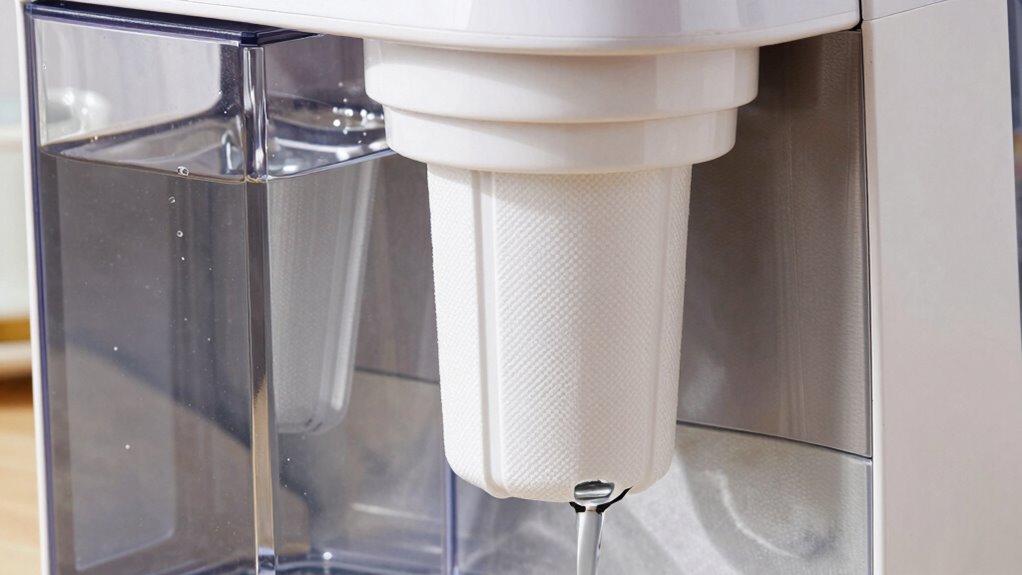

Using water filters in your coffee machine really makes a difference. They remove impurities like chlorine, minerals, and sediments, improving the flavor and aroma of your coffee. Filters also prevent mineral buildup inside the machine, helping it last longer and work more efficiently. This means less maintenance and savings on repairs. Overall, filtered water enhances your coffee experience while protecting your equipment. Keep going to discover even more benefits of incorporating filters into your daily routine.
Key Takeaways
- Water filters improve coffee flavor by removing impurities that can mask subtle bean notes.
- They protect coffee machines from scale buildup, extending lifespan and reducing maintenance costs.
- Using filters increases filter longevity and decreases waste compared to disposable alternatives.
- Filtered water enhances brewing consistency and prevents mineral deposits that impair machine performance.
- Overall, water filters support sustainable practices and optimal equipment function, making them a valuable investment.

Using a coffee machine water filter can considerably improve the taste and quality of your brew. When you take the time to filter your water, you’re removing impurities like chlorine, minerals, and sediments that can negatively impact your coffee’s flavor. Without a filter, these contaminants can mask the natural aroma and subtle notes of your beans, leading to a dull or off-putting taste. A clean, filtered water supply helps you extract the best possible brewing flavor, ensuring each cup is vibrant and well-rounded. Plus, many filters are designed to reduce hard water minerals that can cause scale buildup inside your machine, which not only preserves the integrity of your equipment but also maintains consistent brewing performance over time.
One of the key benefits of using water filters is that they can extend the filter lifespan, saving you money and effort in the long run. When you use unfiltered tap water, mineral deposits and impurities can clog or degrade your filter more quickly, forcing you to replace it more often. By filtering out these substances from the start, you help your water filter last longer, which means fewer replacements and less waste. This also ensures your coffee machine operates efficiently and produces high-quality brews consistently. A longer filter lifespan doesn’t just save you money; it also minimizes the hassle of frequent filter changes, allowing you to enjoy your coffee routine without unnecessary interruptions. Additionally, using a water filter can contribute to sustainable practices by reducing plastic waste from disposable filters and bottles, supporting environmentally-friendly habits.
In addition to improving flavor and extending filter lifespan, using a water filter can protect your coffee machine from scale buildup, which is a common issue in areas with hard water. Scale can impair heating elements and clog internal components, leading to decreased performance or even costly repairs. By filtering out minerals like calcium and magnesium, you help keep your machine in excellent condition. This maintenance benefit means fewer descaling cycles and a longer lifespan for your equipment, ultimately saving you time and money.
Frequently Asked Questions
How Often Should I Replace My Coffee Machine Water Filter?
You should replace your coffee machine water filter every 2 to 3 months, depending on its filter lifespan and usage. Pay attention to replacement indicators like a change in water flow or taste, which signal it’s time for a new filter. Regular replacements ensure your coffee stays fresh and your machine functions properly, preventing buildup of impurities. Staying on top of these cues helps maintain ideal water quality and coffee flavor.
Do Filters Affect the Taste of My Coffee?
Did you know that 85% of people notice a difference in water flavor when using a filter? Yes, filters markedly affect your coffee’s taste by removing impurities that alter flavor. The filter’s effectiveness ensures you get cleaner water, which enhances your coffee’s aroma and richness. So, if you want a consistently delicious cup, using a good water filter is key to better taste and overall quality.
Are Water Filters Necessary for All Types of Coffee Machines?
You don’t need water filters for all coffee machines, but they’re highly beneficial if your water quality is poor. Regular filter maintenance ensures your machine runs smoothly and prolongs its lifespan. If your tap water has high mineral content or impurities, using a filter helps improve taste and prevents buildup. Evaluate your water quality first, then decide if a filter is essential for your specific machine and brewing preferences.
Can Water Filters Prevent Mineral Buildup in My Machine?
Water filters can markedly reduce mineral accumulation in your coffee machine, thanks to their filter efficacy in trapping minerals like calcium and magnesium. This prevents buildup that can clog components and impair performance. While filters aren’t foolproof, they do help maintain cleaner water flow and prolong your machine’s lifespan. Using a filter regularly is a smart step to keep mineral buildup at bay, ensuring better-tasting coffee and smoother operation.
Do Filtered Water Machines Produce Healthier Coffee?
Filtered water machines do produce healthier coffee because their filter effectiveness reduces impurities and contaminants. By removing chlorine, sediments, and certain minerals, your coffee tastes better and retains more of its natural flavor. Additionally, using filtered water can offer health benefits by decreasing exposure to substances that might affect your well-being. Overall, investing in a good filter enhances both your coffee’s quality and your health, making each cup more enjoyable and wholesome.
Conclusion
In the end, whether you decide to use a water filter in your coffee machine depends on your taste and water quality. They can make a noticeable difference in flavor and help extend your machine’s lifespan. But don’t just take it at face value—try it out yourself and see if it’s worth the effort. Sometimes, you’ve got to see the proof in the pudding before making up your mind. Give it a shot and enjoy a better brew!