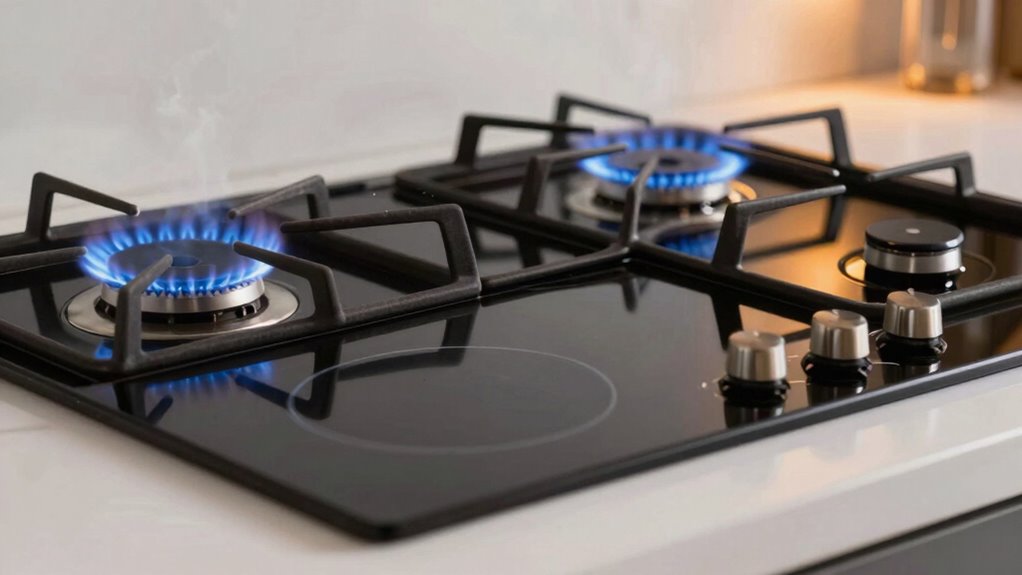
If you’re concerned about indoor air quality, choosing induction over a gas range makes a big difference. Gas burners release combustion pollutants like nitrogen dioxide and carbon monoxide that can build up, especially in poorly ventilated kitchens. Induction cooktops don’t produce these gases, offering cleaner, safer air. They also heat faster and use energy more efficiently. Want to understand how these differences impact your health and safety even further? Keep exploring to find out more.
Key Takeaways
- Gas ranges emit combustion byproducts like nitrogen dioxide and carbon monoxide, potentially degrading indoor air quality.
- Induction cooktops do not produce combustion gases, leading to cleaner indoor air and reduced respiratory health risks.
- Poor ventilation of gas ranges can cause pollutant buildup, whereas induction minimizes indoor air pollution regardless of ventilation.
- Long-term use of gas stoves may contribute to respiratory issues; induction offers a safer alternative for indoor air health.
- Technological safety features in induction cooktops further enhance indoor air quality by reducing associated hazards.
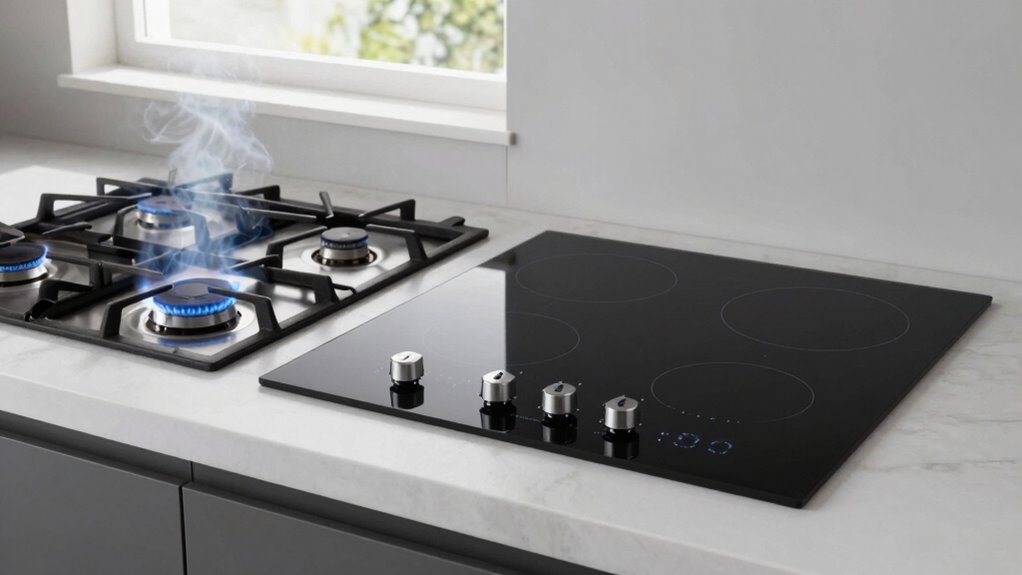
When choosing between a gas range and an induction cooktop, understanding their key differences can help you make an informed decision. One of the most significant factors to contemplate is how each option impacts indoor air quality. Gas ranges burn fuel directly, releasing combustion byproducts like nitrogen dioxide, carbon monoxide, and particulate matter into your kitchen. These pollutants can accumulate, especially in poorly ventilated spaces, leading to health issues over time, such as respiratory problems or aggravating allergies. Induction cooktops, on the other hand, don’t produce combustion gases because they use electromagnetic fields to heat cookware directly. This means they don’t contribute to indoor air pollution, offering a cleaner, healthier environment for you and your family. Additionally, because they operate without combustion, induction cooktops can be a safer choice in homes with young children or vulnerable individuals.
Energy efficiency is another crucial aspect when comparing these two options. Gas ranges tend to be less efficient because a significant portion of the heat escapes into the surrounding air, wasting energy. In contrast, induction cooktops are highly efficient—most of the electrical energy is transferred directly to the cookware, resulting in faster heating and less energy loss. This efficiency not only saves you money on utility bills but also reduces the environmental impact. Additionally, induction cooktops heat up quickly and respond instantly to temperature adjustments, giving you precise control over your cooking process. This responsiveness helps prevent energy waste caused by overcooking or prolonged heating.
Safety features also set induction cooktops apart. Gas ranges pose potential hazards, such as gas leaks, open flames, and the risk of burns from hot surfaces or accidental contact with the flame. They require proper ventilation to prevent dangerous build-up of combustion gases, which can be an ongoing concern. Induction cooktops eliminate many of these risks because they don’t involve open flames or exposed heating elements. The surface of an induction cooktop remains relatively cool, only heating in contact with compatible cookware, which reduces the chance of burns. Many models also come equipped with safety features like auto shut-off, child lock functions, and indicators that show when the surface is hot, giving you added peace of mind. Moreover, the use of European cloud servers in smart kitchen appliances can enhance safety features through improved connectivity and real-time monitoring.
induction cooktop with safety features
As an affiliate, we earn on qualifying purchases.
As an affiliate, we earn on qualifying purchases.
Frequently Asked Questions
How Does Indoor Air Quality Affect Health Over Time?
Indoor air quality directly impacts your health over time by affecting your respiratory health. Indoor pollutants like smoke, fumes, and chemicals from cooking or heating can accumulate and cause long-term issues, such as asthma or chronic bronchitis. You should guarantee good ventilation and choose appliances that emit fewer indoor pollutants, like induction cooktops, to protect your respiratory system and promote a healthier living environment.
Are There Specific Cooking Tasks Better Suited for Induction?
Cooking delicate sauces or precise simmering is ideal on induction, thanks to its excellent temperature control. You’ll want cookware compatibility for best performance, ensuring even heat distribution. Tasks like boiling water or stir-frying work beautifully, as induction heats quickly and responds instantly to adjustments. For foods requiring gentle or exact heat, induction offers a seamless experience, making your cooking more efficient and enjoyable while maintaining better indoor air quality.
What Maintenance Is Required for Gas Ranges Versus Induction?
You need to regularly inspect and clean your gas range’s fuel line to prevent blockages and guarantee safety. A thorough cleaning routine involves wiping down burners and surfaces to remove grease and debris. For induction cooktops, maintenance is minimal—just keep the glass surface clean with a damp cloth. Unlike gas ranges, induction doesn’t require checking fuel lines, making it easier to maintain with less frequent upkeep.
Can Induction Cooktops Be Used During Power Outages?
During a power outage, induction cooktops can’t be used for emergency cooking because they rely on electricity. If you experience a power outage, you’ll need alternative methods like a gas stove or camping stove. It’s smart to keep emergency cooking supplies handy, so you’re prepared for any situation. Induction cooktops are efficient and safe but require power, so plan accordingly to guarantee you can cook during unexpected outages.
How Do Installation Costs Compare Between Gas and Induction Systems?
Imagine a kitchen where sparks fly or sleek induction surfaces glow—your installation costs influence this scene. Gas ranges often require more extensive upgrades, like venting and gas lines, making installation pricier. Induction systems usually involve simpler appliance upgrades, leading to lower installation costs. You’ll save money upfront with induction, but consider the long-term benefits and potential upgrade expenses to choose what fits your budget and lifestyle best.
gas range with low emissions
As an affiliate, we earn on qualifying purchases.
As an affiliate, we earn on qualifying purchases.
Conclusion
Choosing between a gas range and induction is like picking between a roaring fire and a sleek, silent stream. While gas may conjure cozy warmth, it can also stir up unseen pollutants, clouding your indoor air like a fog settling over a clear lake. Induction, on the other hand, offers a whisper-quiet cooking experience, keeping your air pristine like a pristine mountain spring. Make your choice wisely—your home’s fresh air depends on it.
induction stove for health
As an affiliate, we earn on qualifying purchases.
As an affiliate, we earn on qualifying purchases.
energy-efficient induction cooktop
As an affiliate, we earn on qualifying purchases.
As an affiliate, we earn on qualifying purchases.