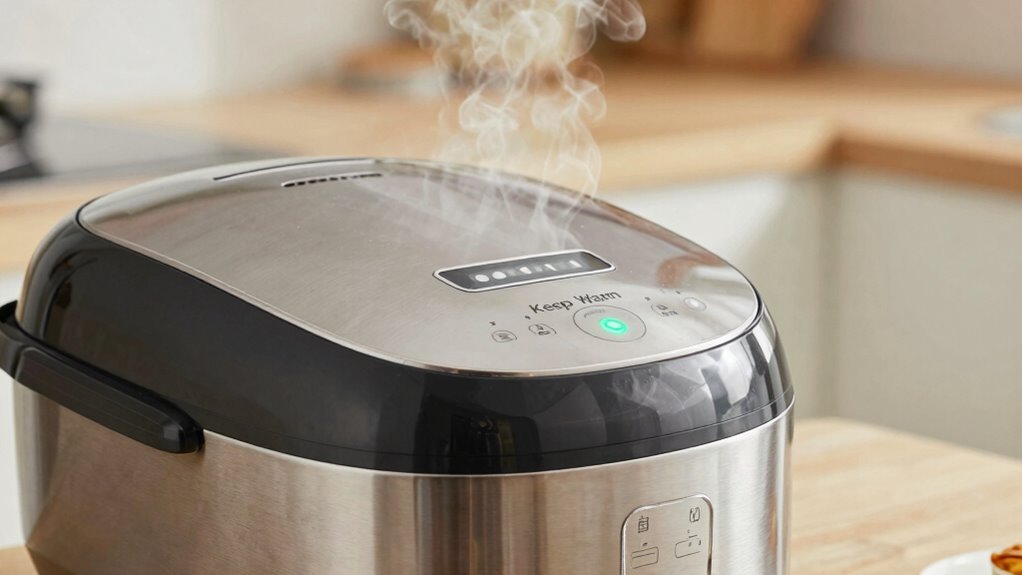

You should avoid keeping rice in the ‘Keep Warm’ setting for more than 4 to 6 hours, as bacteria like *Bacillus cereus* can grow quickly and produce toxins that reheating won’t destroy. Extended warm storage increases the risk of food poisoning and can cause moisture loss and uneven temperature. To stay safe, serve rice promptly or transfer leftovers to the fridge within a couple of hours. Continue exploring for practical tips to keep your rice safe and fresh.
Key Takeaways
- Rice should be kept on “Keep Warm” for no more than 2 hours to prevent bacterial growth.
- Extended warm holding increases the risk of food poisoning from bacteria like Bacillus cereus.
- Many cookers have automatic shut-off or timers to limit safe “Keep Warm” duration.
- Discard rice if it develops an off smell, sliminess, or if kept beyond recommended safety time.
- Proper storage and timely serving are safer and more eco-friendly than prolonged warm holding.
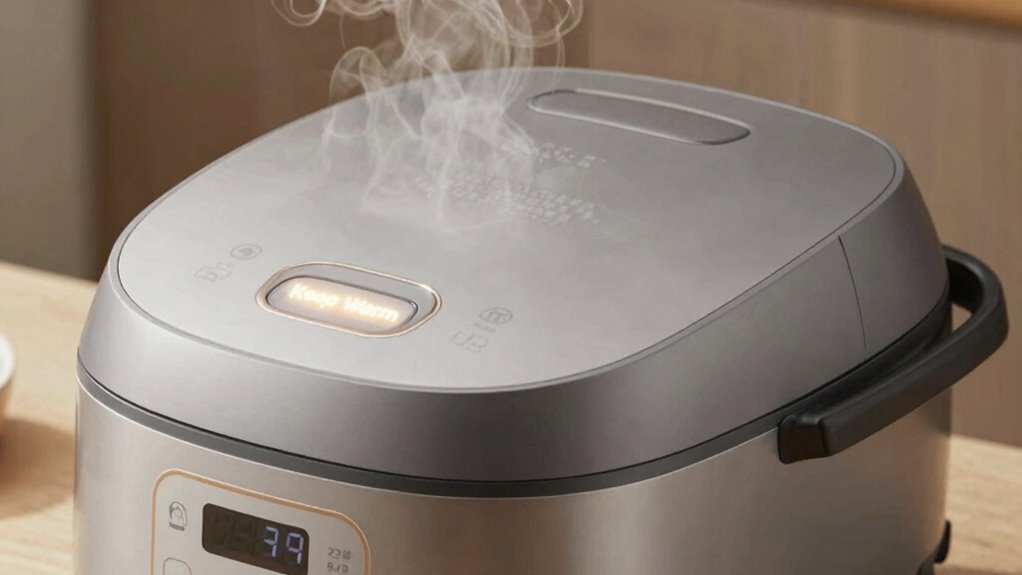
Using the “Keep Warm” setting on your rice cooker can be convenient, but it’s important to understand the safety risks involved. One major concern is the potential for food poisoning if you leave cooked rice sitting too long. Bacteria like Bacillus cereus can thrive at warm temperatures, especially when rice is kept on the “Keep Warm” setting for extended periods. This bacteria produces toxins that aren’t destroyed by reheating, so the longer rice stays warm, the higher the risk of foodborne illness. To minimize this danger, it’s best to consume the rice within two hours of cooking or transfer leftovers to the refrigerator promptly.
Another issue to contemplate is energy consumption. Many people assume that leaving the rice cooker on “Keep Warm” is harmless and energy-efficient, but it actually continues to draw power unnecessarily. Over time, this can add to your electricity bill and increase your environmental footprint. If you’re not planning to eat the rice soon, it’s more economical and eco-friendly to turn off the cooker and store leftovers properly. Keeping rice warm indefinitely isn’t just a safety concern—it’s also a waste of energy, which can be avoided by managing your cooking habits better.
Leaving rice on warm wastes energy and increases costs. Turn off your cooker when not serving immediately.
People often leave rice on “Keep Warm” because it’s easy and prevents the rice from drying out. However, doing so for too long can lead to moisture loss and uneven temperature distribution, creating an environment where bacteria can develop. If you find yourself regularly using the “Keep Warm” feature, establish a routine to check and serve the rice within a safe timeframe. Use a timer if your cooker has one, or set a reminder to prevent leaving food on warm for hours. This way, you protect yourself from food poisoning and avoid unnecessary energy use. Additionally, some rice cookers now have automatic shut-off features, which can help mitigate these risks and conserve energy.
Additionally, consider the type of rice you’re cooking. White rice typically remains safe for a few hours on “Keep Warm,” but brown rice and other whole grains tend to spoil faster due to their higher oil content. Always follow your rice cooker’s manufacturer instructions regarding the maximum safe duration for keeping rice warm. If you notice an off smell or slimy texture, discard the rice immediately—not only to prevent food poisoning but also to avoid waste and unnecessary energy consumption. Being mindful of how long you keep rice warm helps you stay safe, save energy, and enjoy your meals without worry.
Frequently Asked Questions
Can I Leave Rice in the Cooker Overnight Safely?
You shouldn’t leave rice in the cooker overnight, as it risks food safety issues like bacterial growth. For overnight storage, it’s better to transfer the rice to an airtight container and refrigerate promptly. This helps prevent spoilage and keeps your rice safe to eat later. Leaving rice in the ‘keep warm’ mode too long can also cause it to dry out or develop bacteria, so always refrigerate if you won’t eat it right away.
What Are the Signs of a Malfunctioning Keep Warm Function?
A malfunctioning keep warm function is like a ticking time bomb—look out for signs like strange odors, inconsistent temperatures, or smoke. You might notice the rice drying out or burning, which indicates safety concerns. If your cooker’s buttons don’t respond or it turns on and off unexpectedly, these are clear malfunction symptoms. Ignoring these signs could lead to safety hazards, so always stay vigilant and unplug if you suspect a problem.
Does the Type of Rice Affect How Long I Can Keep It Warm?
Yes, the type of rice affects how long you can keep it warm. Different rice varieties have varying moisture content, which impacts how quickly they dry out or spoil. For example, jasmine rice with higher moisture stays fresh longer, while brown rice tends to dry faster. To guarantee safety and quality, check your rice’s moisture content and avoid keeping it warm for extended periods, typically no more than 4-6 hours.
Are There Any Health Risks From Extended Warm-Keeping?
Staying warm in your rice cooker for too long can pose food safety risks, like bacteria growth. If you keep rice warm for over four hours, bacteria may start to thrive, increasing the chance of foodborne illness. To stay safe, avoid extended warm-keeping periods, and always refrigerate leftovers promptly. Properly managing warm food helps prevent bacteria growth and keeps your rice safe to eat later.
How Often Should I Clean My Rice Cooker’s Keep Warm Setting?
You should clean your rice cooker’s keep warm setting at least once a week to prevent buildup of residue and bacteria. For maintenance tips, unplug the cooker before cleaning, use a damp cloth to wipe the interior, and avoid harsh abrasives. Regular cleaning guarantees peak performance and food safety. If you notice any odors or stains, increase cleaning frequency. Proper maintenance keeps your rice cooker in top shape and safe to use.
Conclusion
Now that you know the dangers of droning on with your rice cooker’s keep warm setting, don’t delay or dismiss the danger. Devote diligent daily diligence to avoid accidents and adverse effects. Limit lingering long past the safe limit, and look out for signs of spoilage or overheating. Your safety, your sanity, and your space depend on staying vigilant. Keep your kitchen calm and controlled—because a careful cook keeps crises at bay.