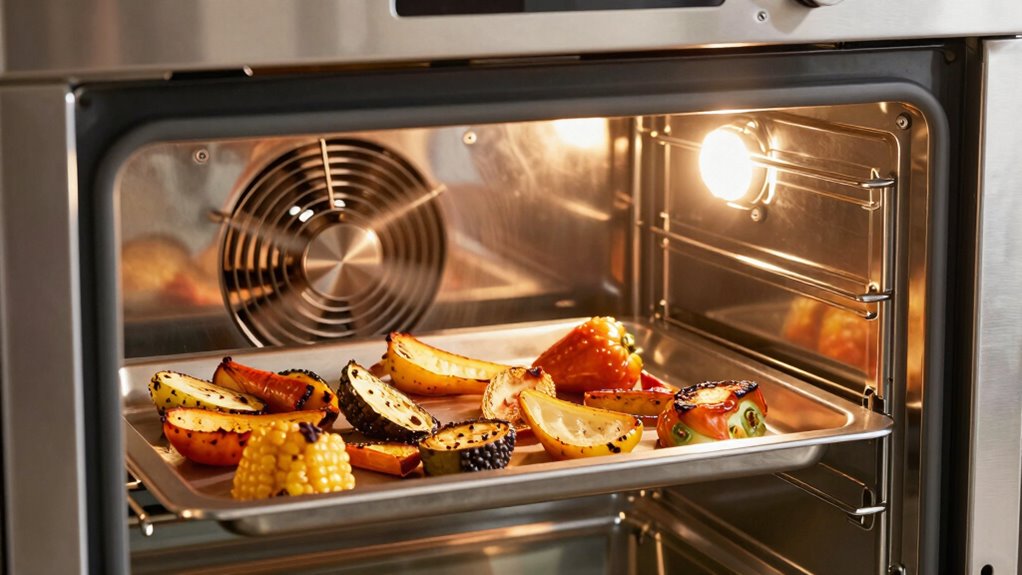
Convection ovens cook food faster because their fans actively circulate hot air around your dishes, improving heat transfer and guaranteeing more even cooking. This constant airflow reduces hot and cold spots, speeding up surface heating and overall cooking time—usually by about 25%. To adjust your recipes, lower the temperature slightly and shorten cooking times. Want to learn how to perfect your baking and ensure perfect results? Keep exploring for more tips!

Get home appliances delivered free — and shop member deals
- Fast, free delivery on millions of items
- Access to Prime Big Deal Days deals on October 6–7
- Prime Video, Amazon Music and more included
Key Takeaways
- Circulating hot air in convection ovens improves heat transfer, leading to faster and more even cooking.
- Active airflow reduces hot and cold spots, ensuring uniform temperature around food surfaces.
- The continuous movement of air accelerates surface heating and overall cooking times.
- Adjust recipes by lowering the temperature by about 25°F and reducing cooking time by approximately 25%.
- Proper placement and avoiding overcrowding optimize airflow for quick, consistent results.
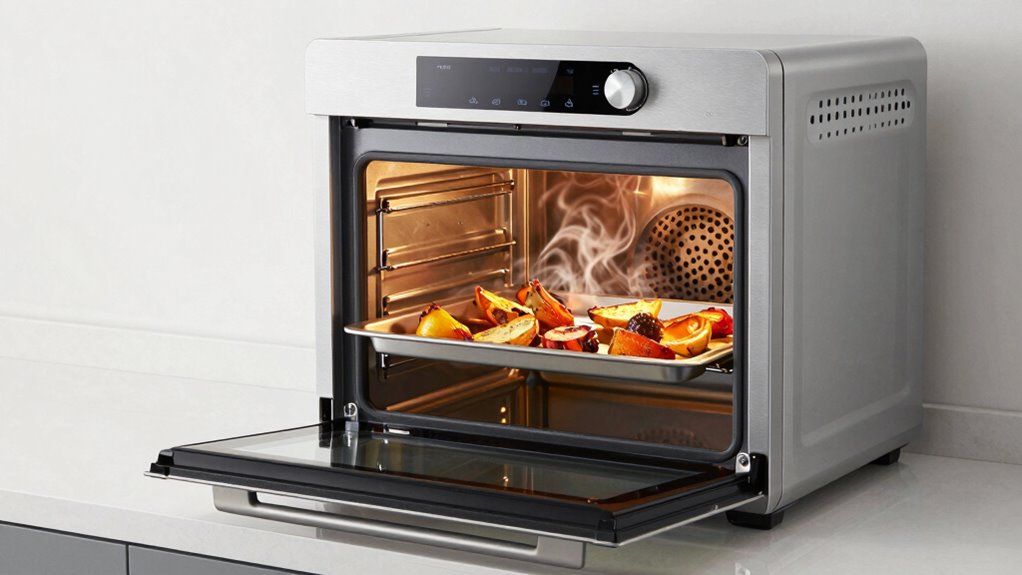
Convection ovens cook food faster because they actively circulate hot air around the entire surface of your dishes. This continuous movement improves air circulation, which directly enhances heat transfer from the oven to your food. Unlike conventional ovens that rely mainly on radiant heat and still air, convection ovens keep hot air moving, ensuring even and efficient cooking. When the air circulates effectively, it comes into contact with every part of your dish, reducing hot and cold spots. This consistent contact accelerates heat transfer, allowing your food to reach the desired temperature more quickly. Additionally, the technology behind convection ovens optimizes airflow, further speeding up the cooking process.
Convection ovens cook faster by actively circulating hot air around your dishes for even, efficient heat transfer.
The key to why convection ovens work so efficiently lies in the combined effect of air circulation and heat transfer. As the fan blows hot air over and around your food, it replaces the cooler air that tends to settle around it in traditional ovens. This constant renewal of air means your food’s surface heats up faster because the temperature of the surrounding air remains uniformly high. The improved heat transfer results in faster cooking times, which can be especially helpful when you’re short on time or cooking large quantities.
Because convection ovens promote rapid heat transfer, you should consider adjusting your recipes accordingly. Typically, you can reduce the cooking temperature by about 25°F (around 14°C) when using convection. This adjustment prevents your food from overcooking or burning on the outside while still ensuring it cooks through evenly. Additionally, cooking times are usually shorter—by approximately 25%—so keep a close eye on your dishes to avoid overdone results. Using a food thermometer can help you determine the perfect doneness, especially when baking or roasting.
Another tip is to ensure proper air circulation within the oven. Avoid overcrowding the oven cavity, as blocking airflow can diminish the convection effect. Position your dishes on the middle or upper racks to maximize exposure to the circulating air. Also, using shallow, uncovered pans helps facilitate better heat transfer and airflow around your food, ensuring quicker, more even results.
As an affiliate, we earn on qualifying purchases.
Frequently Asked Questions
How Can I Convert Traditional Recipes for Convection Baking?
To convert traditional recipes for convection baking, start with temperature conversions—reduce the oven temperature by about 25°F. Next, make recipe adjustments by checking for doneness earlier, as food cooks faster in convection. Keep an eye on your dish and use the lower temperature to prevent overcooking. These tweaks will help you achieve perfect results when adapting recipes for convection ovens.
Does Convection Cooking Affect Food Flavor or Texture?
Convection cooking gently influences your food’s flavor retention and texture alteration, often enhancing crispness and browning. It tends to intensify flavors slightly while maintaining overall freshness. However, delicate textures might become a bit firmer or drier if you’re not careful. You can achieve the best results by adjusting cook times and temperatures, ensuring your dishes stay flavorful and tender, just with a lovely, even finish.
Are Certain Foods Better Suited for Convection Ovens?
Certain foods are better suited for convection ovens, especially those involving baking techniques like roasting or crispy foods. You’ll find that foods with a good food pairing, such as vegetables, poultry, or pastries, benefit from the even heat distribution. Convection enhances browning and crispiness, making it ideal for achieving perfect textures. So, when planning your recipes, choose items that thrive with dry heat to maximize convection oven benefits.
How Do I Prevent Overcooking in Convection Baking?
Prevent overcooking by perfecting your pace with precise temperature adjustment and vigilant monitoring of cooking times. Start by lowering the oven temperature by about 25°F to prevent overdone edges, then keep a close eye on the clock. Regularly check your food’s progress to catch that perfect point before overcooking occurs. This proactive approach guarantees your dishes stay deliciously tender, tasty, and just right every time.
What Are the Energy Efficiency Benefits of Convection Cooking?
Convection cooking offers significant energy savings because it cooks food faster and at lower temperatures, reducing electricity or gas use. These eco-friendly benefits mean you spend less energy while achieving great results. By using a convection oven, you contribute to sustainability efforts and lower your utility bills. It’s an efficient choice that helps conserve resources, making your cooking more environmentally friendly without sacrificing quality or convenience.
Conclusion
Now that you know convection’s secret to speeding up cooking, imagine your oven as a gentle whirlwind, swirling hot air around your food like a dancer’s graceful spin. This lively movement crisps up your dishes quicker, turning raw into perfect faster than you ever expected. So next time you’re craving a golden crust or tender interior, embrace the convection magic—your culinary creations will thank you with every delicious, perfectly cooked bite.
Fall yard work Picks
leaf blowers
As an affiliate, we earn on qualifying purchases.