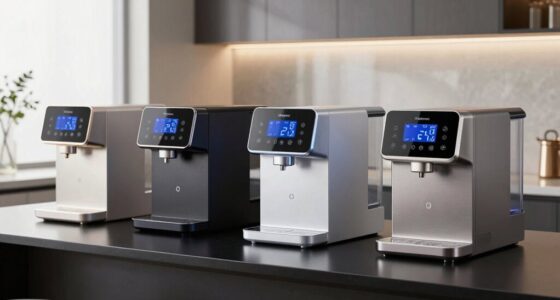
The best Viomi smart home appliances in this lineup serve two very different needs: water filtration and automated floor care. My best overall pick is the Viomi V8 Pro 800 GPD Reverse Osmosis System, which pairs high rated capacity with a sediment prefilter. The VIOMI Pure B6W 600 GPD is a more measured under-sink option, while the Viomi V2 Max Robot Vacuum and Mop is the standout for reducing routine floor chores. The main tradeoffs are water output, filtration setup, installation needs, and whether you want a water system or a cleaning appliance. Read on for the full breakdown and help matching a pick to your household.

Get home appliances delivered free with Prime
- Fast, free delivery on millions of items
- Prime Video, Amazon Music and more included
- Member-only deals all year
Complete the kit


Key Takeaways
- The lineup is mostly about drinking water: five of the six picks are tankless reverse osmosis systems, while the V2 Max is the only robot vacuum and mop.
- The V8 Pro leads on stated capacity and included pretreatment: its 800 GPD rating and 40-micron spin-down sediment filter make it the most complete high-output pick in this comparison.
- Capacity is not the only reason to choose a system: the Pure B6W and V6 Pro are 600 GPD options for buyers who may not need the higher stated output of the 800 GPD models.
- Several models share the 800 GPD label: compare included filters, product details, and installation requirements rather than treating capacity alone as a meaningful tie-breaker.
- The V2 Max fills a different role: choose it for automated vacuuming and mopping, not as an alternative to the water systems.
| Viomi V8 Pro 800 GPD Reverse Osmosis System with 40-Micron Spin-Down Sediment Filter |  | Best Overall | Filtration stages: 9 | Capacity: Up to 800 GPD | Glass fill time: 8 oz in 7 seconds | VIEW LATEST PRICE | See Our Full Breakdown |
| VIOMI Pure B6W 600 GPD Under-Sink Reverse Osmosis System with 40-Micron Spin-Down Sediment Filter |  | Best for Water-Saving Filtration | Model: Pure B6W | Filtration stages: 7 | Capacity: 600 GPD membrane | VIEW LATEST PRICE | See Our Full Breakdown |
| VIOMI V8 Tankless Reverse Osmosis Water Filtration System, 800 GPD |  | Best for Low-Waste Filtration | Capacity: Up to 800 GPD | Filtration: 9 stages; 0.0001 μm reverse osmosis membrane | Pure-to-drain ratio: 3:1 | VIEW LATEST PRICE | See Our Full Breakdown |
| VIOMI V2 Max Robot Vacuum and Mop |  | Best for Multi-Floor Cleaning | Cleaning functions: Vacuuming and mopping | Navigation: LDS laser mapping | Map storage: Up to 5 floor maps | VIEW LATEST PRICE | See Our Full Breakdown |
| VIOMI V6 Pro 600 GPD Tankless Under-Sink Reverse Osmosis Water Filtration System |  | Best for Smart Water Monitoring | Filtration stages: 9 | Capacity: 600 GPD | Purification method: Reverse osmosis and carbon block | VIEW LATEST PRICE | See Our Full Breakdown |
| VIOMI 800 GPD Tankless Reverse Osmosis Water Filtration System |  | Best for Certified Contaminant Reduction | Purification method: Reverse osmosis | Filtration stages: 9 | Membrane pore size: 0.0001 μm | VIEW LATEST PRICE | See Our Full Breakdown |
| Viomi smart home appliance | Certifications | Filtration stages | Capacity | Pure-to-drain ratio |
|---|---|---|---|---|
| Viomi V8 Pro 800 GPD Reverse O | NSF/ANSI 58 and NSF/ANSI 372 | 9 | Up to 800 GPD | — |
| VIOMI Pure B6W 600 GPD Under-S | NSF/ANSI 58 and NSF/ANSI 372 | 7 | 600 GPD membrane | 2:1 |
| VIOMI V8 Tankless Reverse Osmo | NSF/ANSI 42, 53, and 372 | — | Up to 800 GPD | 3:1 |
| VIOMI V2 Max Robot Vacuum and | — | — | — | — |
| VIOMI V6 Pro 600 GPD Tankless | NSF/ANSI 42, 53, 58, and 372 | 9 | 600 GPD | 3:1 |
| VIOMI 800 GPD Tankless Reverse | NSF/ANSI 53, 42, and 372 | 9 | — | 3:1 |
More Details on Our Top Picks
Viomi V8 Pro 800 GPD Reverse Osmosis System with 40-Micron Spin-Down Sediment Filter
The V8 Pro is my strongest all-around pick for households that want fast, app-connected filtered water without a storage tank. Its stated 800 GPD capacity and 7-second fill time for an 8-ounce glass make it a better fit for frequent use than the 600 GPD VIOMI V6 Pro. An LCD faucet and app report water quality, filter life, and usage, while the included spin-down sediment filter adds a distinct prefiltration step. The compact, tankless body also leaves more cabinet room than a traditional tank system.
The tradeoff is installation: it needs drilled holes, an outlet, and room behind the unit for tubing. A refrigerator or ice-maker line is supported, but its tubing is not included. Choose the V6 Pro if its 3:1 pure-to-drain ratio and TDS display matter more than the V8 Pro’s extra capacity; skip both if your sink cabinet cannot accommodate plumbing work.
Pros:- 800 GPD capacity and a stated 7-second fill for an 8-ounce glass
- LCD faucet and app display water quality, filter life, and system usage
- Tankless dimensions preserve under-sink storage space
- Supports a separate refrigerator or ice-maker water line
Cons:- Installation requires drilled holes, an outlet, and adequate rear clearance
- Refrigerator connection tubing is not included
- A switched garbage-disposer outlet may not provide the required power
Best for: Households that use filtered water throughout the day and want fast dispensing, app monitoring, and a refrigerator-line option.
Not ideal for: Renters or anyone with a crowded under-sink cabinet, no suitable electrical outlet, or no permission to drill installation holes.
- Filtration stages:9
- Capacity:Up to 800 GPD
- Glass fill time:8 oz in 7 seconds
- System dimensions:16.3 × 5 × 12.8 in
- Rear clearance:2.0–3.9 in for tubing
- Certifications:NSF/ANSI 58 and NSF/ANSI 372
- Filter life:RO filter up to 2 years; PCB filter up to 1 year
- Refrigerator connection:Standard tubing connection; tubing not included
Our verdict“Choose the V8 Pro for high daily water demand and connected monitoring, provided your cabinet and outlet can handle the installation.”
VIOMI Pure B6W 600 GPD Under-Sink Reverse Osmosis System with 40-Micron Spin-Down Sediment Filter
The Pure B6W is the lineup’s practical choice for buyers who want a tankless RO system with a stated 2:1 pure-to-drain ratio. It offers seven filtration stages and app tracking for filter life, water quality, and consumption, rather than the nine stages and 800 GPD capacity found in the V8 Pro. That lower stated capacity makes it a less compelling match for homes with heavy, simultaneous water demand, but its focus on water use may appeal to households weighing wastewater alongside filtration.
It can feed a compatible refrigerator or ice maker, though the tubing must be supplied separately. As with the V8 Pro and V6 Pro, installation requires plumbing work and a standard outlet; a disposer sharing a switched outlet can complicate the setup. Pick this over the VIOMI V6 Pro when the B6W’s 2:1 ratio matters more than the V6 Pro’s nine stages and 3:1 ratio.
Pros:- Tankless seven-stage reverse osmosis filtration
- Stated 2:1 pure-to-drain ratio
- App tracks filter life, water quality, and consumption
- Can connect to a compatible refrigerator or ice maker
Cons:- Lower stated capacity than the 800 GPD V8 Pro and V8 Pro 800 GPD system
- Refrigerator or ice-maker tubing is not included
- Installation needs drilled holes and an outlet that may need to be dedicated
Best for: Households seeking a tankless RO system with app monitoring and a stated 2:1 pure-to-drain ratio.
Not ideal for: Large households with high peak water demand, or buyers who want included refrigerator tubing or a higher stated capacity.
- Model:Pure B6W
- Filtration stages:7
- Capacity:600 GPD membrane
- Purification method:Reverse osmosis
- Pure-to-drain ratio:2:1
- Installation type:Under sink
- Certifications:NSF/ANSI 58 and NSF/ANSI 372
- Power requirement:Standard outlet
Our verdict“Choose the Pure B6W if its 2:1 pure-to-drain ratio and app monitoring suit your household better than higher capacity or more filtration stages.”
VIOMI V8 Tankless Reverse Osmosis Water Filtration System, 800 GPD
The VIOMI V8 pairs a stated 800 GPD capacity with a 3:1 pure-to-drain ratio, making it a stronger match for buyers who want high output while limiting water sent to drain. Its nine-stage system uses a 0.0001 μm RO membrane, and tool-free filter replacement offers a simpler maintenance routine than setups that require tools. Compared with the V8 Pro, this model has clearly specified water-saving performance and a long stated filter life, but it gives up refrigerator and ice-maker compatibility.
That restriction matters: the V8 works only with its included faucet, so it is a poor fit for anyone hoping to supply a second water line. Installation also calls for two holes, a dedicated outlet, and enough cabinet clearance. Its filtration claims include TDS and several named contaminants, but the buyer should weigh those benefits against a more limited connection setup than the V6 Pro or V8 Pro.
Pros:- Up to 800 GPD capacity with a stated 3:1 pure-to-drain ratio
- Nine-stage filtration with a 0.0001 μm RO membrane
- Tool-free filter replacement
- LED faucet signals when a filter needs replacement
Cons:- Works only with the included faucet and cannot connect to a refrigerator or ice maker
- Installation requires two holes, a dedicated outlet, and cabinet clearance
- Actual filter life varies with water use
Best for: Households that want 800 GPD capacity, a stated 3:1 pure-to-drain ratio, and tool-free filter changes at the sink.
Not ideal for: Buyers who need filtered water routed to a refrigerator or ice maker, or who cannot provide two installation holes and a dedicated outlet.
- Capacity:Up to 800 GPD
- Filtration:9 stages; 0.0001 μm reverse osmosis membrane
- Pure-to-drain ratio:3:1
- Water-saving percentage:75%
- Filter life:Up to 4 years
- Dimensions:16.3 × 5 × 12.8 in
- Weight:27.5 lb
- Certifications:NSF/ANSI 42, 53, and 372
- Installation:Under sink; two holes and a dedicated electrical outlet required
Our verdict“Pick the VIOMI V8 if high capacity and a stated 3:1 ratio outweigh the convenience of a refrigerator connection.”
VIOMI V2 Max Robot Vacuum and Mop
The VIOMI V2 Max is the only floor-care pick in this Viomi appliance lineup, and its clearest advantage is LDS laser mapping that can store up to five floor plans. That makes it a more natural fit for multi-level homes than any of the under-sink RO systems here, which serve a completely different daily need. For floors, it combines vacuuming with Y-pattern mopping, a motion intended to cover hard surfaces more like a manual mop, plus four suction modes reaching up to 2400 Pa.
App scheduling and Alexa control add hands-free routine setting, but the 2.4 GHz Wi-Fi requirement may rule it out for some network setups. Its 0.55-liter dust capacity also means frequent emptying in homes with pets or heavy debris. Unlike the water systems in this roundup, it does not address drinking-water filtration; choose it for mapped floor cleaning, not as a substitute for one of the RO picks.
Pros:- Stores up to five floor maps using LDS laser navigation
- Y-pattern mopping for hard-floor cleaning
- Four suction modes with up to 2400 Pa suction
- App and Alexa controls support scheduling and voice commands
Cons:- Wi-Fi compatibility is limited to 2.4 GHz
- The 0.55-liter dust bin may need frequent emptying in busy or pet-owning homes
Best for: Owners of multi-floor homes who want mapped vacuuming and mopping with app scheduling and Alexa control.
Not ideal for: Buyers whose Wi-Fi network does not support 2.4 GHz, or homes with heavy debris that would quickly fill a 0.55-liter dust bin.
- Cleaning functions:Vacuuming and mopping
- Navigation:LDS laser mapping
- Map storage:Up to 5 floor maps
- Suction power:Up to 2400 Pa
- Suction modes:4
- Dust capacity:0.55 liters
- Controls:App and voice control; Amazon Alexa compatible
- Wi-Fi compatibility:2.4 GHz
Our verdict“Choose the V2 Max if your priority is app-controlled, mapped floor care across multiple levels rather than water filtration.”
VIOMI V6 Pro 600 GPD Tankless Under-Sink Reverse Osmosis Water Filtration System
The VIOMI V6 Pro suits buyers who want water information right at the faucet, not just in an app. Its smart LED faucet displays TDS and filter life, while app monitoring adds another way to track system status. With nine-stage filtration, a 600 GPD membrane, and a stated 3:1 pure-to-drain ratio, it offers a capable balance, though its output is below the 800 GPD V8 Pro and VIOMI V8.
Unlike the VIOMI V8, the V6 Pro can supply a separate refrigerator or ice-maker line, a useful advantage for kitchens that want filtered water in more than one place. The tubing is not included, and installation still calls for drilled holes and a suitable outlet. Its stated filter lives are more specific than the V8’s “up to four years,” but buyers should still account for replacement needs rather than treating those intervals as guarantees.
Pros:- Smart LED faucet displays TDS and filter life
- App monitoring complements the faucet readout
- Nine-stage filtration with a stated 3:1 pure-to-drain ratio
- Can connect to a separate refrigerator or ice-maker line
Cons:- 600 GPD capacity is below the V8 Pro and VIOMI V8
- Refrigerator or ice-maker tubing is not included
- Installation requires two drilled holes and a suitable electrical outlet
Best for: Kitchen users who want TDS and filter-life readings at the faucet, app monitoring, and the option to feed a refrigerator line.
Not ideal for: Households needing the higher stated output of an 800 GPD model, or buyers unwilling to arrange tubing and electrical installation.
- Filtration stages:9
- Capacity:600 GPD
- Purification method:Reverse osmosis and carbon block
- Pure-to-drain ratio:3:1
- Certifications:NSF/ANSI 42, 53, 58, and 372
- Supported maximum TDS:800 ppm
- Filter life:RO filter: 2 years; PCB filter: 1 year
- Dimensions:16.3 × 5 × 12.8 in
- Weight:20.1 lb
Our verdict“Choose the V6 Pro if faucet-side TDS monitoring and refrigerator compatibility matter more than 800 GPD output.”
VIOMI 800 GPD Tankless Reverse Osmosis Water Filtration System
I’d choose this model for buyers who want clearly stated contaminant-reduction figures alongside high output. Its nine-stage filtration and 0.0001 μm reverse-osmosis membrane target substances including lead, fluoride, microplastics, PFOA, and PFOS; the listed reductions exceed 99.6% for PFOA and 99.88% for PFOS. Like the VIOMI V8 Tankless, it offers 800 GPD, but this model’s described appeal is its contaminant-specific performance and included NSF/ANSI-certified faucet. The 3:1 pure-to-drain ratio also limits wastewater relative to systems with less favorable ratios. The tradeoff is a less flexible installation: it requires a dedicated outlet and two holes, and it works only with the included faucet, not a refrigerator or ice maker. I’d pick a more adaptable setup if those connections matter.
Pros:- Nine filtration stages target a broad range of listed contaminants.
- Up to 800 GPD supports high-volume household use.
- A 3:1 pure-to-drain ratio limits wastewater.
- Includes an NSF/ANSI-certified faucet.
Cons:- Compatible only with the included faucet; it cannot connect to refrigerators or ice makers.
- Installation needs two holes and a dedicated electrical outlet.
- Under-sink clearance and rear tubing space may limit fit.
Best for: Households seeking high-capacity under-sink filtration with stated reductions for PFOS, PFOA, and other common contaminants, and willing to use the included faucet.
Not ideal for: Buyers who want filtered water routed to a refrigerator or ice maker, or who lack a dedicated outlet, clearance, or permission to drill two holes.
- Purification method:Reverse osmosis
- Filtration stages:9
- Membrane pore size:0.0001 μm
- Pure-to-drain ratio:3:1
- TDS reduction:Up to 90.35%
- Certifications:NSF/ANSI 53, 42, and 372
- Dimensions:16.3 × 5 × 12.8 in
- Installation and faucet:Under sink; dedicated outlet required; included faucet only
Our verdict“Choose this system if you want high-capacity, contaminant-focused reverse osmosis and can accommodate its fixed faucet and electrical installation requirements.”
How We Picked
I compared the six products by the job they do and the practical tradeoffs a buyer faces. For the reverse osmosis systems, I gave weight to stated daily capacity, whether a spin-down sediment filter is included, and the distinction between a 600 GPD and 800 GPD model. I also considered installation and upkeep as buying questions: an under-sink system needs compatible space and filter replacement, while a robot vacuum and mop needs floor access and regular care.
The V8 Pro ranks first because its 800 GPD rating is paired with a named sediment prefilter, giving it the clearest combination of output and included pretreatment among these choices. The Pure B6W follows as a lower-capacity alternative with the same specified prefilter. The other RO models are grouped by their stated capacity and available details, rather than by assumptions about features not supplied here. The V2 Max earns a separate place for buyers whose priority is floor cleaning; it does not rank against filtration systems on water performance.
| Viomi smart home appliance | Certifications | Filter life | Purification method |
|---|---|---|---|
| Viomi V8 Pro 800 GPD Reverse O | NSF/ANSI 58 and NSF/ANSI 372 | RO filter up to 2 years; PCB filter up to 1 year | — |
| VIOMI Pure B6W 600 GPD Under-S | NSF/ANSI 58 and NSF/ANSI 372 | — | Reverse osmosis |
| VIOMI V8 Tankless Reverse Osmo | NSF/ANSI 42, 53, and 372 | Up to 4 years | — |
| VIOMI V2 Max Robot Vacuum and | — | — | — |
| VIOMI V6 Pro 600 GPD Tankless | NSF/ANSI 42, 53, 58, and 372 | RO filter: 2 years; PCB filter: 1 year | Reverse osmosis and carbon block |
| VIOMI 800 GPD Tankless Reverse | NSF/ANSI 53, 42, and 372 | — | Reverse osmosis |
Factors to Consider When Choosing Best Viomi Smart Home Appliances
Before choosing among Viomi appliances, decide which household task needs attention first. The water systems may look similar by capacity, but their supplied details and installation needs can change the fit. These checks can help avoid paying for output you will not use or buying an appliance that does not suit your space.
Match Water Output to Household Use
Daily capacity is a useful comparison point, but it is not a direct forecast of how much filtered water your household will draw. A larger rating may matter for frequent cooking and multiple users, while a smaller household may have little reason to prioritize 800 GPD over 600 GPD. Think about peak demand, such as filling bottles or preparing meals at the same time, rather than focusing only on the headline number. Also check the manufacturer’s stated operating conditions, since real output can depend on incoming water and system setup. A common mistake is choosing the highest capacity without checking whether the home has a practical need for it.
Check What the Prefilter Actually Covers
A spin-down sediment filter can catch larger particles before water reaches the RO system, which may be useful where sediment is a concern. It is not a substitute for the RO stages, and its stated micron rating does not describe removal of every contaminant. Compare the included filtration components and consult the product documentation for the contaminants addressed and any required certifications. Buyers often assume systems with similar capacity use identical filtration arrangements, but the product names here show that included pretreatment can differ. Choose based on your water report and documented system specifications, not on the word “purification” alone.
Plan the Under-Sink Installation Before Ordering
Tankless under-sink systems still need room for the unit, connections, and access for servicing. Measure the cabinet and check plumbing compatibility before deciding, especially if the space already holds a disposer, cleaning supplies, or other equipment. Confirm whether installation requires a dedicated faucet or changes to the existing setup by reading the product instructions. If you rent or cannot modify plumbing, the installation burden may outweigh the benefit of a particular RO model. A careful fit check can matter more than choosing between two systems with similar stated output.
Compare Maintenance, Not Just Purchase Features
RO systems require filter changes, and the long-term effort depends on replacement availability, service intervals, and the cost of consumables. Check the exact replacement filters for the model you are considering before committing; similarly named systems should not be assumed to share parts. Ask how the system signals or documents filter replacement needs, and confirm that you can source the required components in your area. The initial feature list can make two models seem alike, while maintenance access separates a convenient fit from a frustrating one. Budget time for routine upkeep as well as the space for the appliance itself.
Decide Whether You Need Water Treatment or Floor Care
This roundup includes five water filtration systems and one robot vacuum and mop, so first identify the task you want to solve. The V2 Max addresses routine floor cleaning; the RO models address drinking and cooking water. If both needs matter, compare them as separate purchases rather than treating one appliance as a substitute for another. For a robot cleaner, check floor types, thresholds, furniture clearance, and the maintenance needed for brushes and mop components. For an RO system, focus instead on water quality, plumbing access, and filter servicing.
Pay More Only for a Benefit You Will Use
Higher stated capacity and additional included filtration can justify choosing one system over another when those features match your household. They may offer little practical benefit if water demand is modest or the supplied pretreatment does not address your water conditions. Compare the complete system specification, replacement requirements, and installation needs rather than relying on one headline feature. For floor care, prioritize the cleaning functions and home layout fit you will use regularly. A sound choice is the one whose capabilities solve a recurring problem without adding complexity you do not need.
Frequently Asked Questions
Which Viomi reverse osmosis system is the best fit for a household with high water demand?
The V8 Pro 800 GPD is the clearest fit in this group when stated output is a priority, and it also names a 40-micron spin-down sediment filter in its setup. The other 800 GPD systems may suit high-demand households too, but compare their included filtration and installation details rather than assuming the models are identical. A capacity rating alone does not establish actual output under your home’s water conditions. Check the manufacturer’s specifications and consider how much water your household uses during busy periods.
Should I choose a 600 GPD system or an 800 GPD system?
Choose based on household demand and the rest of the system specification, not on capacity alone. The Pure B6W and V6 Pro are 600 GPD options, while several models here are rated at 800 GPD. For a smaller household, the lower stated capacity may be adequate; a busier home may prefer the additional rated output. Check the included filtration, water conditions, and replacement requirements before deciding, since those factors can matter as much as the rating.
Does an included 40-micron spin-down filter mean I do not need to check my water quality?
No. A spin-down sediment filter is intended to catch larger particles, not to replace an assessment of the water or explain which contaminants an RO system reduces. Review your local water report or arrange testing if you use a private well. Then compare the system’s documented contaminant reduction claims and certifications with the issues identified in your water. The V8 Pro and Pure B6W list this prefilter, but that detail alone is not proof that either system addresses every water concern.
Can I install a Viomi tankless RO system in any under-sink cabinet?
Not necessarily. Cabinet dimensions, plumbing layout, electrical needs if specified, faucet arrangements, and service access can affect whether a particular system fits. Measure usable space rather than the cabinet’s outside dimensions, and leave room to reach filters for replacement. Read the installation manual before ordering and check whether your sink or plumbing setup needs modification. If you rent or cannot alter the plumbing, confirm installation permissions first.
Should I buy the V2 Max if I am mainly shopping for a Viomi water purifier?
Only if automated floor cleaning is also a priority. The V2 Max is the sole robot vacuum and mop in this roundup, so it serves a different need from the five RO systems. It cannot replace water filtration, and the RO systems cannot reduce routine floor-cleaning work. Decide which task would make the bigger difference in your home, then evaluate the relevant products on their own requirements. For the V2 Max, check floor compatibility, navigation around furniture, and ongoing brush and mop maintenance.
Conclusion
For the strongest combination of stated output and included pretreatment, I recommend the Viomi V8 Pro 800 GPD as best overall. The Pure B6W 600 GPD is my best value-style fit for buyers who want a lower-capacity RO option with a named sediment prefilter, while the 800 GPD tankless models are the premium direction for households that place greater weight on rated output. For beginners, I would start by checking the Pure B6W’s installation and filter requirements against the home rather than defaulting to the highest capacity. If your specific need is less routine floor cleaning, choose the V2 Max; if your need is drinking-water treatment, select an RO system after checking your water and under-sink space. The best pick depends on the task you want solved, the fit of your home, and the upkeep you are prepared to handle.