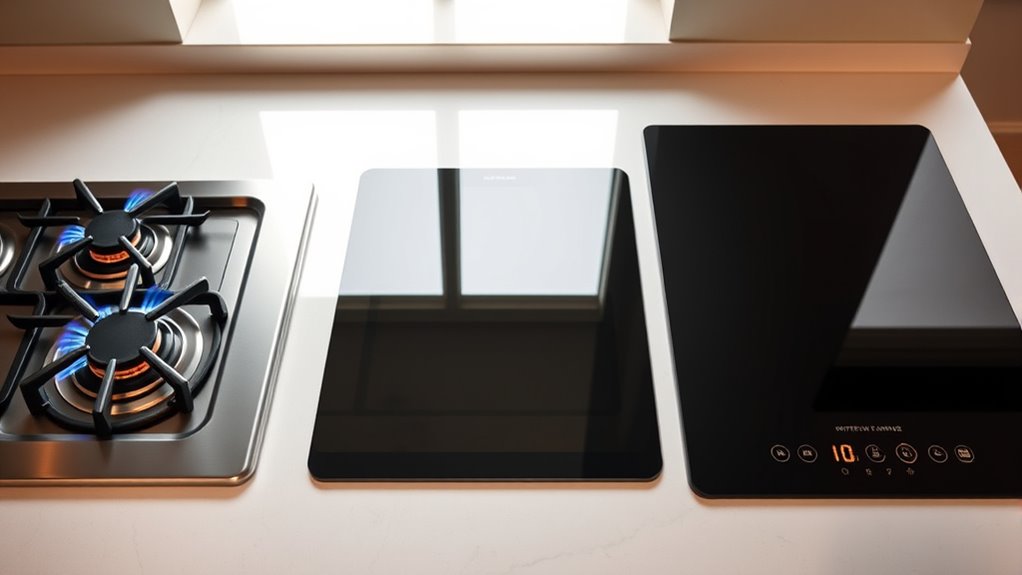

When comparing cooktop safety, gas models pose fire and gas leak risks, requiring careful maintenance and supervision, especially around children. Electric cooktops reduce fire hazards but can stay hot enough to cause burns, so precautions are still needed. Induction cooktops are safer because they heat only cookware and surfaces stay cooler, lowering burn and fire risks. If you want to know which fits your home best, stay tuned for more safety tips.
Key Takeaways
- Gas cooktops pose fire and gas leak risks, requiring proper installation and maintenance for safety.
- Electric cooktops eliminate open flames but can cause burns from hot surfaces if not monitored.
- Induction cooktops heat cookware directly, reducing burn risks and keeping surfaces cooler for safer use.
- Safety features like child locks and automatic shut-offs are available across all cooktop types.
- Regular inspection, supervision, and household-specific safety considerations are essential for safe cooking environments.
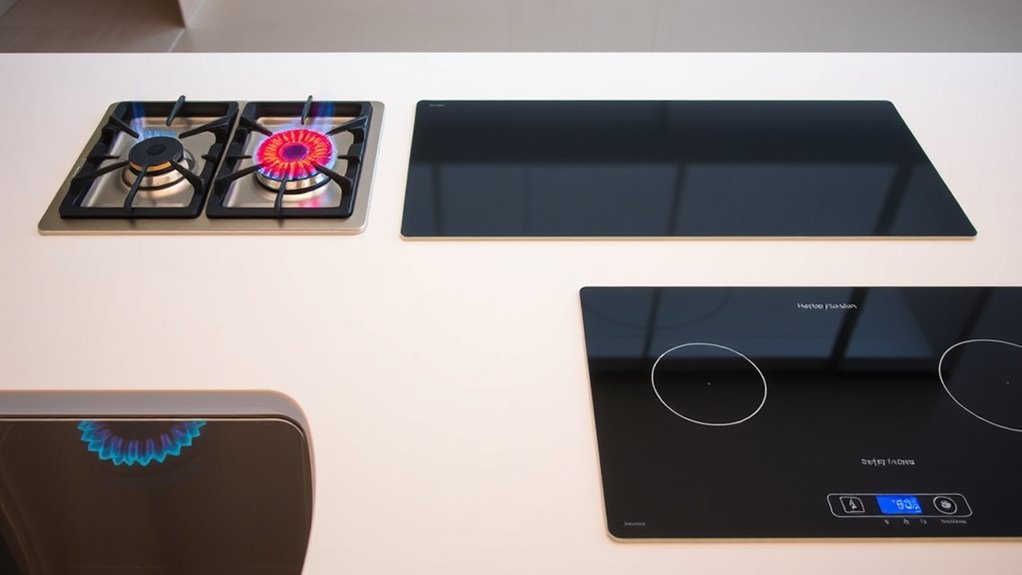
Have you ever considered how safe your cooktop really is? Many homeowners overlook potential risks when choosing between gas, electric, or induction appliances. Safety isn’t just about convenience; it’s about protecting your loved ones, especially children. Child safety is a vital concern because curious little hands can accidentally turn on burners or touch hot surfaces. Gas cooktops pose particular fire hazards since a loose flame or gas leak can lead to dangerous fires or explosions. If your child reaches out and touches a hot burner, serious burns can occur, making it essential to consider safety features like burner covers, child locks, or automatic shut-offs. Electric cooktops reduce some risks, as they don’t have open flames, but the surface can still get hot enough to cause burns, and children might accidentally switch the burners on if controls aren’t secured or child-proofed. Induction cooktops, on the other hand, offer a safer alternative because they only heat cookware directly through electromagnetic fields. The surface stays relatively cool, reducing burn risks, and many models come with child safety locks that prevent accidental activation. Additionally, vacuums with HEPA filters can help improve indoor air quality, making your kitchen environment healthier, especially for those with allergies or respiratory issues.
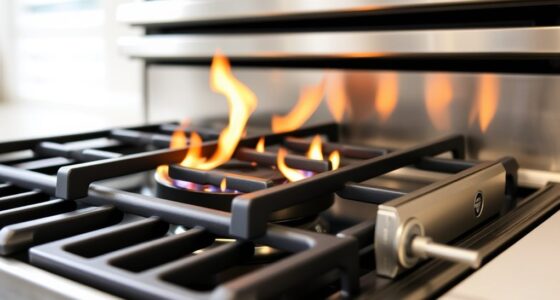
When evaluating fire hazards, gas cooktops are the riskiest because of the open flame and gas leaks. If your gas line isn’t properly maintained or if you forget to turn off a burner, fires can ignite unexpectedly. This makes proper installation and maintenance essential, especially in homes with children. Electric cooktops eliminate the open flame, markedly reducing fire hazards related to accidental ignition. However, the heating elements can remain hot for a while after use, so supervising children around these surfaces is still important. Induction cooktops minimize fire risks further because they don’t produce open flames or exposed heating elements. They activate only when cookware is present, and many models include safety features like automatic shut-offs if no cookware is detected or if overheating occurs.
Ultimately, your choice should factor in safety features tailored to your household’s needs. If you have young children, induction might be the safest option due to the lower risk of burns and fire hazards. But regardless of your choice, always keep safety in mind. Use child locks, never leave children unattended while cooking, and ensure regular maintenance to prevent leaks or malfunctions. Recognizing potential hazards and choosing a cooktop with appropriate safety features can make a vital difference in protecting your family from burns and fires.
Frequently Asked Questions
Which Cooktop Type Is Safest for Children?
You should choose an induction cooktop for safety around children. Induction surfaces stay cool to the touch, reducing burn risks, and are easier to child-proof with simple measures like safety locks. Electric cooktops can be hot for longer periods, while gas stoves pose open flame risks. Prioritize cooktop material safety and implement child-proofing measures to keep your kids safe in the kitchen.
How Do I Prevent Burns on a Glass Electric Cooktop?
Prevent burns on a glass electric cooktop by practicing proper precautions. Keep the surface clean and dry to avoid slips and splatters. Use cookware with flat bottoms for better contact, and always wipe away spills promptly to prevent residual heat hazards. Be vigilant about residual heat—remember, the glass surface stays hot even after cooking ends. By maintaining mindful measures, you can minimize burn risks and master effective burn prevention.
Are Induction Cooktops Safe for People With Pacemakers?
Induction cooktops are generally safe for people with pacemakers, but you should verify pacemaker compatibility before use. They produce electromagnetic interference that could affect your device, so it’s wise to consult your doctor. Keep a safe distance from the cooktop while it’s on, and avoid placing your hands or metallic objects near the control panel. Always follow your pacemaker manufacturer’s guidelines to ensure safety.
What Safety Features Should I Look for in a Gas Cooktop?
You should look for safety features like gas leak detection to alert you of potential leaks and flame failure devices that turn off the gas if the flame goes out. These features help prevent accidents and make sure your kitchen stays safe. Also, consider sturdy controls and easy-to-clean surfaces for added safety and convenience. Prioritizing these features helps you cook safely and confidently.
Can Electric Cooktops Cause Electric Shocks?
Imagine you’re cooking, and suddenly, you feel a shock. Yes, electric cooktops can cause electric shocks if safety precautions aren’t followed. Faulty wiring or damaged cords increase this risk. Always inspect your cooktop regularly, keep it dry, and avoid using it with wet hands. Proper grounding and using the correct utensils help prevent electric shocks, ensuring your cooking remains safe and worry-free.
Conclusion
Choosing the right cooktop depends on your safety priorities and cooking habits. Gas, electric, and induction each have their risks and benefits—are you prepared to handle the potential hazards? Remember, your safety starts with awareness and proper use. So, which cooktop will you trust to keep your family safe while creating delicious meals? Make an informed decision and cook confidently, knowing you’ve prioritized safety in your kitchen.