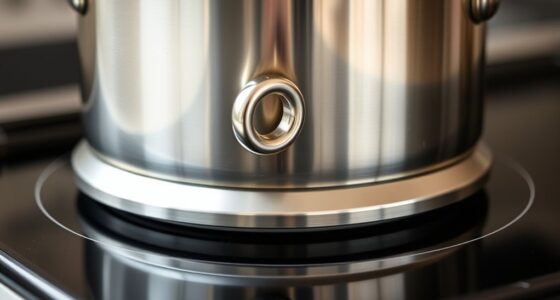
To save energy in daily meals, try using induction cooktops, which heat pots directly and cook faster with less heat loss. Pressure cooking also cuts down cooking time markedly by trapping steam to cook food quicker and more efficiently. Both methods reduce utility bills and environmental impact while making meal prep quicker and easier. Keep exploring these techniques to discover even more ways to cook smarter and more sustainably for your home.
Key Takeaways
- Use induction cooktops with compatible cookware for faster and more efficient heating.
- Opt for pressure cooking to reduce overall cooking times and energy consumption.
- Cover pots and pans to trap heat and conserve energy during cooking.
- Prepare ingredients in advance to shorten cooking durations and save power.
- Incorporate quick-cooking methods like stir-frying and steaming to minimize energy use.

Have you ever wondered how you can cut down on energy use while cooking? It’s a smart question, especially if you’re looking to save money and reduce your carbon footprint. One effective way is by choosing energy-efficient cooking methods like induction cooking and pressure cooking. These techniques not only speed up meal prep but also make better use of energy, so you get your food cooked quickly without wasting power.
Induction cooking stands out because it heats pots and pans directly through electromagnetic fields, instead of warming up a burner or stove surface. This means less heat escapes into the kitchen, and the energy goes straight into cooking your food. Plus, induction stoves heat up faster than traditional electric or gas cooktops, so you spend less time with the burner on. When you use induction, you also have precise temperature control, which helps you avoid overcooking or wasting energy on unnecessary heat. To maximize these benefits, use cookware with flat, ferromagnetic bottoms, ensuring your pots and pans interact efficiently with the induction element. This way, you’re using energy more effectively and reducing overall consumption during meal prep.
Pressure cooking is another excellent technique for saving energy. It works by trapping steam inside a sealed pot, which raises the pressure and temperature, cooking food much faster than conventional methods. For example, beans that typically take hours to soak and cook can be ready in under an hour with pressure cooking. Because the process is quicker, you use less energy overall. Plus, pressure cookers are well-insulated, which minimizes heat loss, and they require less water and energy for boiling, making them a smart choice for energy-conscious cooks. You can also use pressure cooking for stews, rice, and even tougher cuts of meat, all while conserving power. Just be sure to follow safety guidelines and properly maintain your pressure cooker to keep it functioning efficiently.
Incorporating these methods into your daily routine doesn’t mean sacrificing convenience. Both induction and pressure cooking offer quick, reliable results that help you cut down on energy consumption. They’re particularly handy during busy weekdays when you want dinner ready fast without running up your utility bill. Additionally, proper cookware and consistent maintenance can further enhance energy efficiency. By switching to induction for your everyday cooking and using pressure cookers for hearty meals, you make smarter choices that benefit both your wallet and the environment. So, try experimenting with these techniques—you might find that cooking becomes faster, easier, and more energy-efficient, all while enjoying delicious meals.
Frequently Asked Questions
How Can I Optimize Meal Prep for Energy Efficiency?
You can optimize meal prep for energy efficiency by using smart kitchen appliances that automate and streamline cooking tasks, reducing unnecessary energy use. Incorporate meal planning to batch cook and minimize appliance on-time. Prepping ingredients in advance helps you cook multiple meals at once, saving energy. Also, choose appliances like pressure cookers or slow cookers that use less energy. These strategies help you save power while making daily meal prep more efficient.
Are There Specific Cookware Materials That Save Energy?
You should choose induction cookware or ceramic pots to save energy. Induction cookware heats quickly and directly transfers energy to the pot, reducing wasted heat. Ceramic pots distribute heat evenly and retain warmth well, lowering cooking times and energy use. Both options are efficient because they maximize heat transfer and minimize energy loss. By switching to these materials, you’ll cook faster and use less energy during your daily meals.
What Are Quick Energy-Saving Cooking Tips for Busy Mornings?
Picture yourself rushing through your busy morning, grabbing a quick breakfast to fuel your day. To save energy, preheat your pan just enough to sear your eggs or toast. Use a lid to trap heat while boiling water or cooking breakfast, reducing energy use. Opt for microwave or pressure cooker methods when possible, cutting down cooking time. These tips streamline your morning routine, making energy efficiency effortless and fast.
How Does Meal Portion Size Affect Energy Consumption?
Portion control directly impacts your energy consumption by helping you avoid overeating and reduce calorie intake. When you serve smaller portions, you use less energy to cook, reheat, and store food. This also supports calorie reduction, leading to less waste and lower energy costs. By paying attention to portion sizes, you make your meals more energy-efficient, saving both resources and money while maintaining a healthy diet.
Can Energy-Saving Techniques Impact Food Flavor or Quality?
Energy-saving techniques can impact food flavor and quality, but if you choose methods carefully, you can preserve flavor and minimize texture impact. For example, using lid-covered cooking traps heat and retains moisture, helping preserve flavor. Avoid overcooking by adjusting time and temperature, which maintains texture and taste. With mindful techniques, you can save energy without sacrificing your food’s flavor or texture, ensuring delicious results every time.
Conclusion
By embracing these energy-saving cooking techniques, you’ll transform your kitchen into a sanctuary of efficiency and warmth. Each small change sparks a ripple of impact, like a gentle breeze stirring a calm lake. As you cook smarter, you’ll not only save energy but also nurture a greener world for tomorrow. Let your everyday meals become a dance of mindful choices, turning simple acts into powerful steps toward a brighter, more sustainable future.