
Exploring sous-vide cooking at home lets you achieve professional-looking results with ease. By controlling the water temperature precisely, you can cook steaks, chicken, and vegetables evenly and safely, without overcooking or drying out your ingredients. It’s simple to set up: just vacuum-seal your food and adjust the device to your desired temperature. If you keep exploring, you’ll discover how to elevate your culinary skills and create consistently delicious dishes every time.
Key Takeaways
- Sous-vide allows precise temperature control, ensuring consistent and perfect results every time you cook at home.
- It is easy to set up with simple equipment like digital immersion circulators, suitable for both beginners and experienced cooks.
- The method enhances food safety by maintaining a constant, safe water temperature during extended cooking.
- You can create restaurant-quality dishes, infuse flavors, and experiment with different textures in your own kitchen.
- Sous-vide offers flexibility for quick weeknight meals or complex culinary projects, making home cooking more versatile.

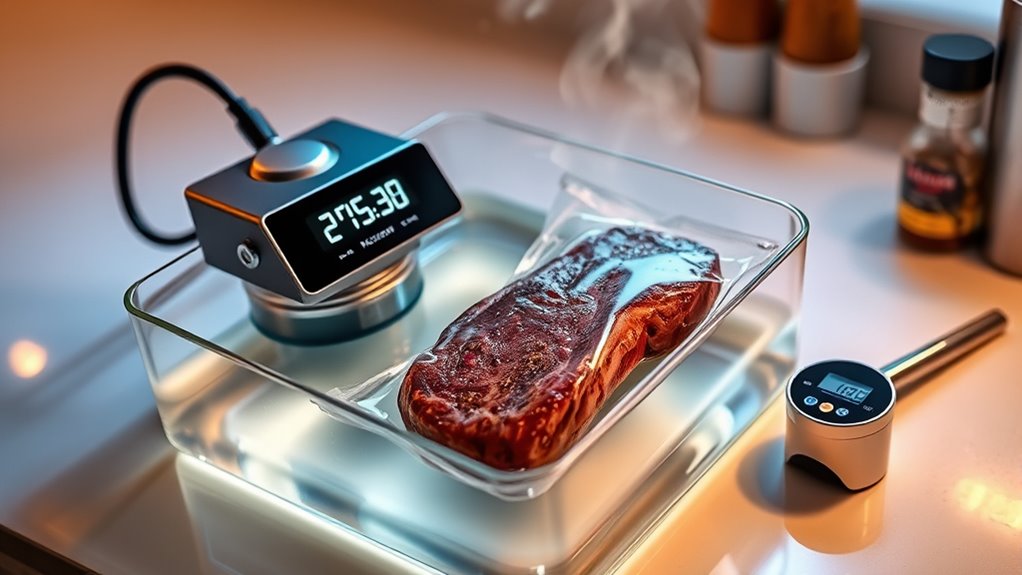
Sous-vide cooking has gained popularity among both professional chefs and home cooks for its precision and consistency. This method involves cooking food slowly in a sealed bag submerged in a water bath maintained at a specific temperature. The key to its effectiveness lies in precision cooking, which allows you to achieve perfect results every time. When you use a sous-vide cooker, you control the temperature with incredible accuracy, ensuring your food is cooked evenly from edge to edge without the risk of overcooking. Unlike traditional methods, where heat can fluctuate and cause uneven results, sous-vide provides a stable environment. This means you can set the desired internal temperature of your meat, fish, or vegetables, and the water bath will hold it there precisely, guaranteeing consistent doneness.
Temperature control is essential in sous-vide cooking. It allows you to fine-tune your dishes to your exact preference. For example, if you prefer a tender, medium-rare steak, you set the water bath to the precise temperature that achieves that doneness. Once it’s in the bath, the steak will cook gently and evenly, with no surprises. You don’t need to worry about flipping or checking it constantly, as the controlled environment ensures uniform results. This level of control is what makes sous-vide so appealing, especially when you’re aiming for restaurant-quality dishes at home. You can also cook multiple items at different temperatures simultaneously, making meal prep more efficient and reliable.
Precise temperature control ensures perfect, uniform results for every dish, from steaks to vegetables.
Another advantage of precise temperature control is the ability to cook foods safely without overcooking or drying them out. Since the water bath maintains a constant temperature, you can leave your food in the sous-vide for longer than traditional methods without worrying about it becoming mushy or losing flavor. This flexibility allows for more creative cooking techniques, like cooking chicken or pork for extended periods to reach ideal tenderness or infusing flavors into ingredients during the process. Additionally, understanding the role of contrast ratio in achieving desirable textures and visual appeal can further enhance your culinary results.
In addition, the simplicity of controlling the temperature with a digital immersion circulator or sous-vide machine makes it accessible for home cooks. You just set the desired temperature, vacuum-seal your ingredients, and relax. The precision of temperature control means you don’t need to be an expert to get professional results. Whether you’re preparing a quick weeknight dinner or experimenting with more complex dishes, mastering temperature control can elevate your culinary skills and help you consistently produce delicious, perfectly cooked meals.
Frequently Asked Questions
How Do I Choose the Right Sous-Vide Equipment for Home Use?
To select the appropriate sous-vide equipment, you should consider your cooking needs and budget. Look for a device with precise temperature accuracy to guarantee perfect results every time. A reliable vacuum sealer is essential for sealing your food properly. Also, check the immersion circulator’s wattage and water capacity to match the amount of food you plan to cook. Easy-to-use controls and durability are key factors for a great home sous-vide experience.
What Are the Safety Concerns With Sous-Vide Cooking?
You might stumble upon safety concerns when using sous-vide, but staying alert makes all the difference. Food safety is key—ensure your food reaches proper temperatures and avoids bacteria growth. Regular equipment maintenance prevents malfunctions and contamination. Keep your water sealed, monitor cooking times, and clean your devices thoroughly. By staying vigilant, you turn sous-vide cooking into a safe, enjoyable experience that elevates your culinary skills and keeps your loved ones protected.
Can I Cook Multiple Dishes at Different Temperatures Simultaneously?
Yes, you can cook multiple dishes at different temperatures simultaneously, but you need to watch out for temperature variance and equipment compatibility. Make sure your sous-vide device has enough capacity and precise temperature controls for each dish. Use separate bags or containers, and double-check that your equipment can handle multiple water baths without mixing or temperature fluctuations. This way, each dish cooks safely and perfectly at its specific temperature.
How Do I Prevent Plastic Bag Leaks During Sous-Vide?
To prevent plastic bag leaks during sous-vide, you should focus on proper plastic bag sealing and leak prevention techniques. Make certain you remove as much air as possible before sealing, using a vacuum sealer if available. Double-check the seal for any gaps, and consider using high-quality, food-grade bags designed for sous-vide cooking. These steps help keep water out and food fresh, ensuring safe, leak-free cooking every time.
What Are Some Common Mistakes Beginners Make With Sous-Vide?
Did you know 60% of beginners struggle with sous-vide? One common mistake is neglecting proper sealing techniques, which can cause leaks. Always double-check your plastic bags for holes and make sure they’re sealed tightly, especially around the edges. Temperature tracking is also vital; monitor your water bath closely to maintain consistent heat. Avoid rushing the process and follow these tips to improve your results and enjoy perfectly cooked dishes every time.
Conclusion
Now that you’ve explored the ins and outs of sous-vide cooking, it’s clear this technique can truly elevate your culinary game. With a little patience and practice, you’ll find it’s easier than you think to master. Remember, the proof is in the pudding—once you try it yourself, you’ll wonder why you didn’t start sooner. So go ahead, embrace the method, and turn your kitchen into a gourmet haven. The sky’s the limit!