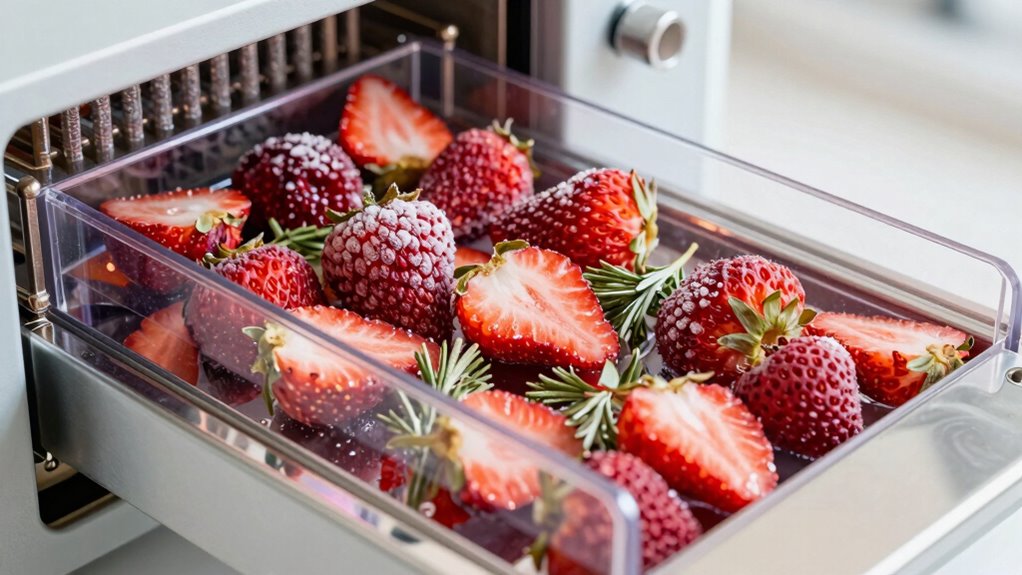

A freeze dryer removes moisture through sublimation under vacuum, effectively preserving many foods and materials. You can safely freeze-dry fruits, herbs, coffee, and certain prepared meals, as long as they’re low in fats and high in moisture. However, items high in fats, liquids, or oils don’t freeze-dry well because they can spoil or separate. To discover more about what works and what doesn’t, continue exploring the process and its guidelines.
Key Takeaways
- Most fruits, vegetables, herbs, and prepared foods can be freeze-dried effectively.
- Freeze-drying is unsuitable for high-fat items like nuts, fatty meats, or oily foods.
- Liquids and liquid-rich foods require pre-freezing into solids before freeze-drying.
- High sugar or moisture content foods may need pre-treatment to prevent spoilage.
- Proper vacuum and temperature control are essential for successful freeze-drying of delicate materials.
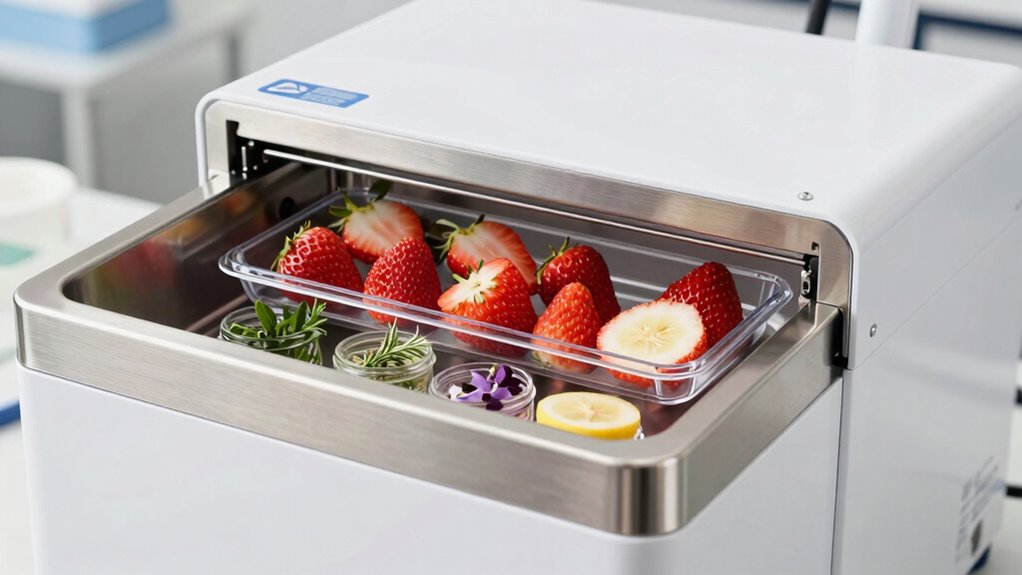
A freeze dryer is a device that removes moisture from food or other materials through a process called lyophilization, which preserves their structure, flavor, and nutrients. When you operate a freeze dryer, you’ll notice it consists of a vacuum chamber where the actual drying takes place. This chamber is essential because removing air and reducing pressure allows the frozen material to undergo sublimation—the transition of ice directly into vapor—without passing through the liquid phase. Managing the vacuum chamber effectively is crucial to guarantee optimal moisture removal and prevent spoilage.
Within the vacuum chamber, the shelf temperature plays a vital role. As you load your items onto the shelves, you’ll set and monitor their temperature carefully. Initially, the shelves are cooled to freeze the material solidly, sometimes reaching temperatures as low as -40°C. During the primary drying phase, the shelf temperature is gradually increased to encourage sublimation. You want to find the right balance: too high, and you risk melting the material or damaging delicate structures; too low, and drying becomes inefficient. Maintaining proper shelf temperature throughout this process guarantees that moisture is removed evenly, preventing internal pockets of residual water that can compromise preservation.
Because the vacuum environment lowers the boiling point of water, your materials can be dried at relatively low temperatures, which helps preserve sensitive nutrients and flavors. You have control over the shelf temperature, adjusting it in real-time based on the progress of the drying cycle. This precise regulation means you can tailor the process to different types of foods or materials—fruits, herbs, pharmaceuticals—and maximize their shelf life and quality. Additionally, understanding the sublimation process is key to optimizing drying cycles and ensuring consistent results.
However, not everything is suitable for freeze-drying. Items with high fat content, like oily nuts or fatty meats, don’t freeze-dry well because fats can become rancid or separate during the process. Additionally, foods with high sugar or moisture content might require special handling or pre-treatment to avoid spoilage or texture changes. You also can’t freeze-dry liquids or liquids-rich foods directly without first solidifying them into a suitable form, as the process relies on sublimating ice, not removing water from liquid solutions.
Frequently Asked Questions
Can I Freeze-Dry Liquids Like Milk or Juice?
You can freeze-dry liquids like milk or juice through beverage freeze drying, but it requires special equipment designed for liquid preservation. You can’t just pour liquids into a standard freeze dryer; they need to be frozen into thin sheets or small portions first. This process removes moisture efficiently, maintaining flavors and nutrients. Make sure your freeze dryer supports liquid freeze drying to avoid damage and ensure successful results.
How Long Does the Freeze-Drying Process Typically Take?
Oh, the thrill of waiting! Typically, freeze-drying takes anywhere from 20 to 48 hours, depending on processing duration and factors affecting time like moisture content and item size. You’ll be amazed at how patience becomes your best friend. Larger or wetter items need more time, so don’t rush it. Embrace the process, and soon you’ll have perfectly preserved goodies ready to impress.
Is Freeze-Drying Suitable for Home Use or Only Commercial?
Freeze-drying is suitable for both home use and commercial applications. You can find smaller, user-friendly home appliances that make the process accessible, allowing you to preserve foods, herbs, and more easily. However, commercial equipment tends to be larger and more efficient, ideal for processing bigger quantities. If you’re interested, start with a home freeze dryer to experiment before investing in professional-grade commercial equipment.
What Are the Storage Requirements for Freeze-Dried Products?
You should store your freeze-dried products in airtight storage containers to keep them fresh. Make sure to control moisture by using vacuum-sealed bags or containers with desiccants. Keep them in a cool, dry, and dark place to prevent spoilage and preserve quality. Proper storage guarantees your freeze-dried foods stay light, crispy, and safe for long-term use, maximizing your investment and enjoyment.
Are There Foods That Cannot Be Freeze-Dried at All?
Some foods can’t be freeze-dried because they contain high fat, moisture, or delicate structures that don’t survive the process. For food preservation and shelf stability, avoid freeze-drying oily fish, soft cheeses, and certain raw eggs, as they spoil or don’t dry properly. Fruits, vegetables, and herbs usually work well, but always consider their composition to guarantee successful preservation and long-term shelf stability.
Conclusion
Now that you understand what you can and can’t freeze-dry, think of your freezer as a treasure chest waiting to preserve nature’s jewels. With careful selection and a gentle touch, you’ll turn fleeting freshness into eternal life, like capturing sunlight in a jar. Remember, not everything belongs in this icy symphony—some notes just won’t harmonize. Embrace the artistry of freeze-drying, and watch your pantry blossom with preserved perfection, a demonstration of your newfound mastery.