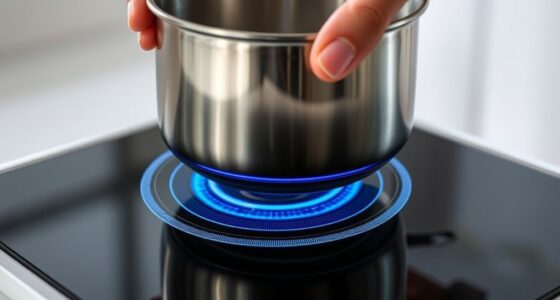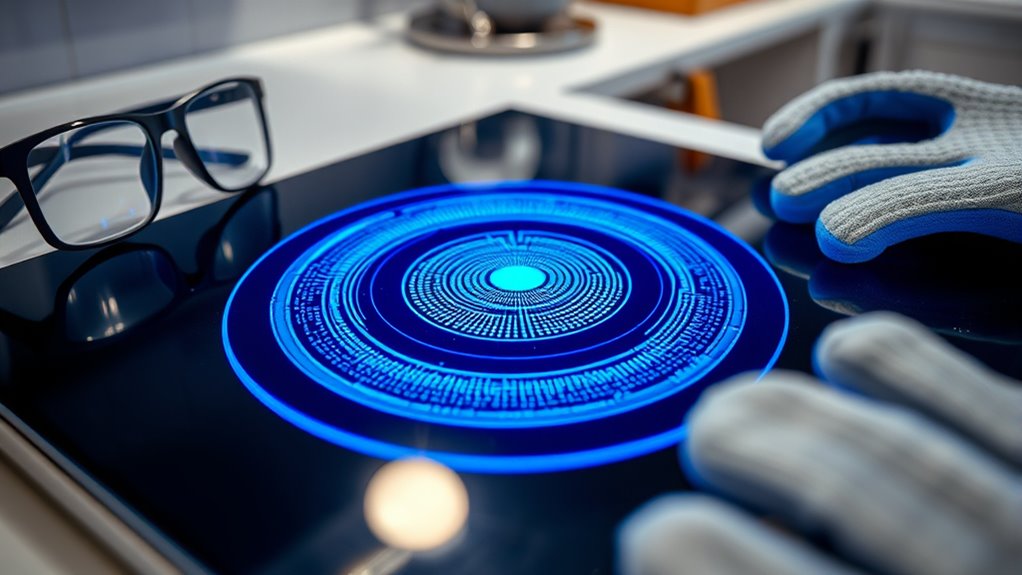

Induction heating works by running an alternating electric current through a coil, creating a changing magnetic field that penetrates the metal object nearby. This magnetic field induces eddy currents inside the metal, which generate heat due to resistance. This process allows for fast, precise heating while reducing energy loss. To stay safe, keep a safe distance from the coil, use protective gear, and guarantee proper equipment maintenance. Keep exploring to learn more about safe and effective induction heating practices.
Key Takeaways
- Induction heating uses alternating current in a coil to generate magnetic fields that induce eddy currents in metals, producing heat directly.
- Magnetic fields transfer energy efficiently into the metal, enabling rapid, uniform heating without external heat transfer methods.
- Safety involves maintaining safe distances, avoiding contact with magnetic fields, and wearing protective gear to prevent burns and electromagnetic interference.
- Regular equipment inspections, proper grounding, and following manufacturer guidelines are essential to prevent malfunctions and ensure safe operation.
- Understanding the electromagnetic process helps optimize heating efficiency while implementing safety measures minimizes risks during use.
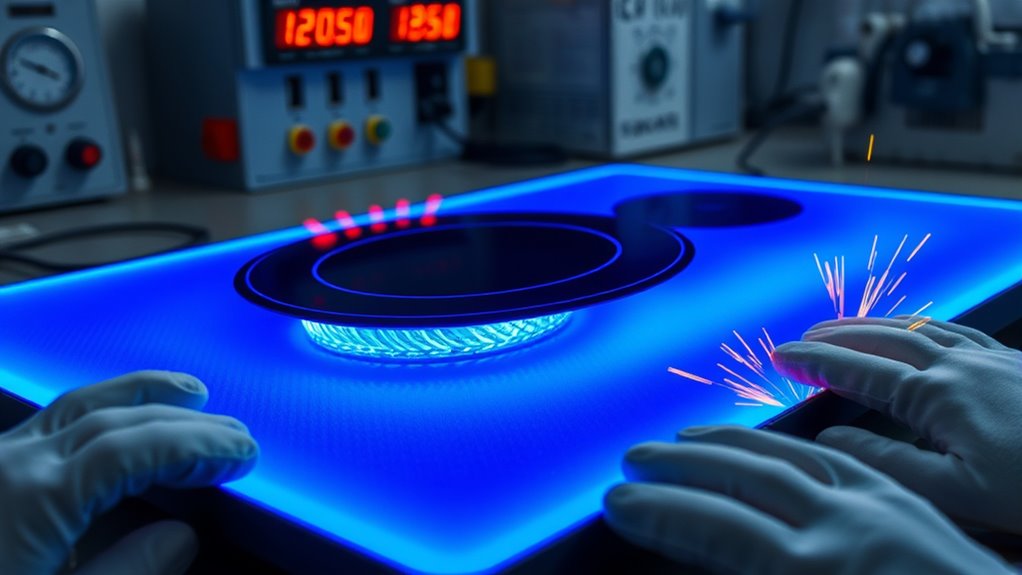
Have you ever wondered how induction heating quickly and efficiently heats metals without direct contact? It all comes down to the fascinating interplay of magnetic fields and heat transfer. When you activate an induction heater, an alternating electric current flows through a coil, creating a rapidly changing magnetic field around it. This magnetic field penetrates the metal object placed within the coil’s vicinity, inducing electric currents called eddy currents inside the metal. These eddy currents are responsible for generating heat directly within the material, rather than relying on conduction from an external heat source. This process allows for precise, fast heating because the energy is transferred directly into the metal through electromagnetic induction, bypassing traditional methods that rely on conduction or convection.
The role of magnetic fields is central in this process. You can think of them as the invisible forces that transfer energy into the metal. As the magnetic field oscillates, it induces eddy currents in the metal, and the resistance of the metal to these currents causes it to heat up. This mechanism makes induction heating highly efficient because it minimizes energy loss; most of the energy supplied is directly converted into heat within the metal. Unlike traditional heating methods, which require heat to transfer from a hot surface or flame to the metal, induction heating skips that step entirely. The heat transfer occurs directly through electromagnetic induction, resulting in rapid and uniform heating, which is particularly advantageous for precision tasks like hardening, welding, or melting metals.
Magnetic fields induce eddy currents, heating metals efficiently through direct electromagnetic transfer.
Safety is a crucial aspect of working with induction heating systems. Because the process involves powerful magnetic fields and high-frequency currents, you should always follow safety protocols. Keep a safe distance from the induction coil while it’s operating to avoid accidental burns or exposure to strong magnetic fields, which can interfere with electronic devices or pose health risks. Make sure the work area is clear of flammable materials, as the rapid heating can sometimes cause sparks or hot spots. Always wear protective gear, such as gloves and eye protection, to prevent burns or injuries from hot metals or sparks. Additionally, ensure that the equipment is properly grounded and maintained, reducing the risk of electrical shock. When not in use, turn off the system and disconnect it from power sources. Regular inspections and adherence to manufacturer guidelines will help prevent malfunctions or accidents.
Understanding the science behind induction heating not only gives you insight into how it works but also emphasizes the importance of safety. By respecting the power of magnetic fields and the heat transfer process, you can operate induction systems efficiently while minimizing risks. Whether you’re using it for industrial purposes or small-scale projects, knowing these principles helps you harness induction heating’s full potential safely and effectively.
Frequently Asked Questions
How Does Induction Heating Compare to Traditional Heating Methods?
Induction heating is more efficient than traditional methods because it directly heats the object, reducing energy loss. You’ll notice better heating uniformity, as heat is generated evenly within the material. Plus, induction heats up faster, saving you time and energy. Unlike conventional methods that rely on external heat sources, induction provides precise control, making it ideal for applications demanding quick, uniform, and energy-efficient heating.
What Materials Are Compatible With Induction Heating?
Materials compatible with induction heating are like dancers perfectly synchronized with their partner’s rhythm. You’ll find that ferrous metals with strong magnetic properties, such as cast iron, carbon steel, and certain stainless steels, respond best. Non-magnetic materials like aluminum, copper, and glass don’t work directly unless coated or combined with magnetic materials. Always verify the material compatibility to guarantee efficient heating and avoid damage or inefficiency.
Can Induction Heating Cause Electromagnetic Interference?
Yes, induction heating can cause electromagnetic interference (EMI), which may disrupt nearby electronic devices. To prevent this, you should take safety precautions like shielding your equipment and maintaining proper grounding. Ensuring your induction cooktop or heater is correctly installed and regularly inspected helps minimize EMI risks. Being aware of potential interference allows you to implement effective safety measures, protecting both your appliances and electronic devices nearby.
How Energy-Efficient Is Induction Heating Technology?
Induction heating is highly energy-efficient because it directly heats the cookware, reducing energy consumption and minimizing wasted heat. This targeted process lowers environmental impact since less energy is needed for the same heating result. You’ll notice faster cooking times and less energy waste, making induction a smart choice for eco-conscious households. Overall, its efficiency benefits both your utility bills and the environment.
Are There Health Risks Associated With Induction Heating?
You might wonder if induction heating poses health risks, and the good news is, it generally doesn’t. The electromagnetic exposure from induction cooktops is minimal and unlikely to harm you if you follow basic health precautions. To stay safe, keep a safe distance from the coil when it’s on, and avoid prolonged close contact. Proper usage and safety measures help guarantee your health remains protected while enjoying efficient cooking.
Conclusion
Now that you understand the science behind induction heating, you can see how it transforms metal into a glowing canvas of energy. With careful attention to safety, you protect yourself from sparks and burns, allowing you to work confidently in this fiery dance. Feel the warmth of progress in your hands, knowing each spark is a step toward innovation. Embrace the power, but always respect its heat — because safety keeps the fire alive.