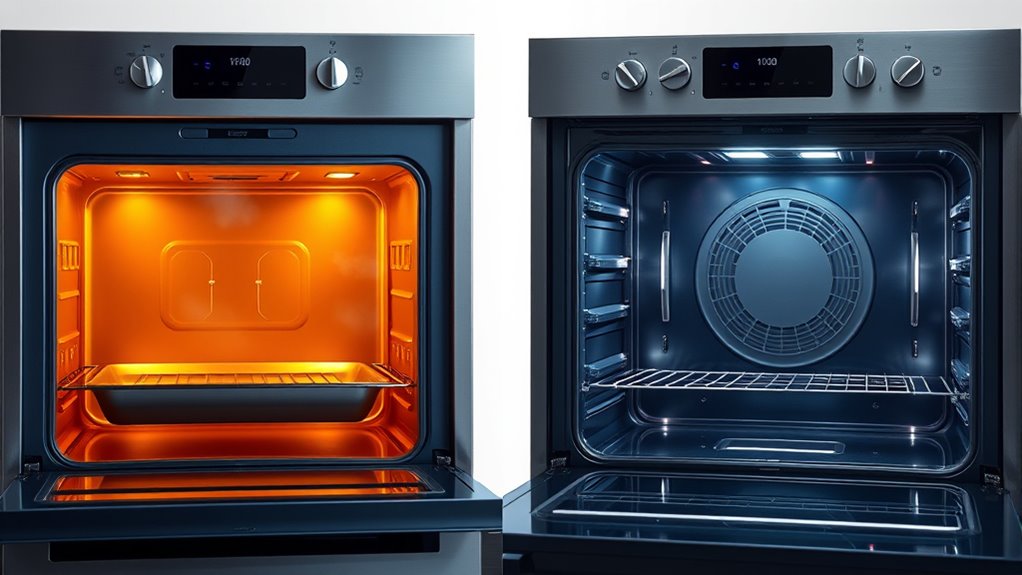

Convection ovens use a fan and exhaust system to circulate hot air, ensuring even heat distribution, cooking faster and more efficiently than conventional ovens, which rely on radiant heat from elements and can have hot spots. If you need quick, uniform baking for cookies or roasts, convection is ideal, but for delicate items like soufflés, conventional may fare better. To discover more about how these ovens compare and which fits your needs best, keep exploring the details.

Get home appliances delivered free with Prime
- Fast, free delivery on millions of items
- Prime Video, Amazon Music and more included
- Member-only deals all year
Key Takeaways
- Convection ovens use a fan to circulate hot air for even, faster baking, while conventional ovens rely on radiant heat without air movement.
- Convection models typically cook food faster and more efficiently, reducing energy consumption compared to conventional ovens.
- Conventional ovens may be better suited for delicate baked goods like soufflés, which benefit from gentle, static heat.
- Most convection ovens can switch between convection and conventional modes, offering versatility for different recipes.
- Convection ovens provide more uniform browning and consistent results, especially when baking multiple trays simultaneously.
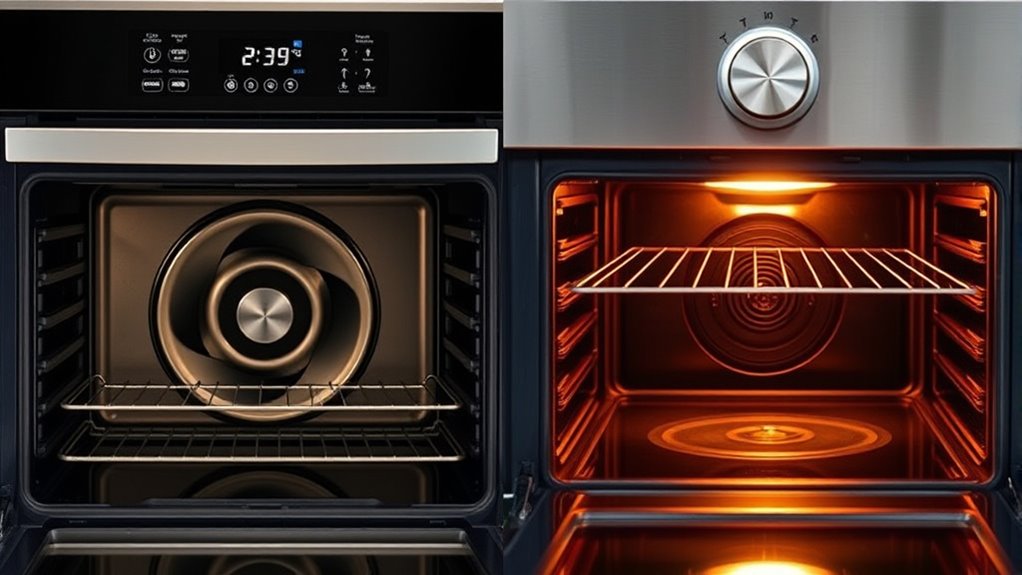
When choosing a kitchen oven, understanding the key differences between convection and conventional models can help you make an informed decision. One of the main considerations is baking efficiency. Convection ovens use a fan and exhaust system to circulate hot air evenly throughout the cooking chamber. This constant movement of air promotes uniform heat distribution, which means your baked goods tend to cook more evenly and often faster than in a conventional oven. If you frequently bake cookies, pastries, or roasts, a convection oven can save you time and produce consistently better results. In contrast, conventional ovens rely on radiant heat from the top and bottom elements without any air circulation. This can lead to hot spots and uneven baking, requiring you to rotate trays or adjust cooking times to achieve the desired results.
Energy consumption is another critical factor to think about. Because convection ovens cook faster, they often use less energy for the same tasks compared to conventional models. The efficient heat distribution means you don’t need to keep the oven on as long, which reduces electricity or gas use over time. If you’re budget-conscious or aiming to lower your energy bills, a convection oven might be a more economical choice. However, it’s worth noting that convection ovens sometimes consume slightly more energy during preheating due to the fan operation, but this is usually offset by the shorter cooking times. Additionally, energy efficiency is an important consideration linked to the overall environmental impact of your appliance.
The design of convection ovens also influences your cooking experience. Most convection models allow you to switch between convection and conventional modes, giving you flexibility based on what you’re preparing. For delicate baked goods like soufflés or cakes, you might prefer the gentler heat of a conventional oven to prevent over-drying or uneven rising. Conversely, for roasting vegetables or baking multiple trays of cookies simultaneously, the convection setting can be a real advantage by ensuring even browning across all your dishes.
As an affiliate, we earn on qualifying purchases.
Frequently Asked Questions
Can Convection Ovens Save Energy Compared to Conventional Ovens?
Yes, convection ovens can save energy compared to conventional ovens. Their improved energy efficiency comes from the fan and exhaust system that circulate hot air evenly, reducing cooking time. This enhanced cooking performance means you use less energy to achieve the same results. By choosing a convection oven, you’ll not only save on energy bills but also enjoy faster, more consistent cooking.
How Do I Convert Traditional Recipes for Convection Baking?
When converting traditional recipes for convection baking, you should start with a temperature conversion—reduce the oven temperature by about 25°F (14°C). Adjust recipe times slightly shorter because convection ovens cook faster. For recipe adjustments, keep an eye on your baked goods to prevent overbaking, and consider lowering the rack position to ensure even heat distribution. Always check for doneness earlier than usual to get perfect results.
Are Convection Ovens Suitable for All Types of Baked Goods?
Like a chameleon blending into its surroundings, a convection oven adapts well to many baked goods, showcasing impressive oven versatility. You’ll find it excels in achieving baking precision for cookies, pastries, and roasted dishes. However, delicate cakes might need gentle handling, as the rapid air circulation can sometimes disrupt their rise. Overall, a convection oven suits most baking adventures, but knowing its quirks helps you master every creation.
What Maintenance Does a Convection Oven Require?
You need to regularly maintain your convection oven by cleaning the oven interior and fans to prevent grease buildup and guarantee even cooking. Keep the thermostat calibrated so it heats accurately, and check for any malfunctioning parts. Routine oven cleaning prolongs its lifespan, while thermostat calibration guarantees consistent temperature control, leading to perfect results every time. Schedule professional maintenance if you notice irregular heating or performance issues.
Do Convection Ovens Cook Faster Than Conventional Ovens?
Yes, convection ovens cook faster than conventional ovens, like a racehorse sprinting ahead. This efficiency isn’t just a coincidence; it’s due to the fan and exhaust system that circulate hot air evenly. To guarantee oven safety and get the best cooking tips, always monitor cooking times and adjust recipes accordingly. Your oven’s rapid performance means you should keep a close eye on your dishes to prevent overcooking.
Conclusion
Now that you know the difference, choosing between convection and conventional ovens becomes a breeze. You’ll find that convection ovens can cook faster and more evenly than a race car zooming around a track—no hot spots, just perfect results every time. So, whether you want quick, crispy dishes or traditional baking, understanding these ovens means you’ll never settle for less. Get ready to conquer your kitchen with confidence—your culinary adventures just got a whole lot easier!
NFL season / tailgating Picks
team gear
As an affiliate, we earn on qualifying purchases.