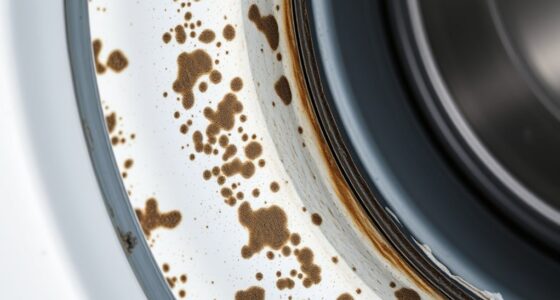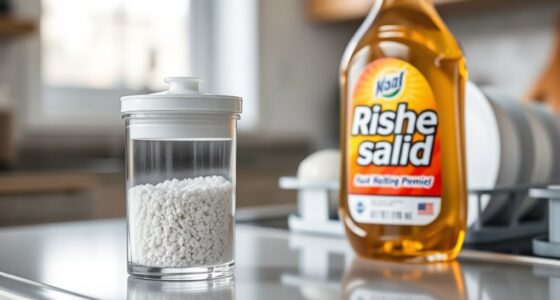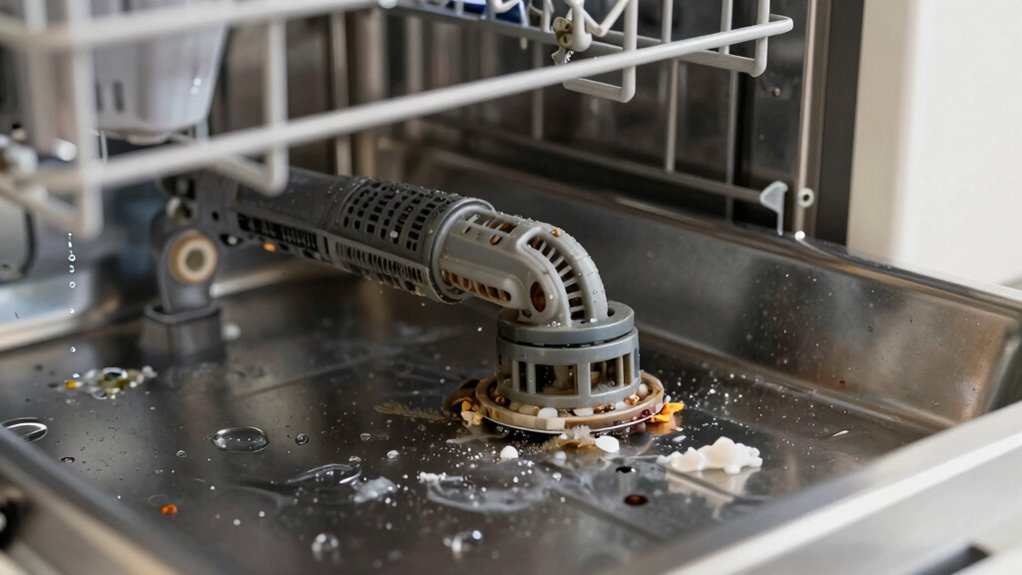

Your dishwasher smells bad mainly because food debris, mold, or bacteria are trapped in areas like the filter, door seals, or spray arms. These spots often collect leftover crumbs, grime, and moisture, creating a foul odor over time. If you don’t clean these regularly, the smell persists and worsens. Want to find out how to effectively eliminate these odors and keep your dishwasher fresh? Keep going, and you’ll discover simple solutions to keep your appliance smelling clean.
Key Takeaways
- Food debris and residue often accumulate in filters, door seals, and spray arms, causing foul odors.
- Mold and bacteria thrive in moist, dark areas like rubber gaskets, leading to bad smells.
- Poor drainage or standing water inside the dishwasher promotes bacterial growth and odors.
- Infrequent cleaning allows grime and leftover food to ferment, producing unpleasant odors.
- Residual soap scum and grime buildup in internal components are common odor sources.
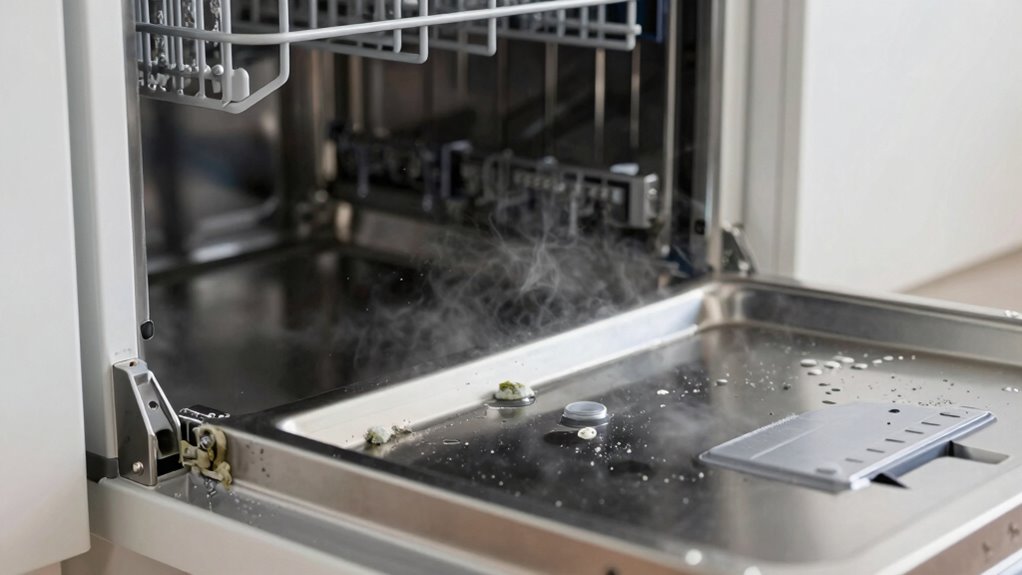
If your dishwasher smells bad, it’s likely due to trapped food particles, mold, or bacteria that build up over time. These odors aren’t just unpleasant; they can also affect the cleanliness of your dishes. The good news is that addressing the root cause is straightforward with proper dishwasher cleaning and odor prevention techniques. Regular maintenance is key to keeping unwanted smells at bay and ensuring your dishwasher operates efficiently. Understanding the sources of odor within your dishwasher can help you target cleaning efforts more effectively. First, you need to understand where the smell originates. Food debris often gets lodged in the filter, spray arms, or door seals. Over time, these leftovers ferment and produce foul odors. Mold and bacteria thrive in moist, dark areas like the rubber gasket around the door or inside the drain. If you neglect these spots, odors will intensify, and your dishwasher won’t smell fresh. To combat this, you should establish a routine of thorough dishwasher cleaning, which includes removing and cleaning the filter, wiping down the door seal, and inspecting spray arms for clogs. Using a mixture of vinegar and baking soda during a wash cycle can help eliminate odors, break down grime, and rinse away lingering residues.
Frequently Asked Questions
Can Using Too Much Dishwasher Detergent Cause Odors?
Yes, using too much dishwasher detergent can cause odors. Excess detergent leads to residue accumulation and detergent buildup inside your dishwasher, which traps food particles and moisture. This creates a breeding ground for mold and bacteria, resulting in unpleasant smells. To prevent this, use the recommended amount of detergent, run a cleaning cycle regularly, and make sure to clean the filter and seals. This keeps your dishwasher fresh and odor-free.
How Often Should I Run a Cleaning Cycle?
You should run a cleaning cycle at least once a month for proper dishwasher maintenance. This regular cleaning helps prevent odors and buildup, ensuring your appliance stays fresh and functions efficiently. If you notice lingering smells or residue, increase cleaning frequency to every two weeks. Using dishwasher cleaner or vinegar during these cycles can also help eliminate grease and soap scum, keeping your dishwasher smelling clean and performing well.
Does Hard Water Affect Dishwasher Smell?
Yes, hard water can affect your dishwasher’s smell. It causes mineral deposits and hard water buildup inside the machine, which leads to unpleasant odors over time. These deposits trap food particles and bacteria, creating a musty smell. To prevent this, use a water softener or descaling agent regularly. Cleaning your dishwasher and running regular maintenance cycles can help eliminate mineral deposits and keep odors at bay.
Are There Natural Remedies to Eliminate Dishwasher Odors?
Yes, you can use natural remedies to eliminate dishwasher odors. Try a natural deodorizer like baking soda or lemon slices to freshen the smell. Vinegar solutions are highly effective; run an empty cycle with a cup of white vinegar to break down buildup and eliminate odors. Regularly using these natural methods helps prevent future smells and keeps your dishwasher fresh without harsh chemicals.
Can a Clogged Filter Cause Bad Smells?
A clogged filter definitely causes dishwasher smells. When debris and food particles accumulate, they trap moisture and bacteria, leading to foul odors. Investigating this, a blocked filter restricts proper drainage, creating a damp environment that promotes bacteria growth. Regularly cleaning your clogged filter helps eliminate these smells, ensuring your dishwasher stays fresh. So, if your dishwasher smells, check and clean the filter to restore freshness and prevent future odors.
Conclusion
So, next time your dishwasher’s smell hits you like a damp basement, remember it’s often just a tiny villain hiding in plain sight. With a quick clean and some freshening tricks, you can banish that stinky ghost and let your dishwasher shine like a clean, sparkling star. Don’t let bad odors sink your kitchen’s vibe—tackle the problem head-on and turn your dishwasher into a fresh-smelling hero of your home.