

If your milk froth fails, it’s usually because of one of five common issues. You might be using the wrong milk type or not adjusting your frothing technique, which affects texture and stability. Temperature matters too—you want it around 140-150°F. Poor equipment maintenance or uneven heat can also cause problems. Finally, understanding milk’s properties like protein and fat helps improve results. Keep these factors in mind, and you’ll find ways to troubleshoot and perfect your froth.

Get home appliances delivered free — and shop member deals
- Fast, free delivery on millions of items
- Access to Prime Big Deal Days deals on October 6–7
- Prime Video, Amazon Music and more included
Key Takeaways
- Incorrectly positioning the steam wand or introducing too much or too little air causes poor foam quality.
- Using milk that is too cold, overheated, or has incompatible properties hampers frothing success.
- Faulty or unclean equipment can prevent proper steam flow and foam formation.
- Not maintaining the ideal temperature (140-150°F) leads to flat or inconsistent froth.
- Lack of understanding milk’s protein and fat content limits optimal frothing with alternative milks.
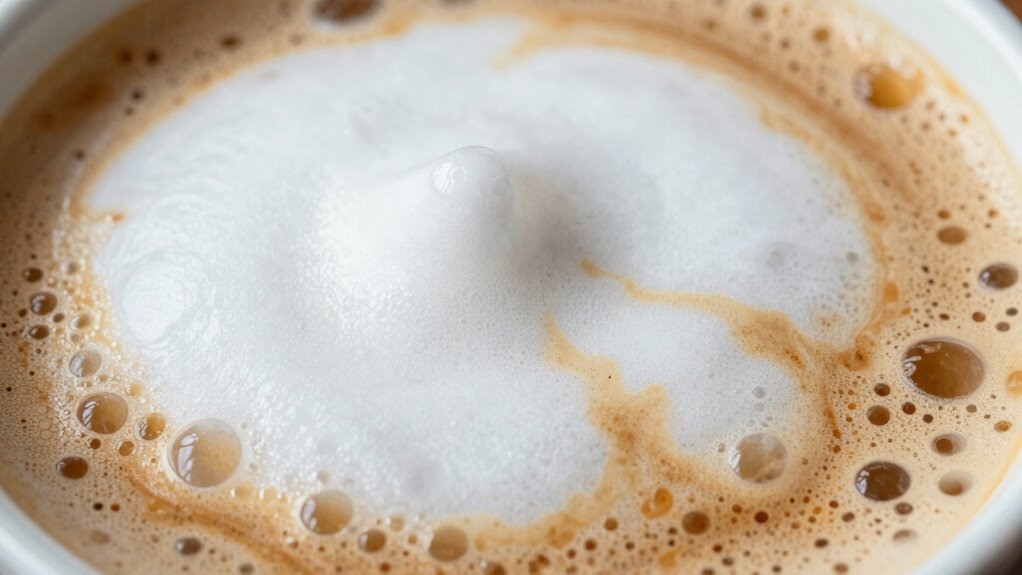
Few things can ruin your coffee experience more than a failed milk froth. You’re excited to enjoy a perfectly creamy cappuccino or a velvety latte, but instead, you’re left with a disappointing, flat surface that doesn’t quite have the texture you wanted. Usually, the problem isn’t just about your skill—many factors can interfere with creating that ideal foam. One common culprit is the type of milk you’re using. If you’re relying solely on dairy, you might overlook how alternative milk options can impact frothing results. Plant-based milks like almond, soy, oat, or coconut milk often have different protein and fat contents, which influence how well they froth. For instance, oat milk tends to produce a creamier, more stable foam, while almond milk might be more challenging due to its thinner consistency. Adjusting your expectations and experimenting with these alternatives can help you find the best match for your preferred froth.
Another key factor that influences your milk’s frothed texture is your frothing technique. Even if you’re using the right milk, improper technique can lead to disappointing results. To get a rich, creamy foam, you need to position your steaming wand just below the surface of the milk and introduce enough air by creating a gentle, consistent hissing sound. If you’re not incorporating enough air, the foam may be thin and lack volume. Conversely, if you add too much air or don’t move the wand correctly, you might end up with large bubbles and a less smooth texture. The temperature also matters—aim for around 140-150°F (60-65°C). Too hot, and the milk will scorch or lose its ability to froth well; too cold, and it won’t froth properly at all. Practicing these frothing techniques consistently makes a big difference. Additionally, understanding how milk properties such as protein and fat content impact frothing can help you select the best milk for your needs.
Sometimes, the problem stems from your equipment. An espresso machine with a faulty steam wand or a frothing pitcher with uneven heat transfer can make even skilled baristas struggle. Make sure your tools are clean and functioning correctly. If you’re using a standalone frother or an electric milk steamer, follow the manufacturer’s instructions carefully. Many devices have specific settings for different milk types, including alternative options, which can optimize your frothing results. Remember, achieving that perfect milk froth isn’t just about pouring milk into your cup; it’s about understanding how your choice of milk, your frothing techniques, and your equipment work together. With a little experimentation and attention to detail, you’ll soon be creating foam that elevates your coffee to the next level.
milk frother for espresso machines
As an affiliate, we earn on qualifying purchases.
As an affiliate, we earn on qualifying purchases.
Frequently Asked Questions
Can Using Cold Milk Improve Froth Consistency?
Using cold milk can improve froth consistency because it helps with temperature control, allowing you to create denser, creamier foam. Cold milk maintains its freshness longer, which enhances the quality of the froth. When milk is at the right temperature, it whips up more easily and holds its shape better. So, start with cold, fresh milk to achieve that smooth, velvety froth every time.
How Does Cup Shape Affect Milk Frothing?
Oh, the magic of the perfect froth—just a cup shape away. You’ll find that a wider, rounded frothing vessel encourages more air incorporation, creating that luscious foam you crave. Conversely, a narrow or oddly shaped cup stifles the process, turning your frothing adventure into a frustrating quest. So, choose your frothing vessel wisely; the right cup shape transforms frothing from a chore into an art form, darling.
What Role Does Milk Fat Content Play in Froth?
Milk fat substantially impacts froth stability because higher fat content creates a richer, creamier texture that resists breaking down. When you use milk with low fat, the froth tends to be less stable and more prone to collapsing. To get lasting, velvety foam, opt for milk with about 3-4% fat, as it provides the right balance for stable froth and a smooth finish in your coffee.
Is It Better to Use a Steam Wand or Frothing Pitcher?
Using a steam wand is better for creating smooth, glossy milk froth because it allows you to control milk temperature and incorporate air effectively. A frothing pitcher helps you steady the milk and monitor its temperature, ensuring prime froth consistency. Choose a milk type with ideal fat content, like whole milk, for richer foam. Mastering both tools enhances your barista skills and results in a perfect, velvety coffee experience every time.
How Long Should I Steam Milk for Optimal Foam?
You should steam milk for about 20-30 seconds to reach the ideal temperature of 150°F to 155°F, enhancing foam quality. Notably, studies show that milk’s froth stability peaks at this range. Use frothing tips like positioning the steam wand just below the surface and maintaining a steady motion. Keep an eye on milk temperature to prevent overheating, which can cause loss of foam texture and flavor.
Conclusion
Next time your milk froth fails, picture the silky steam slipping away like a whisper. Remember, it’s often just a small glitch—be it temperature, cleanliness, or technique—that causes the disappointment. With a little patience and the right touch, you’ll soon have that luscious cloud of foam, ready to crown your coffee masterpiece. Don’t let a fleeting stumble dull your passion; your perfect froth is just a few mindful steps away.
Fall yard work Picks
leaf blowers
As an affiliate, we earn on qualifying purchases.