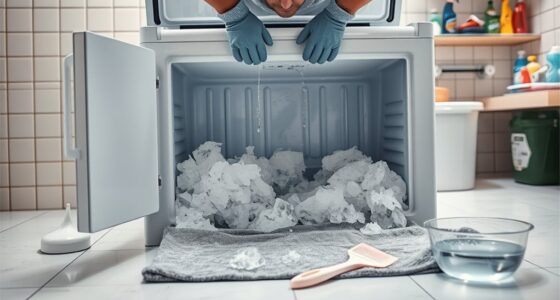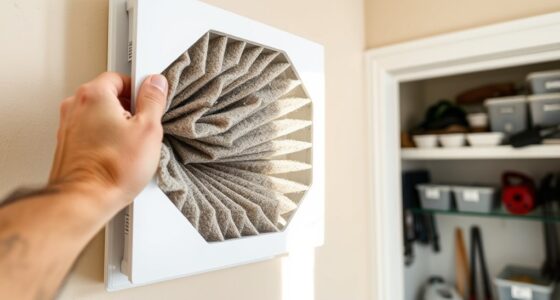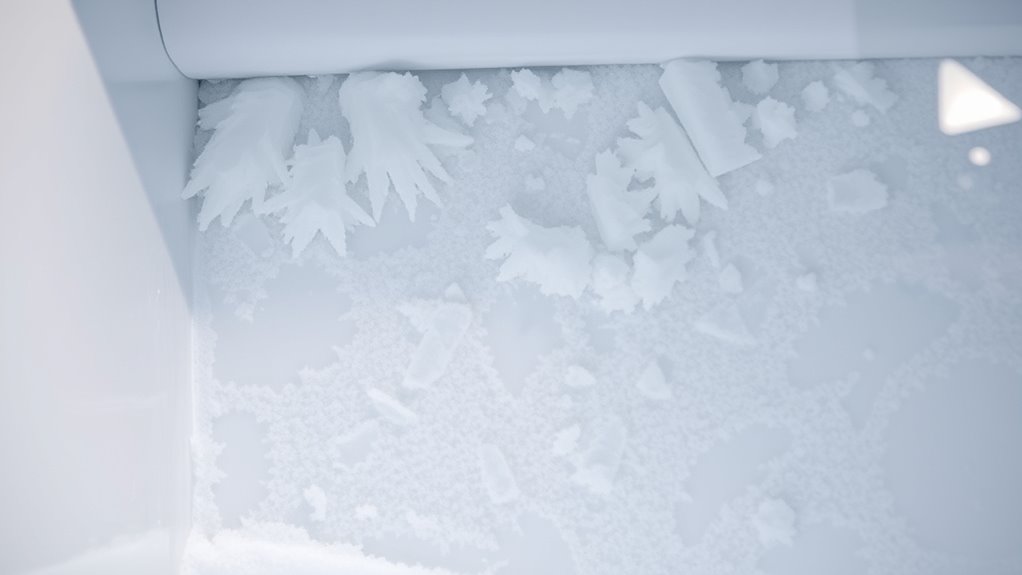

Frost build-up in your freezer mainly happens when warm, humid air enters through leaks, door openings, or poor seals, then freezes inside. Overloading or storing unsealed wet food can also trap moisture. Temperature fluctuations, malfunctioning defrost systems, and structural issues make frost worse. Maintaining proper seal integrity, organizing your items, and avoiding frequent door openings can help, but exploring more about root causes and fixes will give you better solutions.
Key Takeaways
- Seal leaks and door misalignments to prevent humid air entry that causes frost buildup.
- Maintain proper temperature settings (-18°C to -20°C) to reduce condensation and frost formation.
- Ensure regular defrosting and repair malfunctioning defrost systems to prevent frost accumulation.
- Organize storage to promote airflow, avoid overpacking, and minimize moisture release from containers.
- Limit door openings and keep seals clean to reduce humidity entry and frost development inside the freezer.
Understanding How Warm and Humid Air Contributes to Frost Formation
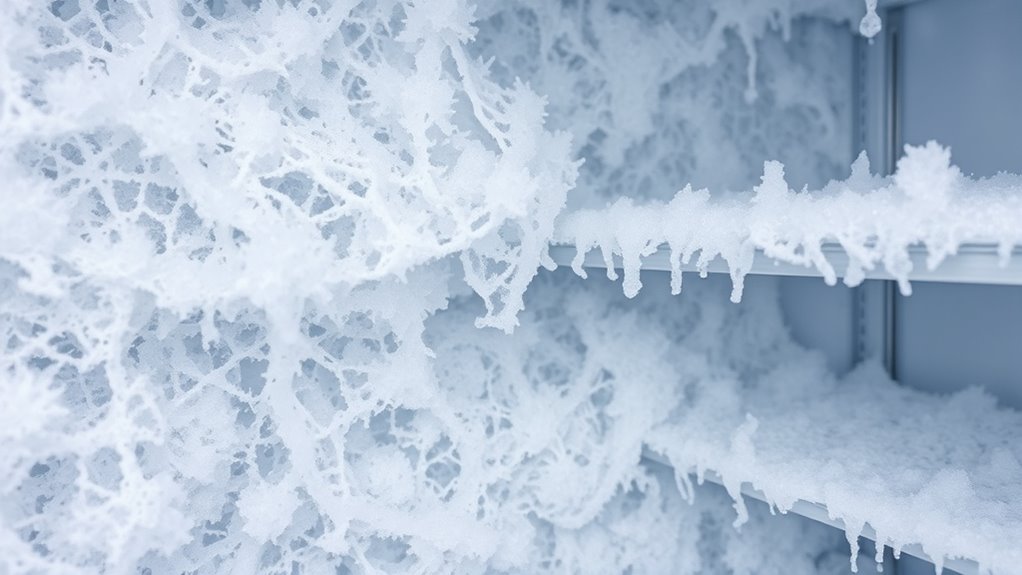
Warm and humid air substantially contributes to frost formation inside your freezer because it carries more moisture than cold air. When this air enters your freezer, it cools rapidly to sub-zero temperatures. As it cools, the moisture reaches 100% relative humidity, hitting the dew point, and condenses into tiny water droplets. These droplets freeze instantly upon contact with cold surfaces, creating frost. Over time, as more warm, moist air enters—especially through frequent door openings, damaged seals, or gaps—the frost accumulates. The process is ongoing, with moisture repeatedly condensing and freezing on evaporator coils, walls, or stored items. Controlling door openings, maintaining seals, and minimizing humidity exposure are key to reducing frost buildup caused by humid air intrusion. Additionally, proper freezer maintenance can help reduce the likelihood of frost forming by ensuring seals are intact and ventilation is adequate. Implementing humidity control measures can further prevent excess moisture from entering the freezer environment.
The Impact of Overloading and Improper Food Storage on Freezer Frosting
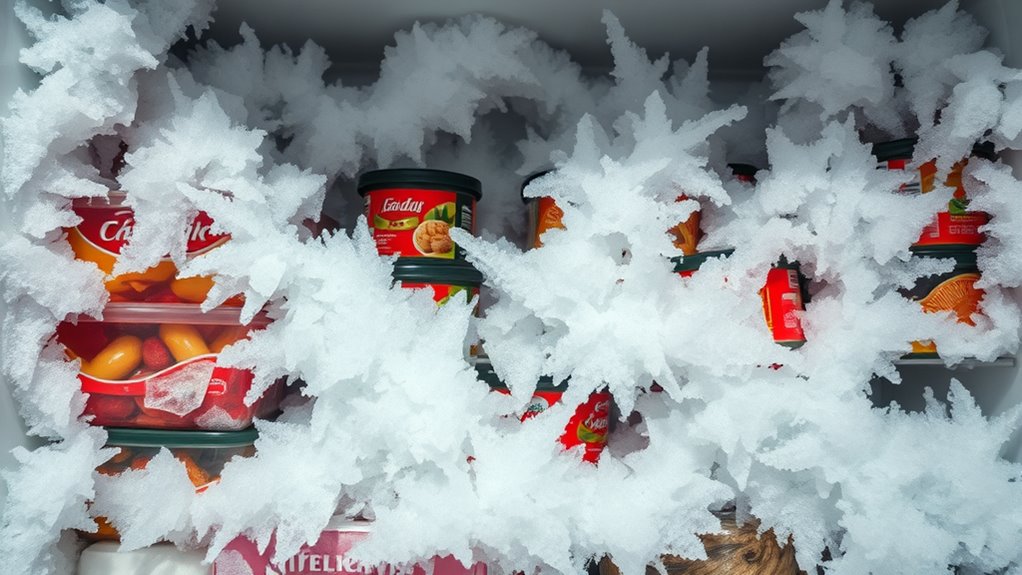
Overloading your freezer blocks airflow, causing uneven cooling and increasing frost buildup. When food isn’t sealed properly or stored in wet containers, moisture escapes and freezes, adding to the frost. Keeping items organized and leaving space for air circulation helps prevent these issues and keeps frost at bay. Proper airflow is essential for maintaining consistent temperature and minimizing frost formation. Additionally, understanding how condenser performance affects frost buildup can help optimize your freezer’s efficiency. Regular defrosting and cleaning can also improve overall freezer function and prevent excessive frost accumulation.
Airflow Obstruction Risks
When you overload your freezer or store food improperly, you risk obstructing essential airflow pathways. Excessive food volume can block the evaporator fan, limiting cold air circulation and causing uneven cooling. Crowded shelves and tightly packed containers prevent proper airflow distribution, leading to frost buildup in localized areas. Large or bulky items placed improperly can block vents, reducing ventilation and increasing frost accumulation. Blocking return air vents between compartments hampers air exchange, causing temperature inconsistencies and more frost. Disorganized contents make it difficult for cold air to reach all sections evenly, creating frost pockets. Overloading and improper storage force the compressor to work harder, increasing energy use and risking damage to internal components. Maintaining clear airflow pathways is vital for preventing frost buildup and ensuring efficient freezer operation. Proper food storage techniques can also minimize frost formation by reducing clutter and improving airflow. Additionally, understanding airflow patterns within the freezer can help identify potential problem areas before frost becomes a significant issue.
Moisture Entrapment Factors
Crowded freezer shelves and tightly packed containers can substantially increase moisture levels inside your freezer. Overloading limits airflow, causing moisture to accumulate in specific areas and freeze as frost. Dense packing traps humidity released by thawing or surface moisture, leading to more frost on walls and food surfaces. Excess food mass causes temperature fluctuations, promoting condensation and ice formation. An overfull freezer also takes longer to close, letting warm, humid air in and raising interior moisture. It reduces defrost cycle efficiency, speeding up frost buildup. Improperly sealed food releases vapor, which condenses on cold surfaces and forms frost. Hot or wet foods increase humidity; cooling or drying them before freezing helps. Frequent door openings introduce moist air, accelerating frost formation. Proper organization prevents moisture entrapment and reduces frost buildup.
The Role of Door Operation and Seal Integrity in Maintaining a Frost-Free Environment
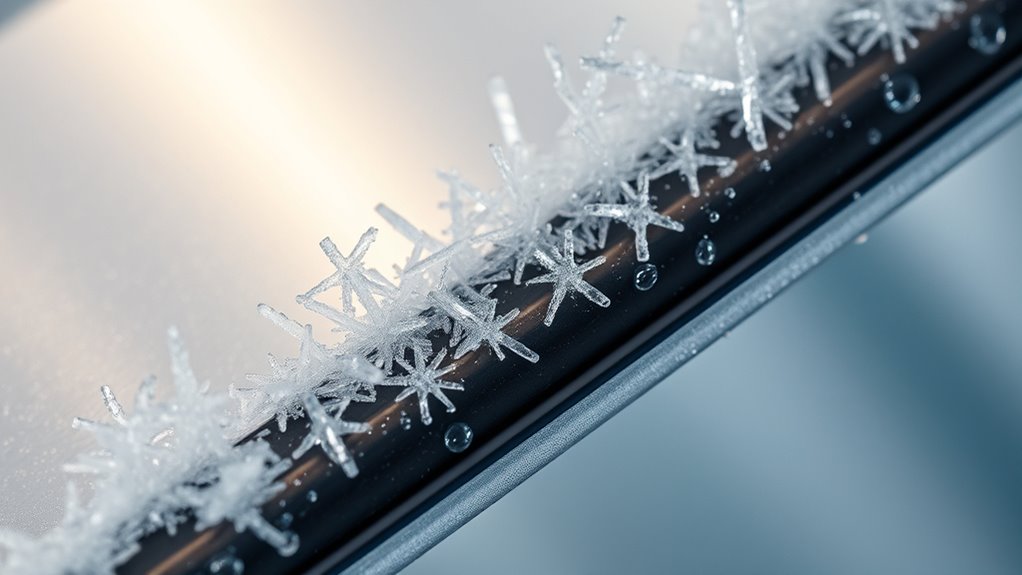
Your freezer door plays a vital role in preventing frost buildup, so proper handling is essential. Regularly inspecting the seal for cracks or dirt helps maintain airtight closure, while addressing any damage quickly keeps frost at bay. When you guarantee the door closes fully and the seal stays intact, you reduce the chances of warm, humid air entering and causing frost to form. Using a self-watering system for your plants can help maintain consistent moisture levels, which is unrelated but highlights the importance of proper maintenance in various household systems. Properly functioning seals are similar to the importance of using the correct brewing techniques in coffee preparation to achieve the desired flavor profile.
Proper Door Handling
Proper door handling is essential for preventing frost build-up inside your freezer. How you open and close the door directly impacts frost formation. To keep frost at bay, follow these key practices:
- Open doors only when necessary and close them quickly and firmly.
- Avoid blocking the seal with food items or objects, ensuring full closure.
- Keep door seals clean from sticky residues and debris to maintain airtightness.
- Regularly check door alignment and hinge condition to ensure proper sealing.
- Ensuring that the door seal remains intact and free from damage is crucial for maintaining a frost-free environment. Additionally, proper water pressure and effective flushing in toilets can prevent leaks that contribute to humidity and frost formation inside freezers.
Seal Inspection Tips
Regular seal inspections are crucial for maintaining a frost-free environment in your freezer. Start by shining a flashlight inside, then close the door and look for light escaping around the seal edges—pay close attention to corners where gaps and wear often occur. Check for cracks, tears, or debris on the gasket surface that could prevent proper sealing. Perform the paper or dollar bill test by placing it between the seal and frame, then closing the door halfway; resistance indicates a good seal, while easy sliding suggests leaks. Conduct these inspections regularly, especially after heavy use or impacts. Keep the gasket and surrounding frame clean and dry, and make certain the door closes tightly to prevent air leaks and moisture infiltration that cause frost buildup. Additionally, understanding the Pimple Patch technology can help if your freezer issues are caused by moisture affecting stored items, as proper sealing prevents excess humidity that can lead to frost accumulation. Maintaining a well-sealed freezer door is essential for air leak prevention and to ensure optimal operation.
Impact of Seal Damage
Damage to the freezer door seal directly impacts its ability to keep warm, moist air out, which is essential for preventing frost buildup. When the seal is compromised, warm air enters, increasing humidity inside and causing frost to form. Here are key effects:
- Air leaks weaken cold retention, causing temperature fluctuations that promote condensation and ice formation.
- Frost buildup can block vents or fans, reducing air circulation and freezer efficiency.
- Damaged seals lead to longer compressor runs, raising energy costs and accelerating frost accumulation.
- Gaps created by seal failure allow moisture-laden air to seep in, increasing manual defrosting needs and frost buildup.
Ensuring your seal is intact is crucial for maintaining a frost-free environment and ideal freezer performance.
How Temperature Settings and Fluctuations Affect Frost Buildup
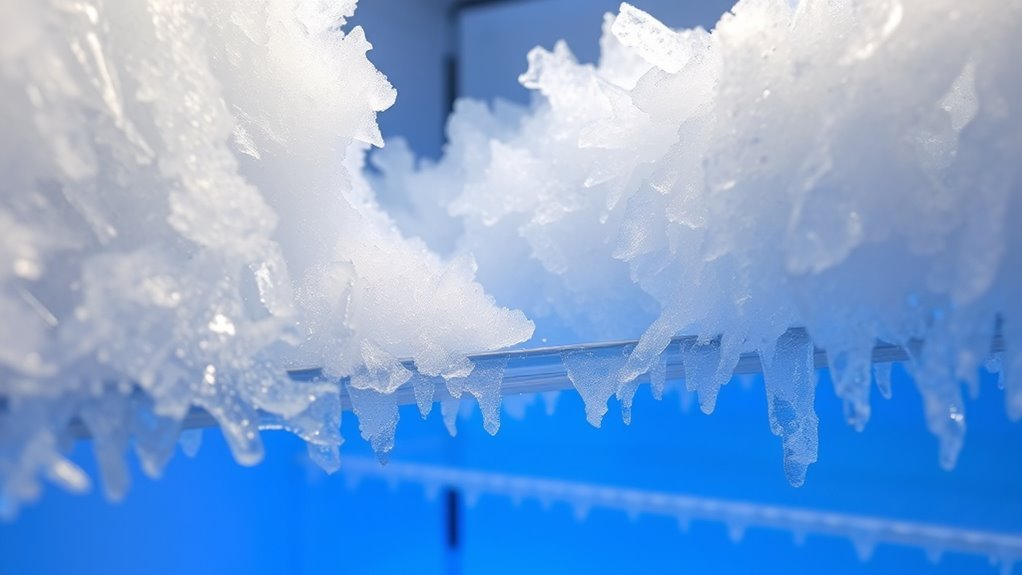
Temperature settings and fluctuations directly influence how much frost builds up inside your freezer. Setting the temperature too low causes excessive frost because increased condensation freezes on cold surfaces. Conversely, setting it too high prevents proper freezing, leading to moisture buildup that freezes intermittently. The ideal range is around -18°C (0°F) to -20°C (-4°F) to minimize frost. Rapid temperature drops, such as when warm items are added, create localized frost due to moisture condensation. Fluctuating temperatures, caused by frequent door openings or defrost cycle failures, lead to repeated freezing and thawing cycles that promote frost accumulation. Maintaining a consistent temperature helps limit frost buildup, keeps your freezer running efficiently, and reduces the need for frequent defrosting. Proper temperature management is key to avoiding excess frost and ensuring your freezer operates efficiently.
Humidity Sources Inside and Outside the Freezer That Accelerate Frost Development

External humidity sources play a important role in speeding up frost buildup inside your freezer. High ambient humidity, especially above 55%, increases moisture entering the unit. Warm air infiltration occurs when you open the door, allowing humid room air to condense and freeze inside. Freezers placed near exterior doors face repeated exposure to moist outside air, raising frost risks. Gaps or poorly sealed panel joints in walk-in freezers let external moisture seep in, promoting frost formation. Additionally, heated vent ports, if not managed properly, can introduce moisture. To minimize these effects, ensure proper sealing, limit door openings, and position your freezer away from humid areas. Addressing external humidity sources can considerably slow frost buildup and improve freezer efficiency. Using appropriate app features to monitor environmental conditions can help you identify and control external humidity influences more effectively.
Mechanical and Structural Issues That Lead to Excess Frost Accumulation
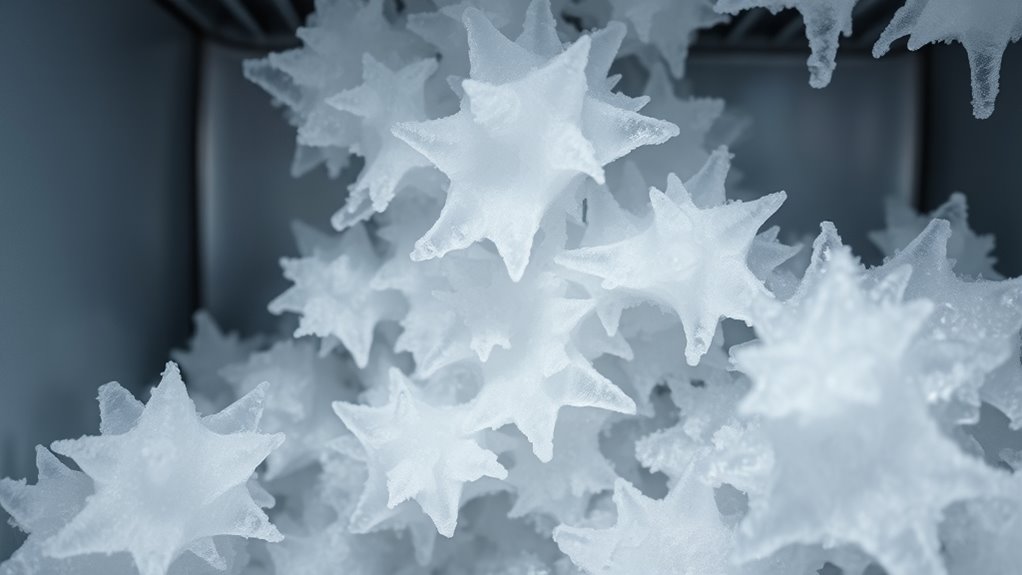
Mechanical and structural issues are common causes of excessive frost buildup in freezers. A malfunctioning defrost system, such as a faulty heater, timer, or thermostat, prevents frost from melting, allowing it to thicken and contact the back wall. You might notice a clicking sound from the circulation fan, indicating interference from frost. Damaged door seals and gaskets also contribute by letting warm, moist air seep inside, leading to condensation and frost formation near entry points. Structural problems like misaligned or damaged doors, warped frames, or compromised insulation can create cold spots or gaps, promoting frost buildup. Regular inspection, maintenance, and timely repairs of these components help ensure proper sealing and airflow, reducing unwanted frost accumulation and maintaining freezer efficiency. Additionally, signs of spoilage such as mold or discoloration can occur if frost and moisture issues are not addressed promptly.
Common Operational Mistakes That Increase Frost Formation
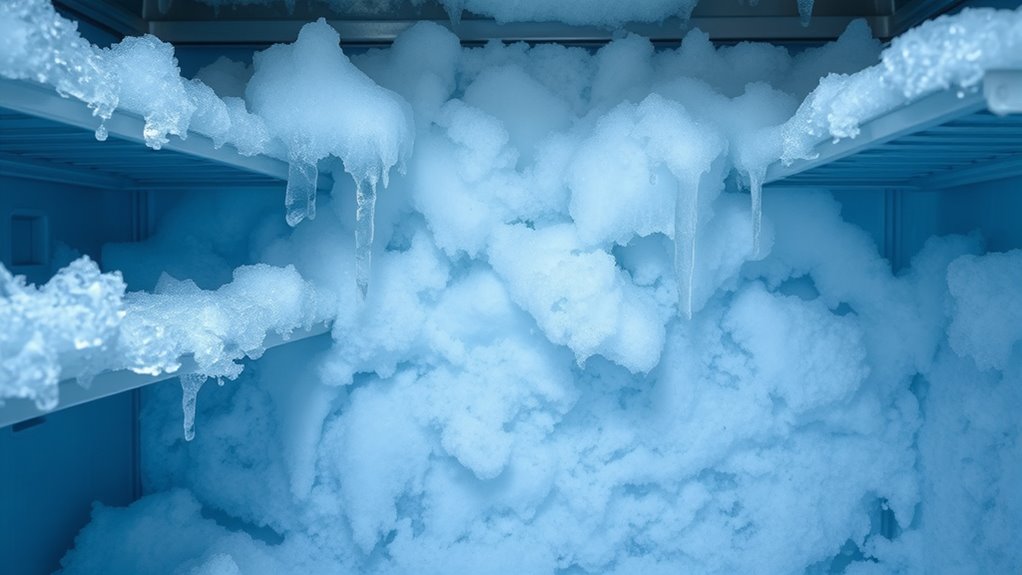
Many common operational mistakes can substantially increase frost formation inside your freezer. First, leaving the door open—even briefly—lets warm, humid air in, which condenses and freezes, adding to frost buildup. Second, frequently opening the door or leaving it ajar causes constant air exchange and moisture entry. Third, storing hot or uncovered food raises internal humidity and temperature, promoting frost. Fourth, overfilling the freezer restricts airflow, trapping moisture and warm spots. Additionally, improper temperature settings, such as too low or fluctuating temperatures, can cause excess frost. Neglecting to check door seals or ignoring signs of wear allows humid air to leak in. Finally, skipping routine defrost system checks lets frost accumulate unchecked, accelerating buildup and complicating maintenance. Regularly inspecting the door seals and ensuring proper operation can prevent unnecessary frost formation. Proper air circulation within the freezer is crucial for an even temperature and to reduce frost buildup. Avoid these mistakes for a frost-free freezer.
The Consequences of Frost Build-Up on Efficiency, Food Quality, and Maintenance
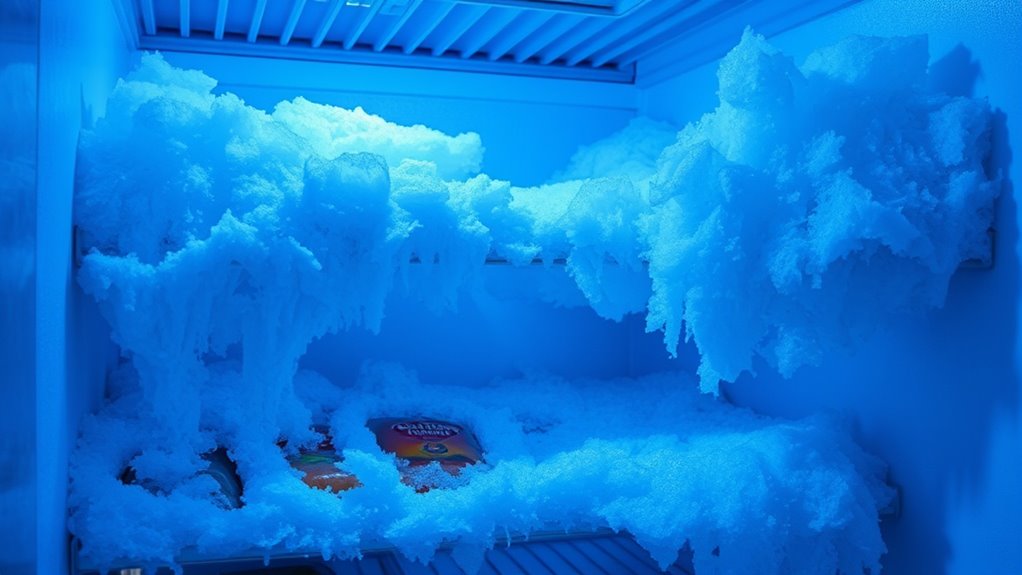
Frost build-up inside your freezer doesn’t just look unsightly; it directly impacts its efficiency and your energy bills. Frost acts as an insulating layer on evaporator coils, reducing heat transfer and forcing your freezer to work harder. It also blocks airflow, causing uneven temperatures and cold spots that compromise food safety. As frost thickens, storage space shrinks, making it harder to organize and increasing the need for frequent defrosting. This can lead to freezer burn, spoilage, and uneven freezing, which degrade food quality. Additionally, frost increases maintenance costs by damaging components like door seals and fans, and raises energy consumption. Over time, heavy frost can shorten your freezer’s lifespan, leading to costly repairs or replacements. Managing frost effectively is essential to prevent these efficiency and safety issues. Furthermore, automation in modern freezers includes features like automatic defrost systems that help maintain optimal performance with minimal manual intervention. Proper temperature regulation also plays a crucial role in minimizing frost accumulation and maintaining food freshness.
Practical Fixes and Preventative Measures to Minimize Freezer Frost Accumulation
Keeping frost buildup in check requires proactive steps to seal out moisture and manage temperature. Here are key measures to minimize frost accumulation:
- Inspect door gaskets regularly for cracks or tears, and clean them with warm, soapy water to ensure a tight seal. Replace damaged gaskets immediately and always close the door securely.
- Maintain the recommended freezer temperature around 0°F (-18°C) using a reliable thermometer, and avoid leaving the door open for extended periods. Proper temperature control helps prevent excessive frost formation.
- Don’t overpack the freezer; leave space between items for proper airflow. Organize your food with bins to reduce door open times. Good airflow is essential to reduce frost buildup.
- Defrost manual freezers regularly and clean interiors with a baking soda solution. Dry surfaces thoroughly after cleaning.
- Consider the humidity levels in your home, as higher humidity can contribute to increased frost buildup if not properly managed. Proper humidity control can significantly reduce frost issues.
Frequently Asked Questions
How Often Should I Defrost My Freezer to Prevent Frost Buildup?
You should defrost your freezer at least once a year, or more often if you notice frost exceeding ¼ inch or if it’s used heavily. For older models without auto-defrost, manual defrosting helps prevent excessive ice buildup. Regular defrosting keeps your freezer running efficiently, preserves food quality, and prevents strain on components. Keep an eye on frost thickness and defrost as needed to maintain peak performance.
Can Installing a Dehumidifier Help Reduce Frost Formation Inside My Freezer?
Imagine a dry, arid desert where moisture can’t settle—installing a dehumidifier inside your freezer creates that same environment. It actively pulls moisture from the air, preventing frost from forming on surfaces. By reducing humidity, you lessen ice buildup, making maintenance easier and keeping your freezer running efficiently. So yes, a dehumidifier acts like a gust of fresh, dry air, greatly cutting down frost formation inside your freezer.
What Are Signs of a Faulty Door Gasket Leading to Frost Issues?
If your freezer has a faulty door gasket, you’ll notice frost forming around the door edges or ice buildup along the seals. You might see gaps or cracks in the gasket, or the door may not sit flush anymore. The freezer could feel colder around the door area, and the door might feel loose or misaligned. Performing the paper test can also reveal if the seal is weak, leading to frost issues.
How Can I Improve Freezer Airflow to Minimize Frost Accumulation?
Think of your freezer as a busy city where air is the traffic, and frost is the traffic jam. To keep things flowing smoothly, you should keep items organized with space in between, avoid blocking vents, and regularly clean dust and ice buildup. Maintain the right temperature, minimize door openings, and don’t overload. These steps help air circulate freely, reducing frost accumulation and keeping your freezer running efficiently.
Is It Necessary to Manually Clean and Defrost My Freezer Regularly?
Yes, you should manually clean and defrost your freezer regularly. Doing so prevents excessive ice buildup, which can impair performance and reduce storage space. You’ll want to defrost when ice exceeds a quarter inch thick or if the freezer isn’t cooling properly. Regular maintenance keeps your freezer running efficiently, helps preserve your food, and extends the lifespan of your appliance. Check your manual for specific recommendations.
Conclusion
To keep your freezer running smoothly, think of frost as an unwelcome snowstorm inside your appliance. By sealing leaks, avoiding overloading, and maintaining steady temperatures, you can let your freezer breathe easy, like a clear winter sky. Regularly defrost and keep humidity at bay to prevent frost from piling up like icy mountains. With these simple steps, you’ll turn your freezer into a calm, frost-free haven, ensuring fresh food and hassle-free maintenance.