
TL;DR

Get home appliances delivered free with Prime
- Fast, free delivery on millions of items
- Prime Video, Amazon Music and more included
- Member-only deals all year
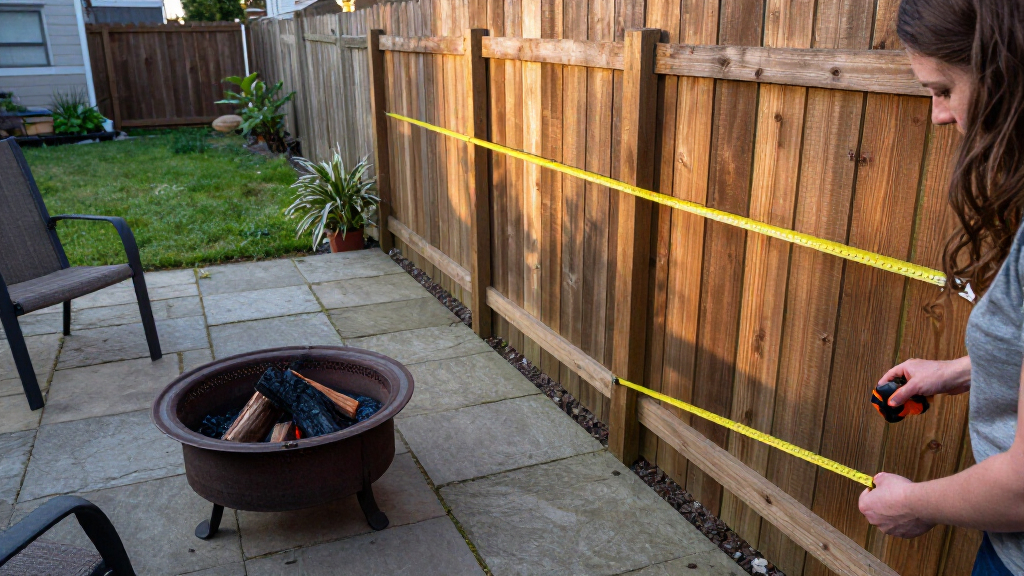
UK guidance cited by Ideal Home says there is no specific legal distance a garden fire pit must be from a fence. A neighbour can raise concerns about fire risk or smoke; councils may act if smoke meets the statutory nuisance test described by a solicitor quoted in the report.
A neighbour’s fire pit does not have a legally specified minimum distance from a garden fence in the guidance cited by Ideal Home, but smoke or a potential fire risk can still prompt action. The report advises residents to raise safety concerns with the neighbour first and says persistent smoke may be reported to the local council if it substantially interferes with a home or affects health.
Gaz Eastwood, an outdoor cooking and heating expert at Direct Stoves, told Ideal Home that neighbours can generally use fire pits in their gardens, while caution remains necessary. He said there is no specific law setting out exactly how far a fire pit must sit from a fence. That does not mean its placement is free of safety considerations, he added.
Eastwood advised following the manufacturer’s instructions and placing a fire pit on a flat, non-combustible surface, well away from fences, foliage and low-hanging branches. The report also cautions that a lit fire pit should not be moved. Residents concerned about a neighbour’s placement are advised to speak with them before escalating the matter; the report says a neighbour may agree to use a different location if there is a genuine concern.
If the problem continues, the report points residents to their local council. Jordan Kluth, a senior associate and conveyancing solicitor at John Fowlers, said smoke may meet the statutory nuisance test if it unreasonably and substantially interferes with the use or enjoyment of a home or other premises, or injures or is likely to injure health. The article says a council that agrees there is a nuisance can serve an abatement notice restricting or preventing use. It reports that a court can impose a fine if the notice is ignored or breached without reasonable excuse.
When Smoke Can Prompt Council Action
The distinction matters because fence distance alone is not presented as the legal test in the report. The relevant questions are whether the fire pit poses a safety risk and whether its smoke reaches the level of a statutory nuisance. That means a neighbour’s concern may warrant a conversation without automatically establishing that a legal breach has occurred.
For residents affected by smoke, the council route offers a formal way to raise a persistent problem. According to Kluth, council action may restrict or prevent fire pit use if the statutory test is met. The report does not say that every complaint will result in an abatement notice; the council must assess whether the reported conditions meet the stated threshold.
Products Worth Considering

Shark Rocket Pet Plus Corded Stick Vacuum, Bordeaux, HV322

Ring Battery Doorbell and Chime (3rd Gen), Satin Nickel
Dyson Car+Boat Cordless Handheld Vacuum
As an affiliate, we earn on qualifying purchases.
What the Guidance Says About Placement
The report focuses on private garden fire pits as cooler weather makes them more popular. It describes general safety advice rather than a fixed legal setback: follow the product maker’s directions, use a stable non-combustible surface and keep flames away from fences and vegetation. It does not specify a universal safe distance, because the source says no specific law sets one.
That leaves placement dependent on the manufacturer’s instructions and the conditions around each fire pit. Eastwood’s advice is attributed to him as an outdoor cooking and heating expert. The legal explanation is attributed to Kluth, who discusses the Environmental Protection Act 1990 and the statutory nuisance criteria. The report does not provide separate council guidance, case law, or details of a particular neighbour dispute.
“There isn’t a specific law that sets out exactly how far it must be from a garden fence.”
— Gaz Eastwood, Outdoor Cooking and Heating Expert at Direct Stoves
How Councils Assess Smoke Complaints
The supplied report does not identify a specific fire pit dispute or council decision. It gives no fixed distance that residents can use to decide whether a fire pit is too close, and it does not say how a particular council would assess smoke from an individual garden.
Whether smoke qualifies as a statutory nuisance depends on the effects described by Kluth: substantial and unreasonable interference with the use or enjoyment of premises, or injury or likely injury to health. The report does not set out what evidence a council would require, how long an investigation might take, or what outcome would follow in any particular case.
Steps for Neighbours and Councils
Residents worried about a nearby fire pit can first explain the safety or smoke problem to their neighbour and ask whether it can be used in a different place in future. If smoke continues to cause substantial interference or raises a health concern, the report says the resident can contact the local council. Any next step would depend on the council’s assessment and, if an abatement notice is served, whether the neighbour complies.
People using a fire pit should follow the manufacturer’s directions and keep it on a flat, non-combustible surface away from fences, plants and low branches. The report does not give a date for any further guidance or development.
Key Questions
Is there a legal minimum distance between a fire pit and a fence?
The Ideal Home report says there is no specific law setting an exact distance from a garden fence. It still advises careful placement and following the manufacturer’s instructions.
What should I do if my neighbour’s fire pit concerns me?
The report recommends speaking to the neighbour first and explaining the safety or smoke concern. If smoke continues to cause a problem, residents can contact their local council.
When can smoke be treated as a statutory nuisance?
Solicitor Jordan Kluth says smoke must unreasonably and substantially interfere with use or enjoyment of a home or other premises, or injure or be likely to injure health, to meet the test described in the report.
Can the council stop a neighbour using a fire pit?
According to the report, a council that deems the smoke a statutory nuisance can serve an abatement notice restricting or preventing use. The report says a court can impose a fine if the notice is ignored or breached without reasonable excuse.
Source: rss