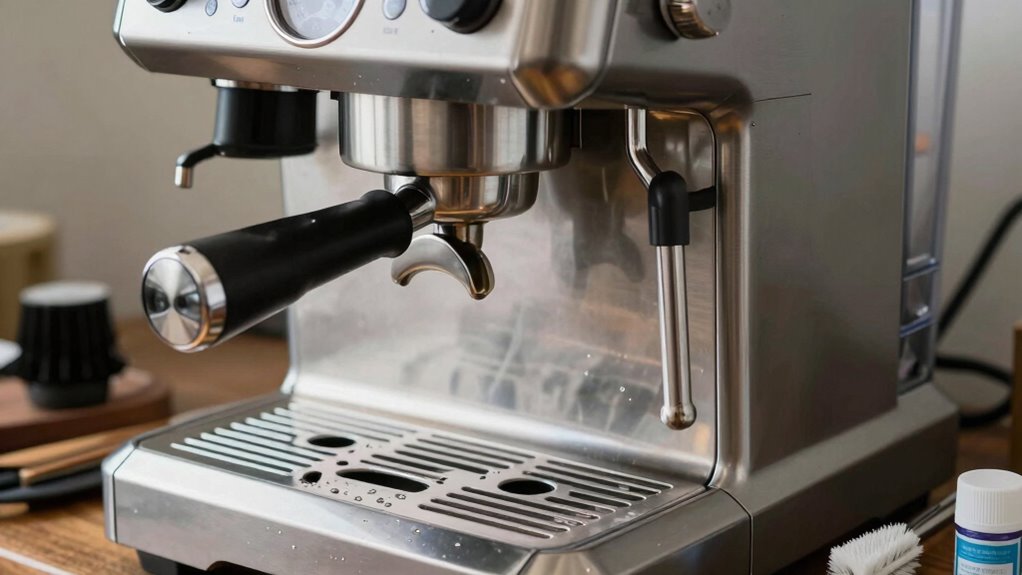

To keep your super-automatic espresso machine performing its best, follow a routine of regular cleaning and maintenance. Use built-in filters, replace them on schedule, and use filtered or bottled water to prevent mineral buildup. Descale as needed, especially in hard water areas, using recommended solutions and machine-specific instructions. Clean brew groups, milk frothers, and drip trays often to maintain flavor and prevent issues. Continue exploring for more tips to guarantee your machine stays in top shape.

Get home appliances delivered free — and shop member deals
- Fast, free delivery on millions of items
- Access to Prime Big Deal Days deals on October 6–7
- Prime Video, Amazon Music and more included
Key Takeaways
- Regularly perform descaling to prevent mineral buildup, especially in hard water areas, following manufacturer-specific instructions.
- Use built-in water filters and replace them as recommended to maintain water quality and protect internal components.
- Clean brew groups, milk frothers, and drip trays routinely to remove oils, residues, and ensure optimal flavor.
- Run descaling solutions through the machine’s brew and steam systems periodically for internal cleaning.
- Follow a consistent maintenance schedule to prolong the machine’s lifespan and ensure consistently high-quality espresso.

Super-automatic espresso machines have revolutionized home brewing by offering a convenient way to make high-quality espresso with minimal effort. However, to keep your machine performing at its best, regular cleaning and maintenance are essential. One of the most important aspects is guaranteeing proper water filtration. Using filtered water helps prevent mineral buildup and reduces the risk of limescale formation, which can impair the machine’s performance. Many machines come with built-in water filters, so it’s vital to replace these filters according to the manufacturer’s recommendations. Doing so guarantees that your water remains clean and that your espresso tastes fresh and vibrant every time. If your machine doesn’t have a built-in filter, consider using bottled or filtered water to minimize mineral deposits.
Descaling is another critical maintenance task, especially if you have hard water. Over time, mineral deposits can accumulate inside your espresso machine’s boiler and pipes, leading to decreased efficiency and potentially damaging the internal components. To prevent this, you should follow specific descaling methods outlined by your machine’s manufacturer. Typically, descaling involves running a solution of descaling agent and water through the machine’s brewing and steam systems. Many machines have built-in descaling alerts to notify you when it’s time to perform this process. Regular descaling keeps your machine operating smoothly, preserves the quality of your espresso, and extends its lifespan. Incorporating preventative maintenance into your routine can help you avoid costly repairs down the line.
When it comes to descaling methods, it’s important to use the right products and procedures. Always follow the manufacturer’s instructions carefully, as improper descaling can harm your machine. Usually, you’ll mix a descaling solution with water and run it through the machine’s brew cycle. Afterward, you’ll need to flush the system with clean water to remove any residual solution. Some models may have specific descaling programs, simplifying the process. Remember, maintaining a clean machine isn’t just about removing mineral buildup; it also involves cleaning the brew group, milk frother, and drip tray regularly. Keeping these parts free of coffee oils and milk residues helps guarantee every cup tastes as good as the first.
super automatic espresso machine descaling kit
As an affiliate, we earn on qualifying purchases.
As an affiliate, we earn on qualifying purchases.
Frequently Asked Questions
How Often Should I Replace the Water Filter?
You should replace the water filter every 2 to 3 months to maintain ideal water quality. Regular filter replacement ensures your espresso machine operates efficiently and prevents mineral buildup. Keep an eye on the machine’s indicator, if available, as it alerts you when a new filter is needed. By staying on top of filter replacement, you’ll enjoy better-tasting coffee and extend your machine’s lifespan.
Can I Use Vinegar to Descale the Machine?
You can use vinegar for descaling, but vinegar safety isn’t guaranteed for all machines. It’s a popular descaling alternative because it’s affordable and effective, but some manufacturers advise against it due to potential damage or residue. Always check your machine’s manual first. If you choose vinegar, dilute it properly and rinse thoroughly afterward to avoid any lingering taste or harm. Consider commercial descaling solutions if you’re unsure.
What’s the Best Way to Clean the Brew Group?
To clean the brew group, you should remove it regularly for thorough brew group maintenance. Use a soft brush or cloth to remove coffee residues, and rinse with warm water. Follow your machine’s recommended cleaning cycle frequency—usually monthly—to prevent buildup. Avoid harsh chemicals, and guarantee the brew group is completely dry before reinsertion. Consistent cleaning keeps your espresso machine functioning at its best and extends its lifespan.
Are There Specific Cleaning Products Recommended?
You should use cleaning product recommendations specifically designed for espresso machines, like descaling solutions, to keep your super-automatic espresso machine in top shape. Avoid harsh chemicals that can damage internal parts. Look for products labeled safe for super-automatic machines, and follow the manufacturer’s instructions carefully. Regularly using these descaling solutions and cleaning products guarantees your machine stays clean, functions efficiently, and produces great-tasting coffee every time.
How Do I Prevent Mineral Buildup Over Time?
To prevent mineral buildup, you should regularly use water filtration to reduce mineral deposits in your machine. Also, descale your espresso machine as recommended by the manufacturer, typically every 1-3 months. Always use filtered water if possible, and run a descaling solution through the system to dissolve any accumulated deposits. These steps will help maintain peak performance and guarantee your machine lasts longer.
Conclusion
To keep your super-automatic espresso machine running smoothly, don’t skip the cleaning routine. Regular upkeep isn’t just a chore—it’s the secret to better-tasting coffee and longer-lasting equipment. Think of it as watering a plant; neglect it, and things will go south fast. Stay consistent with cleaning, and you’ll enjoy your favorite brew without a hitch. After all, a clean machine is a happy machine, and happy machines make happy mornings.
Halloween Picks
halloween
As an affiliate, we earn on qualifying purchases.