
The KitchenAid Artisan Series 5 Quart Tilt Head Stand Mixer is a versatile kitchen staple designed for durability and efficient performance. Proper maintenance is essential to keep your mixer running smoothly, prevent breakdowns, and extend its lifespan. Whether you’re a beginner or a seasoned user, this guide offers step-by-step instructions, practical tips, and troubleshooting advice to help you care for your mixer effectively.

Get home appliances delivered free with Prime
- Fast, free delivery on millions of items
- Prime Video, Amazon Music and more included
- Member-only deals all year
Regular maintenance not only preserves the appearance of your mixer but also ensures that it functions reliably for all your baking and cooking needs. From cleaning and lubrication to addressing common issues, we’ve covered everything you need to know to keep your KitchenAid mixer in top condition.
Key Takeaways
| Routine Cleaning | Clean your mixer after each use to prevent buildup and maintain hygiene. |
| Lubrication | Lubricate moving parts periodically to ensure smooth operation. |
| Bowl and Attachments | Regularly inspect and clean attachments and the bowl for optimal mixing. |
| Troubleshooting | Identify common issues like motor overheating or unresponsive controls. |
| Storage & Safety | Store your mixer properly and follow safety precautions during maintenance. |
Cleaning Your Mixer After Each Use
- Unplug the mixer for safety before cleaning.
- Remove the bowl and attachments, and wash them in warm, soapy water. Dishwasher safe stainless steel bowls can be cleaned in the dishwasher.
- Wipe down the tilt-head and exterior surfaces with a damp cloth. Use a mild detergent for stubborn spots.
- Dry all parts thoroughly before reassembling to prevent rust and corrosion.
- For tough stains or dried ingredients, use a soft brush or non-abrasive sponge.
Regular cleaning prevents buildup of flour, dough, and other ingredients that can impair performance over time.
Lubricating Moving Parts
To keep your KitchenAid mixer running smoothly, lubrication is key. The mixer’s gears and moving parts should be lubricated periodically, especially if you notice any squeaking or stiffness.
- Unplug the mixer and remove the attachment hub cover if accessible (check your model’s manual).
- Apply a few drops of food-grade mineral oil or a silicone-based lubricant to the gear components. Do not over-lubricate.
- Operate the mixer briefly to distribute the lubricant evenly.
- Wipe off any excess oil with a clean cloth.
Always refer to your user manual for specific lubrication points and recommended lubricants to avoid damage.
Inspecting and Cleaning Attachments and Bowl
Attachments like beaters, whisks, and dough hooks should be checked regularly for wear and cleaned thoroughly.
- Remove attachments after each use and wash with warm, soapy water or place in the dishwasher if dishwasher safe.
- Inspect for cracks or damage, replacing any worn or damaged parts promptly.
- Clean the stainless steel bowl with a soft sponge and mild detergent. Avoid abrasive scrubbers that could scratch the surface.
Keeping attachments and the bowl clean ensures consistent mixing results and prevents contamination or residue buildup that can affect your recipes.
Troubleshooting Common Issues
If your mixer isn’t functioning properly, try these troubleshooting steps:
- Motor Overheating: Allow the mixer to cool down for 15-20 minutes. Check for overload—avoid mixing large batches beyond the recommended capacity.
- Unresponsive Controls: Ensure the mixer is properly plugged in and the switch is turned on. Reset the circuit if necessary.
- Struggling or No Power: Verify that the power outlet is working. Test with another device if needed.
- Unusual Noises: Stop the mixer and inspect for debris or damaged parts. Lubricate gears if squeaking occurs.
Addressing issues early prevents further damage and extends your mixer’s lifespan. If problems persist, consult a professional repair service or contact KitchenAid support.
Storing Your Mixer Safely
Proper storage helps maintain your mixer’s condition. Store it in a dry, cool place, preferably covered to prevent dust accumulation.
- Ensure all attachments are clean and dry before storing.
- Keep the cord neatly wound to avoid damage.
- Use the original box or a dedicated storage container for protection.
Safety first: Always unplug the mixer before cleaning or storing to prevent accidental activation.
The Products in This Guide
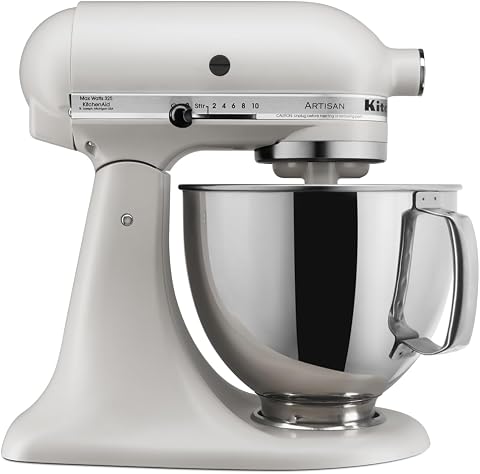
KitchenAid Artisan Series 5 Quart Tilt Head Stand Mixer
- ✔ Voltage: 120V
- ✔ Warranty: 1 Year
- ✔ Included Accessories: Pouring Shield

KitchenAid Stand Mixer Attachment
- ✔ Color: Metal
- ✔ Dishwasher Safe: No
- ✔ Included Accessories: Various plates and tubes
KitchenAid Artisan Series 5 Quart Tilt Head Stand Mixer
The KitchenAid Artisan Series 5 Quart Tilt Head Stand Mixer is built with durable metal construction and offers 59 touchpoints for thorough mixing. Its tilt-head design allows easy access for cleaning and attaching accessories, making it a favorite among home bakers. With 10 speeds and a 5-quart stainless steel bowl, it can handle small or large batches with ease.
Pros:
- Durable metal construction
- Tilt-head for easy access
- Multiple speed settings
- Large 5-quart bowl
- Dishwasher safe parts
Cons:
- Heavy and bulky to move
- Price point may be high for some
- Requires occasional lubrication
Best for: Home bakers needing reliable, versatile mixing power
Not ideal for: Light baking tasks or small kitchens with limited space
Bottom line: A sturdy, versatile mixer perfect for serious home bakers.
KitchenAid Stand Mixer Attachment
The KitchenAid Food Grinder attachment transforms your stand mixer into a powerful food processor, ideal for grinding meats, vegetables, and more. It features multiple grinding plates and sausage stuffer tubes, making it a versatile addition to your kitchen arsenal.
Pros:
- Sharp, durable metal grinder
- Includes fine, medium, and coarse plates
- Easy to attach and clean
- Enables fresh, customized food prep
Cons:
- Requires pre-chilling for best results
- Additional cost for attachment
- May be bulky for small kitchens
Best for: Homemade sausages, grinding meats, and preparing fresh ingredients
Not ideal for: For those not wanting to clean or store attachments regularly
Bottom line: A powerful, versatile attachment for fresh grinding needs.
Frequently Asked Questions
How often should I clean my KitchenAid mixer?
It’s recommended to clean your mixer after each use to prevent residue buildup and ensure optimal performance.
Can I lubricate my KitchenAid mixer myself?
Yes, using food-grade mineral oil or silicone-based lubricant on the gear components periodically can help maintain smooth operation. Always follow the manual’s guidance.
What should I do if my mixer stops working?
First, check the power outlet and cord. If the mixer overheats, let it cool down. If it remains unresponsive, contact KitchenAid support or a professional repair service.
Are the attachments dishwasher safe?
Most stainless steel attachments and the bowl are dishwasher safe, but always check the manual for specific cleaning instructions.
How do I troubleshoot unusual noises during operation?
Stop the mixer and inspect for debris or damage. Lubricate gears if squeaking occurs. If noise persists, professional servicing may be necessary.
Keep Your KitchenAid Mixer Running Like New
Regular maintenance is key to ensuring your KitchenAid Artisan Series mixer remains a reliable kitchen companion for years to come. By following proper cleaning, lubrication, and troubleshooting steps, you can prevent many common issues and enjoy flawless performance at every use. Investing a little time in upkeep pays off with consistent, professional-quality results every time you bake or cook.
Affiliate disclosure: As an Amazon Associate we earn from qualifying purchases. Prices and availability are accurate as of the time of publishing.
Cold & flu season Picks
humidifiers
As an affiliate, we earn on qualifying purchases.