To prevent mineral buildup in your ice maker, regularly replace the water filter every six months and clean key components like the reservoir, ice bin, and evaporator plates every three to six months. Using mild cleaning solutions or vinegar helps dissolve deposits, and installing a water softener can reduce mineral accumulation in hard water areas. Staying on top of these maintenance tasks guarantees clear, high-quality ice—continue with these tips to keep your machine running smoothly.
Key Takeaways
- Regularly replace water filters every six months to prevent mineral entry and buildup.
- Schedule cleaning every three to six months, focusing on evaporator plates, water lines, and ice bins.
- Use manufacturer-approved cleaning solutions like vinegar or mild detergents to dissolve mineral deposits.
- Install a water softener in hard water areas to reduce mineral content and prolong equipment lifespan.
- Monitor ice quality for signs of mineral buildup, such as cloudiness or unusual taste, and address issues promptly.
Regular maintenance is essential to keep your ice maker running smoothly and producing clean, fresh ice. One of the most important steps you can take is paying attention to water filter replacement. Over time, filters become clogged with minerals, sediments, and impurities, which can lead to mineral buildup inside the machine. If you neglect replacing the filter regularly, these deposits can accumulate on the evaporator plates and in the water lines, impairing the ice-making process and affecting ice quality. You should check your manufacturer’s guidelines for the recommended water filter replacement interval—usually every six months—to guarantee you’re not allowing mineral buildup to develop. By staying consistent with filter changes, you help prevent mineral deposits from entering the system and keep the water flowing freely.
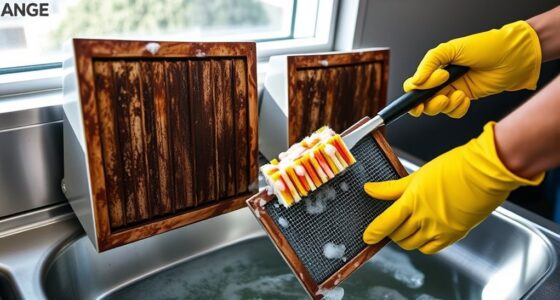
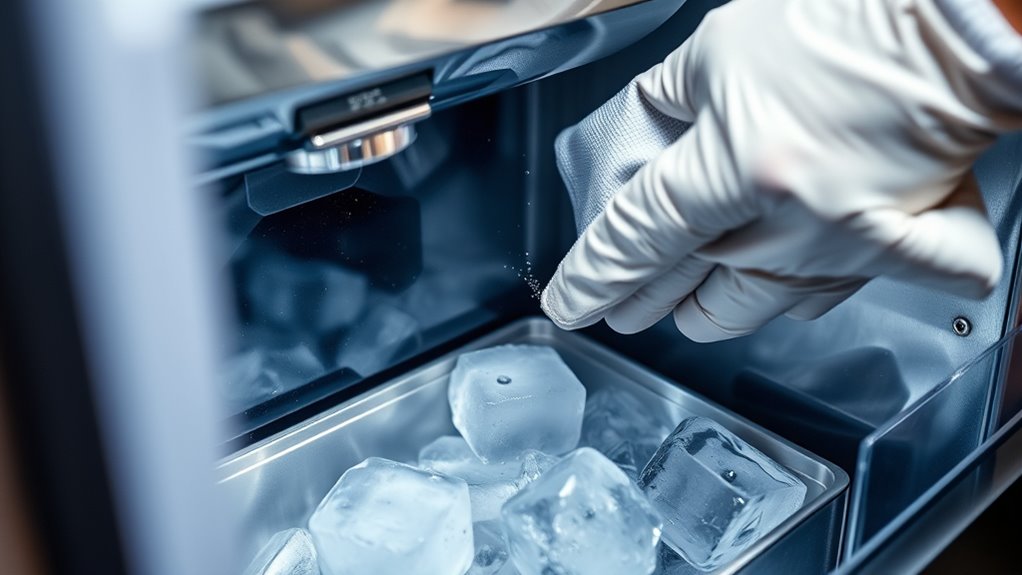
Establishing a cleaning schedule is equally vital. Regular cleaning helps remove mineral deposits, slime, and other residues that can collect over time. A good rule of thumb is to clean your ice maker at least once every three to six months, but if you notice a change in ice clarity or taste, it’s a sign you should clean it sooner. During cleaning, pay special attention to the water reservoir, the ice bin, and the evaporator plates, as these are common spots where minerals tend to settle. Using a mixture of mild detergent and vinegar or a manufacturer-approved cleaner can effectively dissolve mineral buildup and disinfect the interior. Be sure to follow the cleaning instructions specific to your model to avoid damage. Additionally, hard water issues can exacerbate mineral buildup, so addressing water quality can make maintenance easier.
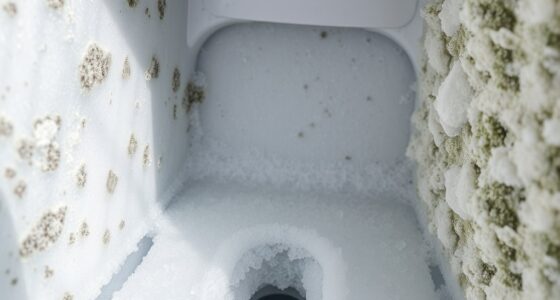
In addition to replacing filters and scheduling regular cleanings, always keep an eye out for any signs of mineral buildup, such as cloudy ice or odd tastes. When mineral deposits become thick, they can restrict water flow and reduce ice production. Regularly inspecting and maintaining your ice maker guarantees these issues don’t escalate. Also, consider installing a water softener if you have hard water, as this can greatly reduce mineral deposits and extend the time between cleanings and filter replacements. Maintaining a consistent cleaning schedule and prioritizing water filter replacement are key steps in preventing mineral buildup, ensuring your ice maker continues to produce high-quality, crystal-clear ice without interruption.
Frequently Asked Questions
How Often Should I Replace the Water Filter in My Ice Maker?
You should replace the water filter in your ice maker every six months, following the recommended replacement schedule. Regularly changing the water filter guarantees your ice stays clean and free of mineral buildup, which can affect the quality and efficiency of your ice maker. Keep an eye on the filter indicator, if available, and set reminders to swap out the filter so you always have fresh, clear ice.
Can Mineral Buildup Cause Ice Taste Issues?
Mineral buildup can turn your ice into an unrecognizable, flavorless disaster! When mineral deposits accumulate, they can seriously affect the ice flavor, making it taste metallic or off. These deposits may also cause ice to appear cloudy or develop an odd texture. To keep your ice tasting fresh and pure, regularly clean your ice maker and use filtered water. Preventing mineral buildup is key to enjoying crisp, clean ice every time.
What Are Signs My Ice Maker Needs Professional Servicing?
If your ice maker shows inconsistent ice production, strange noises, or foul tastes, it’s time for professional servicing. Ice maker diagnostics help identify issues like mineral buildup or faulty parts. The benefits of professional servicing include thorough cleaning, accurate repairs, and extending your appliance’s lifespan. Don’t ignore signs—addressing problems early guarantees your ice stays clean, fresh, and continues to work efficiently.
Are There Specific Cleaning Products Recommended for Mineral Deposits?
You should use specialized descaling solutions or mineral deposit removers to clean your ice maker. These products are designed to break down mineral buildup effectively without damaging the machine. Follow the manufacturer’s instructions carefully, usually involving a mixture of the solution with water. Regular use of these products will help prevent mineral deposits from forming, ensuring your ice maker stays clean and functions efficiently for longer periods.
How Does Hard Water Affect the Longevity of My Ice Maker?
Hard water can considerably reduce your ice maker’s lifespan because of scale formation caused by water hardness. As minerals build up, it strains the machine, making it work harder and increasing wear and tear. Over time, this can lead to costly repairs or early replacement. To protect your ice maker, consider installing a water softener, regularly cleaning, and using recommended descaling products to minimize mineral deposits.
Conclusion
To keep your ice maker running smoothly and prevent mineral buildup, stay diligent with regular cleaning and descaling. Don’t let it turn into a ghost of an old ship’s galley — a neglected machine can become a clog. By maintaining it properly, you’ll enjoy crystal-clear ice and avoid costly repairs. Remember, even in an age of modern marvels, a little upkeep can save you from a frozen disaster. Stay vigilant, and your ice maker will serve you well for years to come.