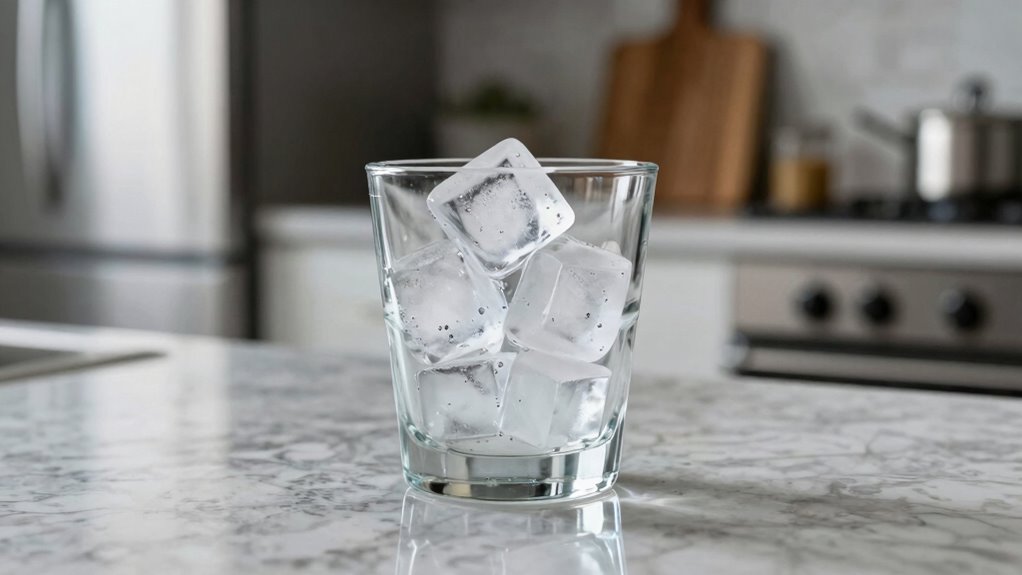
The hidden reason your ice tastes weird could be due to residual chemicals, minerals, or odors from your water source or equipment. Well water may contain natural elements affecting flavor, while municipal water often has chlorine or chloramine lingering in the ice. Poor cleaning habits or outdated equipment can also trap odors or bacteria. Ensuring proper water treatment and regular cleaning can make a big difference—stay tuned to discover how to fix these hidden issues effectively.
Key Takeaways
- Contaminants like residual chlorine, sulfur, or minerals in your water source can cause strange ice flavors.
- Poor cleaning habits allow mold, bacteria, or mineral buildup in ice machines, affecting taste.
- Odors from plastic or metal components can transfer to ice if equipment isn’t regularly sanitized.
- Using unfiltered or improperly maintained water filters may leave impurities that impact ice flavor.
- Natural elements in well water or untreated municipal water contribute to off-flavors in your ice.

Have you ever noticed that your ice tastes off, even though you’re using clean water? This common frustration often puzzles people who assume their water source is perfectly pure. In reality, the issue might lie elsewhere—specifically, in your water source’s condition or your cleaning habits. Even if your tap water appears clear and fresh, it can carry impurities or minerals that subtly influence the flavor of your ice. Well water, for example, often contains natural elements like iron or sulfur that can give ice an unpleasant taste. Similarly, municipal water supplies sometimes have residual chlorine or chloramine used for disinfection, which can linger in your ice if not properly treated. These substances aren’t harmful in small amounts but do affect taste.
Your cleaning habits play a significant role in how your ice tastes, too. Ice makers, trays, and dispensers can develop mineral buildup, mold, or bacteria over time. When you neglect regular cleaning, these contaminants can leach into your ice, altering its flavor and potentially impacting your health. Even if you use filtered or purified water, bacteria or mold can still grow in hidden corners of ice machines or trays if cleaning isn’t consistent. That’s why routine maintenance is key. You should regularly wash your ice trays with hot, soapy water and run cleaning cycles on your ice machine if it has a self-cleaning feature. Using vinegar or a commercial cleaner periodically can help dissolve mineral deposits and eliminate bacteria. It’s also essential to replace filters as recommended by the manufacturer, ensuring contaminants aren’t passing through and affecting your ice. Additionally, understanding water source quality can help you identify if your local water supply contributes to off-flavors and what steps to take to improve it.
Another hidden factor is the material of your ice container or machine. Some plastics or metals can harbor residues or develop odors over time. These odors can transfer to your ice, making it taste strange. To avoid this, opt for high-quality, food-grade materials and clean them thoroughly and frequently. Furthermore, consider the water source’s condition—if you notice persistent off-flavors, installing a good water filter or switching to a different source can make a significant difference. Remember, even the best filtration system needs regular replacement and maintenance to keep impurities at bay.

LWQ Pressure Washer, Portable Power Washer, 4 Quick Connect Nozzles, High Pressure Cleaning Machine for Car Fence Driveway Patio Washing and More
HIGH PRESSURE WASHER: LWQ power washer with deep cleaning high pressure up to 2.5 GPM of water flow....
As an affiliate, we earn on qualifying purchases.
Frequently Asked Questions
Can Water Quality Affect Ice Taste Even if Filtered?
Yes, water quality can affect ice taste even if filtered. If your water has high mineral content, like calcium or magnesium, it can still influence flavor despite filtration. Also, the effectiveness of your filtration system matters—if it doesn’t eliminate minerals or impurities thoroughly, your ice might taste off. To improve, consider upgrading your filter or using purified water to ensure your ice tastes clean and fresh.
Does the Type of Freezer Influence Ice Flavor?
Did you know that a dirty or poorly maintained freezer can make your ice taste off? Yes, the freezer type influences flavor because some freezers have uneven temperatures that affect ice quality. Keep your freezer at the right temperature, around 0°F, and consider using ice trays made of BPA-free silicone or plastic. These materials help prevent odors and maintain clean-tasting ice every time you chill your drinks.
How Often Should I Clean My Ice Maker?
You should clean your ice maker every 3 to 6 months to guarantee ideal ice quality. Regular ice machine maintenance helps prevent buildup of mineral deposits, which can affect water mineral content and cause weird-tasting ice. If you notice your ice tasting strange sooner, clean it more often. Use a mixture of vinegar and water or a commercial cleaner to remove scale and bacteria, keeping your ice fresh and tasting great.
Can Using Bottled Water Improve Ice Taste?
Yes, using bottled water can improve your ice taste. Opt for spring water with low mineral content, as high mineral levels can cause off-flavors. When you choose bottled water, you reduce impurities that might affect taste, resulting in cleaner, fresher ice. Always check the label for mineral content and consider filtering tap water if you prefer a more cost-effective option that still offers good taste.
Do Ice Storage Containers Impact Flavor?
Your ice storage container can totally change the flavor of your ice. Using the right ice mold made from high-quality, non-reactive materials prevents unwanted tastes, while cheap plastic containers might leach odors or chemicals into your ice. Always choose containers with airtight seals and avoid porous materials. This way, your ice stays fresh, clean, and tasting as crisp as mountain air, no matter how long it’s stored.
Philips 4400 Series Fully Automatic Espresso Machine, LatteGo Milk System, Integrated Grinder, 12 Hot & Iced Coffee Pre-Sets, Quick Start, SilentBrew, 15-Bar Pressure, Black Chrome (EP4444/90)
12 PRESETS, ENDLESS COMBINATIONS: Hot drinks like espresso, coffee, lattes, and cappucinos, to iced coffee, or simply hot...
As an affiliate, we earn on qualifying purchases.
Conclusion
So, next time your ice tastes off, remember that it might just be a coincidence—maybe that one time you used a different water source or left the freezer open. Sometimes, small changes create big differences without you realizing it. Keep an eye on your water quality and freezer habits, and you might find the solution was right under your nose all along. After all, strange tastes often come down to simple, unexpected causes.

Ninja Luxe Café Pro Series, Espresso Machine, Drip Coffee, Cold Brew, Hot Water, Integrated Tamper, Built-in Grinder, Hands-Free Frother for Cappuccinos, Lattes, Americanos, Dairy or Non-Dairy, ES701
4 MACHINES IN 1: Brew without limits with no guesswork espresso, well-balanced drip coffee, rapid cold brew, and...
As an affiliate, we earn on qualifying purchases.

De'Longhi Magnifica Evo Automatic Espresso & Coffee Machine with Manual Milk Frother, Built-in Grinder & Auto-Clean Function - For Latte, Cappuccino, Americano, Iced Coffee, ECAM29043SB
5 ONE-TOUCH RECIPES: 5 one-touch or customized coffee drinks: Espresso, Coffee, Americano, Iced Coffee, Long
As an affiliate, we earn on qualifying purchases.