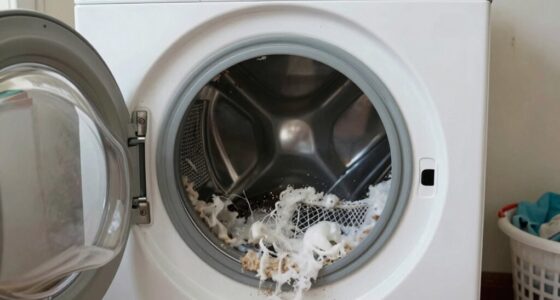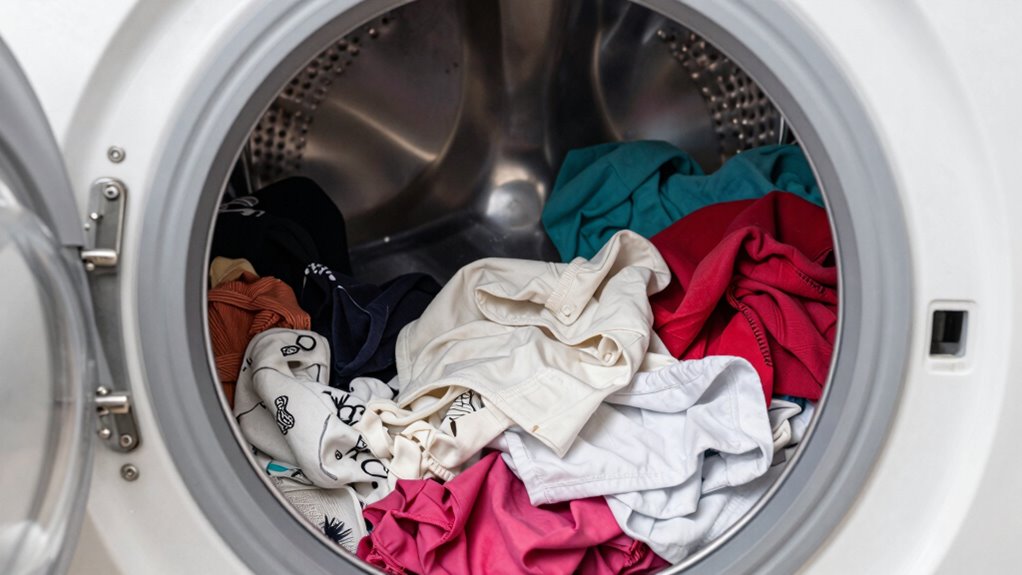

Overstuffing your washing machine can lead to serious damage and poor cleaning results. When you load it beyond the recommended capacity, clothes can’t move freely, causing stress on the drum and mechanical parts. This forces your washer to work harder, increasing energy use and wear on internal components. To keep your machine running smoothly and efficiently, follow capacity guidelines and balance loads properly. Keep exploring to discover how proper loading can extend your washer’s lifespan.
Key Takeaways
- Overstuffing impairs clothes agitation, reducing cleaning effectiveness and leaving items improperly cleaned.
- Excess load strains the washer’s motor and mechanical parts, increasing wear and risk of breakdown.
- Overloading prevents water and detergent from circulating evenly, wasting resources and increasing costs.
- Proper load size ensures balanced spinning, reduces cycle times, and promotes appliance longevity.
- Following manufacturer guidelines maintains optimal washer performance and prevents long-term damage.
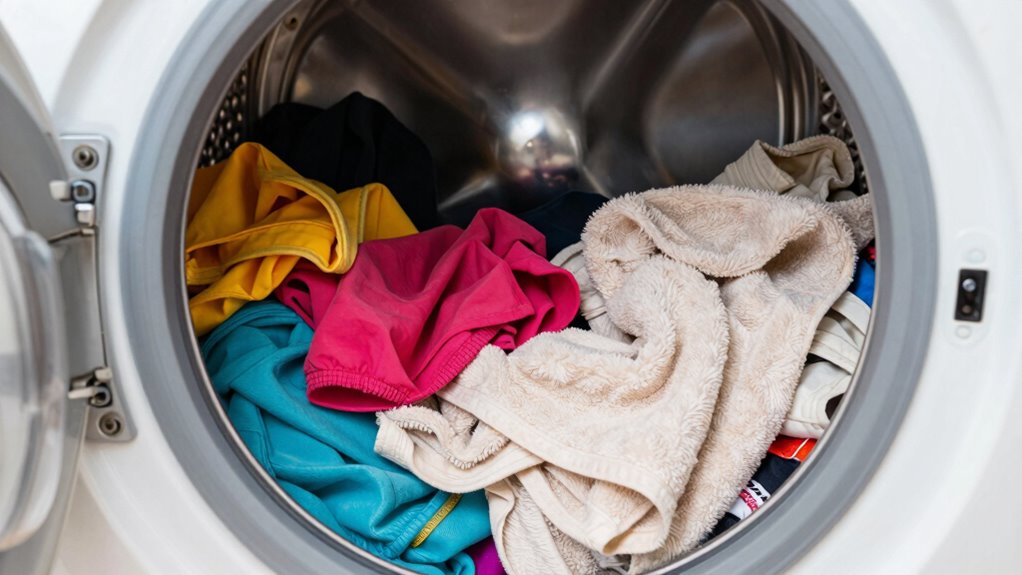
Choosing the right washer load size is essential for efficient laundry cycles and ideal machine performance. When you load your washer properly, you not only ensure your clothes get cleaned thoroughly but also optimize detergent efficiency and reduce energy consumption. Overloading your washer might seem like a time-saver, but it actually hampers its effectiveness and can cause long-term damage. When you stuff the drum beyond its capacity, the washer struggles to agitate clothes properly, leading to poor cleaning results. Furthermore, overstuffed loads prevent water and detergent from circulating evenly, which means you’ll likely use more detergent than necessary to compensate for ineffective cleaning. This wastes detergent and increases your overall laundry costs.
From an energy perspective, overloading your machine forces it to work harder and longer to try to get your clothes clean. The motor has to exert more effort, and the cycle may need to be extended or repeated, which spikes energy consumption. Additionally, the washer’s water heater may run longer or at higher temperatures to compensate for uneven cleaning, further driving up energy use. The cumulative effect is higher utility bills and unnecessary wear on your appliance. Conversely, underloading also isn’t ideal, but overstuffing is particularly damaging because it stresses the mechanical components and can lead to premature breakdowns.
To keep your washer running smoothly and efficiently, always adhere to the manufacturer’s recommended load size. Most washers have load capacity charts or markings inside the drum indicating maximum capacity. Use these as your guide. When loading, distribute clothes evenly around the agitator or drum to promote balanced spinning and even cleaning. Remember that bulky items like towels or blankets take up more space but don’t necessarily mean you should max out your load. Instead, balance the load with smaller items to ensure proper agitation and water flow. Properly sized loads help your detergent to work more efficiently, saving you money and reducing environmental impact. They also prevent unnecessary strain on your washer’s motor and internal parts, extending the appliance’s lifespan. Regularly monitor your load size to avoid overstuffing and keep your washer functioning optimally.
Frequently Asked Questions
How Can I Tell if My Washer Is Overstuffed?
You can tell if your washer is overstuffed by checking load distribution—if clothes are tightly packed or bulging out, it’s too full. This prevents proper cycle optimization, leading to inefficient washing and strain on your machine. To avoid overstuffing, leave enough space for clothes to move freely. Properly balanced loads help your washer work efficiently and last longer, saving you money and effort in the long run.
Does Overloading Affect Laundry Detergent Efficiency?
Imagine your laundry as a bustling city street; overloading clogs the flow, and detergent wastage ensues. When you overload your washer, the detergent can’t circulate properly, reducing cleaning effectiveness. This means you use more detergent than necessary, wasting resources and money. Overstuffing prevents clothes from moving freely, so dirt isn’t fully removed. Keep loads balanced and not too full for ideal detergent use and sparkling, clean laundry.
What Are Signs of a Washing Machine Strain?
You can tell your washer is strained if the drum struggles to turn smoothly, making loud noises or stopping mid-cycle. Overloading beyond the washer drum capacity causes extra strain, leading to faster wear and tear. You might also notice detergent wastage because excessive clothes hinder proper cleaning, forcing you to use more detergent. Keep loads balanced and within capacity to prevent damage and make certain of efficient cleaning.
Can Overstuffing Cause Long-Term Damage?
Yes, overstuffing can cause long-term damage to your washing machine. When you load it too full, the machine works harder, putting extra strain on parts like the drum and motor, which shortens its lifespan. This increased stress can lead to frequent breakdowns and higher repair costs over time. To avoid this, always follow the manufacturer’s load size recommendations to keep your machine running smoothly and save money in the long run.
Are There Specific Load Sizes for Different Fabric Types?
Yes, there are specific load sizes for different fabric types to guarantee proper fabric care and prevent damage. For delicate fabrics, use smaller loads to avoid strain and maintain even load distribution. Heavier fabrics like towels or jeans need larger loads, but not so full that they overstuff the washer. Proper load size helps protect your clothes, ensures thorough cleaning, and keeps your machine running smoothly over time.
Conclusion
If you overstuff your washer, you’re risking more than just a jammed machine—you’re challenging its very design. The idea that bigger loads save time and water isn’t always true; overloading can cause damage and reduce efficiency. Sometimes, less truly is more. Respect your washer’s limits, and you’ll extend its life. Remember, a well-balanced load isn’t just good for your machine—it’s good for your wallet and the environment too.