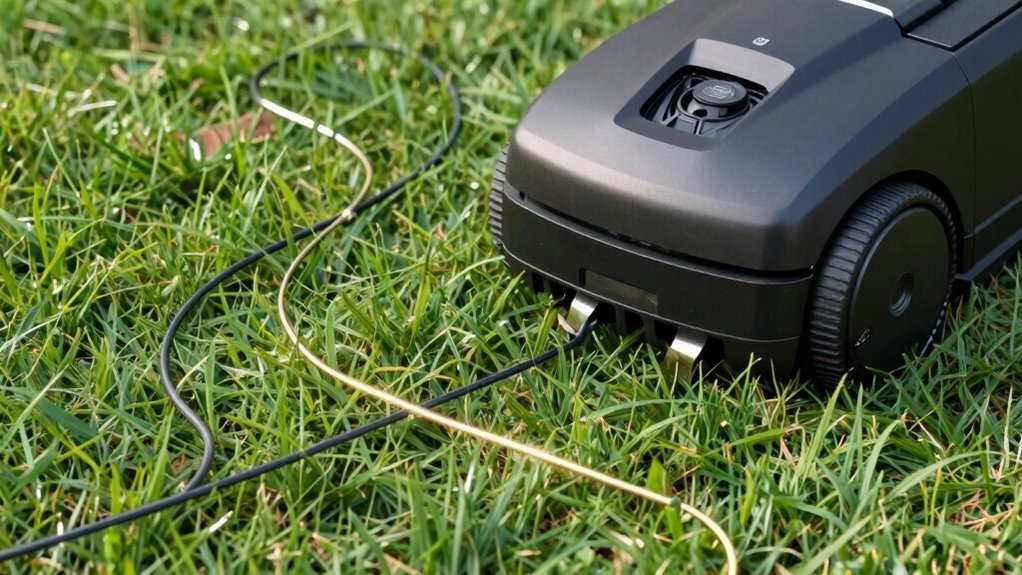

Your success with a wire-free robot mower starts with precise setup and calibration. You’ll need to map your lawn accurately using GPS, ensuring the boundaries are clear and well-defined. Proper calibration makes sure the mower understands its limits, preventing boundary breaches. Great setup boosts battery efficiency and maximizes coverage. If you want to learn how to get your mower functioning perfectly from the start, keep exploring the essential steps that make all the difference.
Key Takeaways
- Accurate yard mapping during the initial setup ensures proper boundary security and optimal mower navigation.
- Proper calibration of sensors and GPS reception is crucial for boundary precision and mower performance.
- Properly defining and managing boundaries prevents breaches and landscape damage during operation.
- Battery capacity and initial setup influence the mower’s ability to cover large areas efficiently.
- Landscape changes require updates to the mapping to maintain boundary accuracy and operational effectiveness.
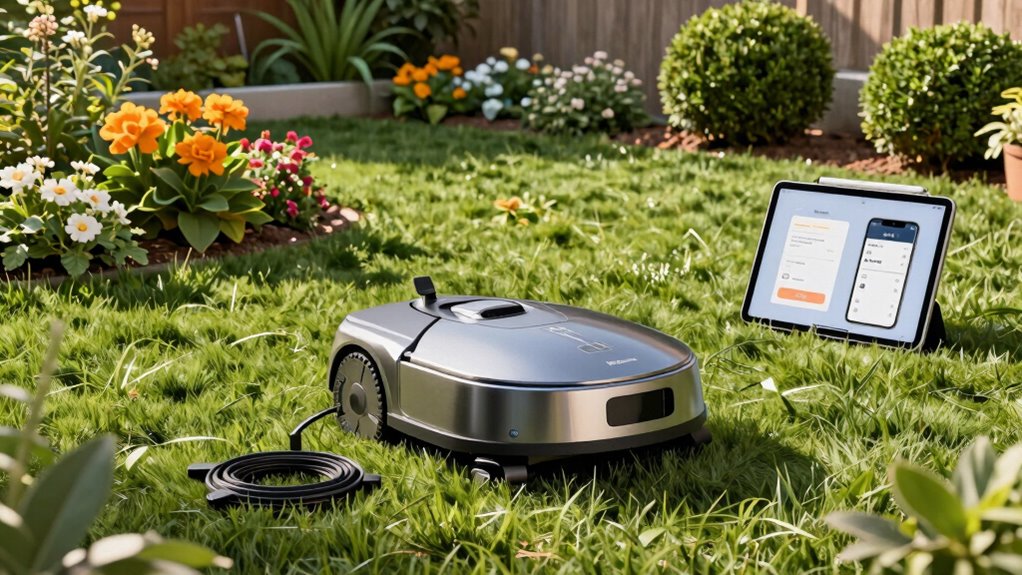
Wire-free robot mowers are revolutionizing lawn care by eliminating the hassle of installing and maintaining boundary wires. You no longer need to spend hours laying out invisible fences or worrying about accidental boundary breaches. Instead, these mowers use advanced sensors and GPS technology to navigate your yard seamlessly. This shift not only simplifies setup but also enhances boundary security—since there are no physical wires to cut, trip over, or disrupt. Your mower’s ability to stay within designated areas depends on its smart boundary management, so understanding how it maintains boundary security is essential. Most wire-free models rely on GPS mapping to define your lawn’s perimeter, ensuring the mower doesn’t stray into flower beds, driveways, or neighboring yards. This technology provides a more flexible and reliable boundary system compared to traditional wired fences, especially if your landscape changes or expands over time. Proper calibration and initial mapping are crucial to maximize boundary accuracy and prevent issues during operation. Another key factor you need to take into account is battery life. Without boundary wires, your mower depends heavily on its battery to cover your entire lawn efficiently. A model with a robust battery life allows you to mow larger areas without frequent recharges, saving you time and effort. When selecting a wire-free mower, check the specifications for battery capacity and run time. Longer battery life means fewer interruptions during your mowing session and more consistent results. Keep in mind that larger lawns may require a mower with an extended battery life, or you might need to schedule multiple runs to complete your yard. Some models feature quick-charging batteries that can be recharged in under an hour, so you can get back to mowing sooner if needed. The setup process is the most vital step, as it impacts boundary security and battery efficiency. You’ll want to carefully map out your yard, ensuring the GPS system accurately captures your property’s limits. Proper calibration and initial mapping are essential to prevent boundary breaches and optimize battery usage. When done correctly, your mower will understand exactly where to operate and where to stay away from, maximizing its efficiency and protecting your landscape. Additionally, ensuring your yard has good GPS reception can significantly improve boundary accuracy and overall performance.
Frequently Asked Questions
How Long Does It Take to Fully Charge a Wire-Free Robot Mower?
You’ll typically need about 1 to 2 hours for a wire-free robot mower to fully charge, depending on its battery capacity. The charging time varies with the battery capacity; larger batteries take longer to reach full charge. During this period, the mower’s battery refuels, ensuring it’s ready for efficient mowing. Keep in mind that some models may have faster charging options, so always check your mower’s specifications for precise details.
Can Wire-Free Robot Mowers Handle Steep Slopes or Uneven Terrain?
Think of your robot mower as a rugged adventurer stepping into uncharted terrain. It can handle steep slopes and uneven terrain if it’s designed for terrain adaptability and slope handling. Many models now feature advanced sensors and powerful motors, making them capable of tackling inclines up to 20-30 degrees. Just guarantee you choose a mower with the right specifications, and it’ll conquer those hills like a true trailblazer.
What Safety Features Are Included in Wire-Free Robot Mower Setups?
You’ll find that wire-free robot mowers include essential safety features like sensor integration, which detects obstacles and prevents collisions. Many models also have emergency protocols, such as automatic shutdowns if they encounter hazards or if sensors pick up unusual activity. These features work together to keep you and your yard safe, ensuring the mower operates smoothly while minimizing risks. Always review your mower’s safety system for maximum protection.
How Often Should the Boundary Wires or Virtual Boundaries Be Reset?
Think of your virtual boundary as a garden fence that keeps your robot mower in check. You should reset boundary adjustments or virtual boundaries whenever you notice the mower straying outside its designated area or after significant landscape changes. Regular checks ensure the virtual fence remains precise, typically every few weeks or as needed, keeping your mower within safe limits and maintaining ideal performance.
Are There Any Environmental Considerations When Installing Wire-Free Mowers?
When installing wire-free mowers, you should consider the environmental impact and wildlife considerations. You’ll want to choose locations that minimize disruption to natural habitats and avoid areas with sensitive wildlife. Guarantee the setup doesn’t interfere with local ecosystems, and use eco-friendly materials where possible. By planning carefully, you protect wildlife and reduce environmental harm, making your mower operation more sustainable and harmonious with the environment.
Conclusion
Remember, the setup is the foundation that holds your robot mower’s success. Like planting a seed in fertile soil, a careful, thoughtful start guarantees a thriving, trouble-free mowing experience. Skimp on this step, and you risk a future full of tangled wires and missed patches. So take your time, plan your boundaries, and set your mower up for a smooth journey—because the first step plants the seed for a perfectly manicured lawn.