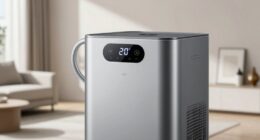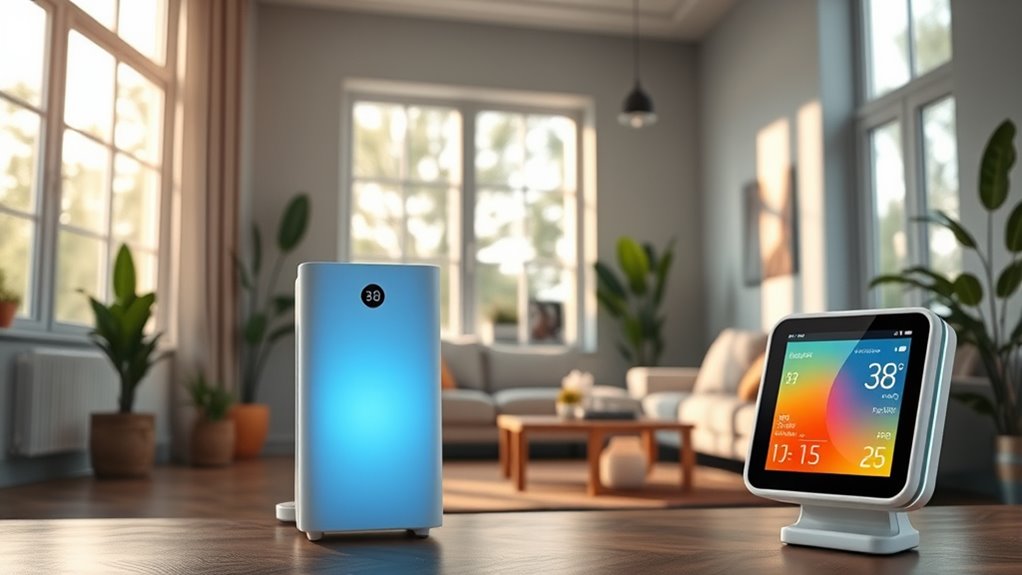

Using smart air purifiers and indoor air quality monitors helps you keep the air in your home clean and healthy. These devices work together to detect pollutants, allergens, and toxins in real time. They automatically adjust filtration and alert you when maintenance is needed. Regular upkeep ensures peak performance and continuous air quality. If you’re interested in enhancing your indoor environment, there’s more to discover about how these smart systems work together effectively.
Key Takeaways
- Integrate indoor air quality monitors with smart purifiers for real-time pollutant detection and automatic filtration adjustment.
- Regularly maintain and replace filters in smart air purifiers to ensure optimal performance and air quality.
- Use monitor alerts to identify pollution spikes and adjust purification or ventilate accordingly.
- Leverage app controls for remote monitoring, scheduling, and maintenance reminders of your smart air quality system.
- Consistently track air quality data to optimize device settings and create a healthier indoor environment.

In today’s world, maintaining clean indoor air has become more important than ever, especially as we spend more time indoors. With smart air purifiers and indoor air quality monitors, you now have powerful tools to guarantee your living space meets ideal air quality standards. These devices work together to detect pollutants, allergens, and airborne toxins, giving you real-time insights and control over your environment. To keep everything functioning smoothly, you need to pay attention to Air Purifier Maintenance. Regularly replacing filters, cleaning vents, and following the manufacturer’s instructions ensures your purifier operates at peak efficiency. Neglecting maintenance can lead to reduced filtration quality, which means pollutants may linger longer in your air, defeating your efforts to create a healthier space.
Regular maintenance of your air purifier ensures optimal performance and cleaner indoor air.
Smart air purifiers often come with app integrations, allowing you to monitor their status and get alerts when it’s time for filter changes or maintenance. This convenience helps you stay proactive, avoiding performance drops that can happen if filters become clogged or dirty. When filters are replaced on time, your air purifier continues to meet Indoor Air Quality Standards, which are designed to minimize health risks from indoor pollutants. These standards set benchmarks for acceptable levels of particulates, volatile organic compounds, and other contaminants, ensuring your home remains safe for everyone. By using a smart purifier, you can verify that these standards are met consistently, thanks to sensors that measure air quality and automatically adjust filtration levels.
Moreover, indoor air quality monitors complement your smart purifier by providing continuous feedback on air conditions. They track changes in pollutant levels and notify you if your indoor air quality drops below recommended thresholds. This real-time data helps you take swift action, whether that’s increasing purification settings or opening windows to ventilate. Together, these devices create a thorough defense against indoor pollutants, giving you peace of mind.
Integrating smart technology into your air purification routine simplifies maintaining healthy indoor air. It enables you to stay informed, respond swiftly to changes, and ensure your environment always aligns with indoor air quality standards. By committing to regular Air Purifier Maintenance and leveraging the insights from indoor air quality monitors, you protect your health and improve your overall comfort. In essence, these smart systems empower you to take control of your indoor environment, making clean, safe air a consistent reality in your home or office.
Frequently Asked Questions
How Often Should I Replace Filters in My Air Purifier?
You should replace your air purifier filters every 6 to 12 months, depending on usage and air quality. Regular filter maintenance guarantees your device works efficiently and extends its lifespan. Check the manufacturer’s guidelines for specific recommendations, as some filters may need more frequent changes. Neglecting filter replacement can reduce air purifier performance and compromise indoor air quality, so stay attentive to signs like decreased airflow or odors to maintain ideal operation.
Can Indoor Air Quality Monitors Detect Mold Growth?
Think of indoor air quality monitors like vigilant sentinels, silently watching over your home. While they excel at detecting pollutants, mold growth often escapes their detection because mold releases spores and volatile organic compounds that may not trigger air quality sensors directly. Regular inspections and humidity control remain essential. So, monitors help identify air issues, but mold detection still requires visual checks and proper ventilation to keep your space safe.
Are Smart Air Purifiers Energy-Efficient for Long-Term Use?
Smart air purifiers are generally energy-efficient for long-term use, thanks to their low energy consumption features. You’ll save on electricity bills and enjoy ongoing cost efficiency, especially if you choose models with auto mode or energy-saving settings. These purifiers adapt to your air quality needs, reducing power when air is clean. Overall, they’re a smart investment for maintaining healthy indoor air without markedly increasing your energy costs.
Do Air Quality Monitors Measure VOCS and Formaldehyde Levels?
Yes, air quality monitors measure VOCs and formaldehyde levels. They provide VOC detection, so you can identify volatile organic compounds in your environment. Additionally, these monitors measure formaldehyde concentrations, helping you assess indoor safety. By tracking these harmful pollutants, you can take action to improve your air quality, ensuring a healthier space for you and your family. Regular monitoring keeps you informed and proactive about potential indoor air hazards.
How Do I Connect My Air Purifier to a Smart Home System?
You can connect your air purifier to a smart home system through Wi-Fi connectivity. First, verify your device supports your system, like Alexa or Google Home. Open the app, follow the pairing instructions, and enable voice control features. Once connected, you can control your purifier with voice commands or through the app, making it easy to manage air quality effortlessly and seamlessly integrate it into your smart home setup.
Conclusion
By combining smart air purifiers with indoor air quality monitors, you gain real-time control over your environment. While technology can instantly improve air quality, it also highlights how unseen pollutants quietly impact your health. You might enjoy fresh air at the push of a button, yet remain unaware of the lingering particles around you. Embrace these tools not just for convenience but to truly understand and protect your indoor space’s invisible, essential life.