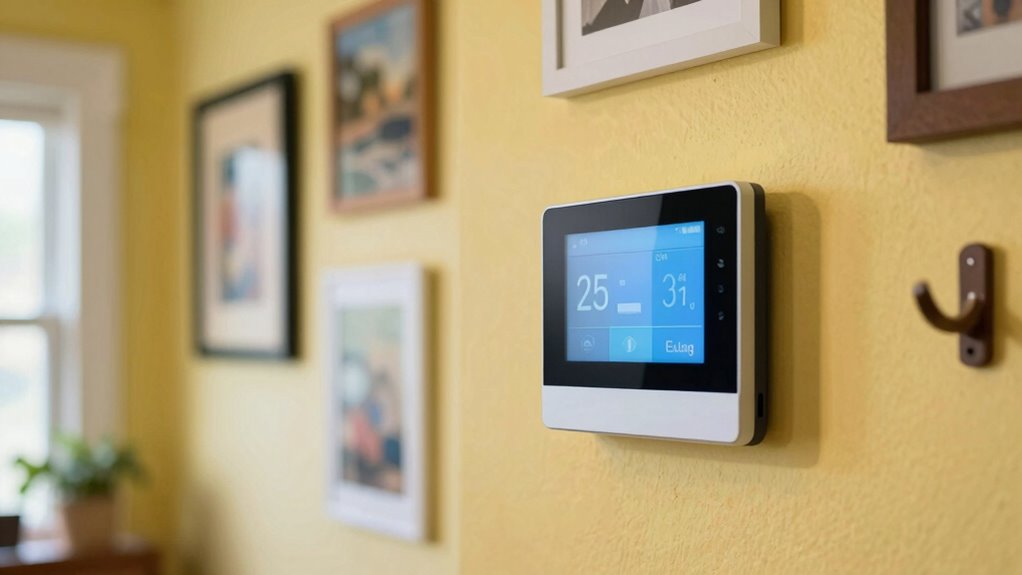

Placing your smart thermostat on the wrong wall can lead to inaccurate temperature measurements and inefficient control. If it’s near heat sources, drafts, or direct sunlight, it may detect false data, causing your system to run inefficiently. For the best results, choose a central, unobstructed wall at eye level, away from disturbances. Keep watching to discover more tips that guarantee your thermostat functions perfectly and keeps your home comfortable.
Key Takeaways
- Placing the thermostat on a wall near heat sources causes falsely high temperature readings.
- Mounting it on a wall close to drafts or vents leads to inaccurate, cooler readings.
- Choosing a wall in a corner or out of the main living area may not reflect true room temperature.
- Installing the device too high or too low can hinder visibility and easy access for adjustments.
- Correct placement on a central, unobstructed wall ensures accurate readings and optimal thermostat performance.
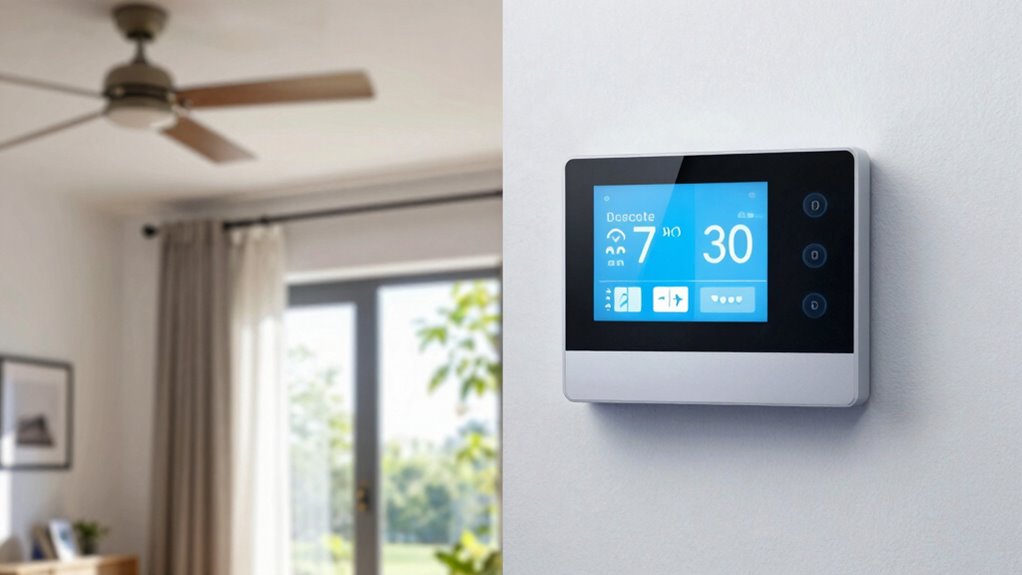
Proper placement of your smart thermostat is essential to guarantee accurate temperature readings and ideal comfort in your home. When you position it correctly, it ensures the sensor calibration is accurate, allowing your device to make precise adjustments to your heating and cooling systems. If your thermostat is placed in a poor spot, it might misread the room’s temperature, leading to inefficient energy use and inconsistent comfort. To avoid this, choose a location that’s representative of the room or zone you want to control, avoiding spots near heat sources, drafts, or direct sunlight. Additionally, understanding the importance of sensor placement can significantly improve your thermostat’s performance and reliability.
Proper thermostat placement ensures accurate readings and consistent home comfort.
Your thermostat’s user interface plays a vital role in how you interact with and set your device. When placed at a comfortable height and in a visible location, you can easily access the controls and monitor the current temperature. This convenience encourages regular adjustments and checks, helping you maintain a stable environment. Keep the interface free from obstructions, and if your thermostat has a touchscreen, ensure it’s not exposed to direct sunlight, which can cause glare and make it harder to read.
Sensor calibration depends heavily on the placement of your thermostat. If it’s too close to a heat source, like a radiator or exposed window, it might register higher temperatures than the actual room climate, prompting your system to cool unnecessarily. Conversely, if it’s in a drafty corner or near an air vent, it could read cooler than the actual room temperature, causing your HVAC system to run longer than needed. Proper placement guarantees the sensor is measuring a true representation of the space, and many smart thermostats automatically calibrate based on their environment, but physical positioning still matters.
Your user interface should be intuitive and accessible, which is why placement matters beyond just sensor calibration. If the thermostat is mounted high on a wall out of reach or tucked away in a corner, you might avoid adjusting it regularly, leading to less optimal comfort. Ideally, position it at eye level on a central wall, where you can easily see and operate it. This ensures you’re always aware of the current temperature and can make quick adjustments, keeping your home comfortable and energy-efficient.
Frequently Asked Questions
How Often Should I Recalibrate My Smart Thermostat?
You should recalibrate your smart thermostat every 6 to 12 months to maintain accurate temperature calibration and sensor accuracy. Regular recalibration guarantees it correctly reads your home’s temperature, preventing energy waste and discomfort. If you notice inconsistent readings or your thermostat isn’t responding well, recalibrate sooner. Proper calibration keeps your system running efficiently and ensures consistent comfort, especially if you’ve moved or made changes to your home’s environment.
Can Smart Thermostats Detect Indoor Air Quality Issues?
Yes, your smart thermostat can detect indoor air quality issues if it has built-in air quality sensors. These sensors monitor pollutants, humidity, and other factors to help you maintain a healthier environment. However, keep in mind its limitations—it might not catch all issues like VOCs or odors. Regularly checking and maintaining your sensors guarantees accurate readings, but don’t rely solely on your thermostat for extensive air quality management.
Do Different Wall Materials Affect Sensor Accuracy?
Wall materials can drastically influence your smart thermostat’s sensor accuracy, making it feel like you’re trying to read a crystal ball! Thick wall insulation, drywall, or brick can block signals and skew readings if your sensor isn’t placed correctly. To get precise data, choose a spot with minimal insulation interference and avoid exterior walls. Proper sensor placement guarantees your thermostat responds accurately, saving energy and maintaining comfort effortlessly.
What’s the Best Way to Hide the Thermostat Wiring?
To hide your thermostat wiring, opt for wire concealment options like running wires behind the wall or using a cable raceway for aesthetic integration. You can also install a cover plate that matches your wall color for a seamless look. Make sure to carefully plan the wiring path to keep it hidden yet accessible for future adjustments, creating a clean, uncluttered appearance without sacrificing functionality.
Are There Specific Wall Colors That Impact Readings?
You might think wall color doesn’t matter, but wall color influence actually affects thermostat readings. Light, matte finishes reflect less heat and won’t skew temperature data, while dark or glossy walls can absorb and radiate heat, causing inaccurate readings. To guarantee ideal performance, choose neutral, matte paint finishes, and avoid overly dark or shiny walls near your thermostat. This way, your thermostat gets the most accurate temperature reading possible.
Conclusion
Remember, placing your smart thermostat on the wrong wall is like trying to read a map in the fog—you won’t get accurate readings or comfort. Think of it as a lighthouse guiding ships safely; if the light’s hidden or misaligned, chaos ensues. So, position your thermostat wisely, ensuring it’s in the right spot to illuminate your home’s true temperature. Only then can you enjoy the warm, consistent comfort you deserve.