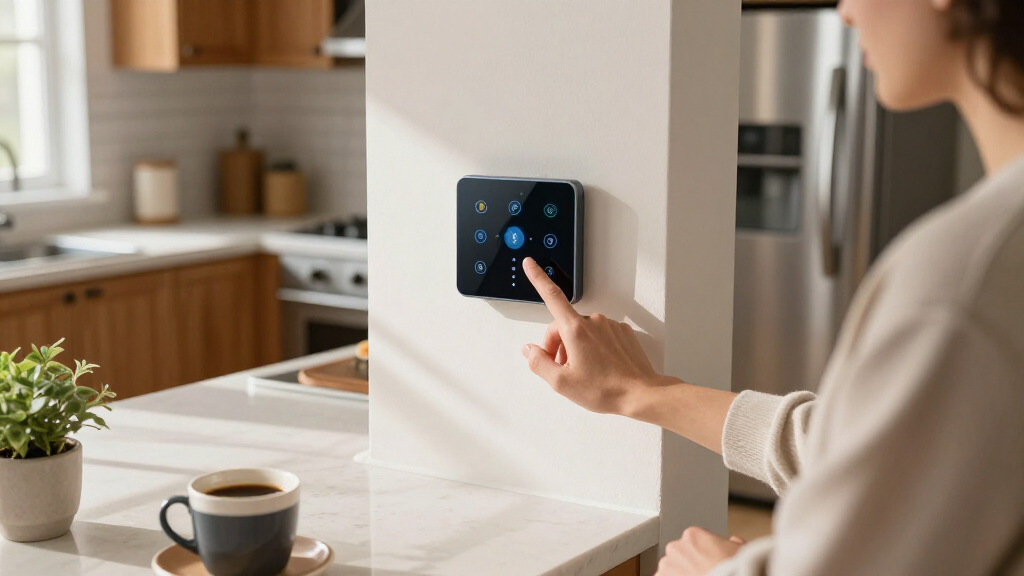

Smart home energy monitors have split into two camps: plug-and-play cloud systems that make tracking effortless, and local-control units built for Home Assistant users who refuse to depend on a subscription or an internet connection. The Emporia Vue 3 takes my top spot overall because it balances real-time accuracy, per-circuit detail, and one of the most polished apps at a mid-range price. The Meross 18-circuit monitor stands out for no subscriptions and solar surplus detection, while the Refoss with Open API is the strongest pick if local, cloud-free control is non-negotiable. The main tradeoff you’ll face is circuit count and ecosystem openness versus simplicity — the most capable monitors require panel installation and some electrical confidence. Read on for the full breakdown of all 15 models.

Get home appliances delivered free with Prime
- Fast, free delivery on millions of items
- Prime Video, Amazon Music and more included
- Member-only deals all year
Complete the kit


Key Takeaways
- The Emporia Vue 3 appears three times in this lineup (standalone, bundled with smart plugs, and as an automation module), and its app ecosystem is the most refined of any brand compared — that consistency is why it earns the top overall slot.
- Circuit count is the biggest price driver: 8-sensor units cost meaningfully less than 16- or 18-sensor models, and most buyers overbuy — a typical home only needs to monitor the 6-10 circuits that actually explain their bill.
- Cloud dependence splits the field sharply: Refoss and the dedicated Home Assistant monitors work fully offline with open APIs, while Emporia and Meross lean on cloud infrastructure that could change terms or pricing later.
- Solar users should narrow their search immediately — only the Meross and the EdgeAnt 3-clamp model support solar net metering or surplus detection, which rules out most of this lineup outright.
- The Siemens Inhab is the only name-brand electrical manufacturer here, and that pedigree shows in sensor accuracy and build quality, but it carries a premium and a less flexible app than the specialist brands.
| Eyedro Smart Home Energy Monitor 200A WiFi/Ethernet |  | Best for Solar and Net Metering Homes | Model: EYEDRO-HOME | Connectivity: WiFi 2.4 GHz, Ethernet | Sensors: Two 200A sensors included | VIEW LATEST PRICE | See Our Full Breakdown |
| Emporia Vue 3 Home Energy Monitor – Smart Home Automation Module and Real-Time Electricity Usage Monitor |  | Best Overall | Certification: UL Listed, CE Listed | Sensors: Sixteen 50A branch sensors | Connectivity: 2.4 GHz Wi-Fi | VIEW LATEST PRICE | See Our Full Breakdown |
| Smart Energy Consumption Monitor with 18 Circuit Monitoring |  | Best Circuit Coverage on a Budget | Sensors: 2×200A + 16×50A | Monitoring: Real-time power, voltage, current, power factor | Accuracy: ±2% | VIEW LATEST PRICE | See Our Full Breakdown |
| Smart Home Energy Monitor with 16 50A Circuit Sensors, Real-Time Power Usage & Cost Tracking |  | Best for Landlords and Home Assistant Users | Number of Sensors: 16 (50A each) | Supported Voltages: 120VAC, 240VAC, 415Y/240VAC | Connectivity: WiFi 2.4 GHz | VIEW LATEST PRICE | See Our Full Breakdown |
| Smart Home Energy Monitor with 8 50A Circuit Sensors, Real-Time Power Measurement, App & LAN Support |  | Best Compact Local-Monitoring Starter | Number of Sensors: 8 (50A each) | Supported Voltages: Up to 240VAC single-phase, 415Y/240VAC three-phase | Connectivity: WiFi 2.4 GHz, MQTT, LAN | VIEW LATEST PRICE | See Our Full Breakdown |
| Refoss Smart Home Energy Monitor with Open API, Home Assistant, No Cloud |  | Best for Privacy and Local Control | Model: EM16P | Current Sensors: 2 main (2–200A), 16 branch (1–60A) | Connectivity: Built-in Web UI, Open API, MQTT | VIEW LATEST PRICE | See Our Full Breakdown |
| Emporia Vue 3 Home Energy Monitor |  | Best Mainstream App Experience | Certification: UL Listed | Installation: Circuit panel | Supported Systems: Single phase, split phase, 3-phase, 4-wire Wye | VIEW LATEST PRICE | See Our Full Breakdown |
| Emporia Energy Monitor with 16 Sensors and 4 Smart Plugs Bundle |  | Best Complete Starter Bundle | Circuit Sensors: 16 | Smart Plugs: 4 Wi-Fi plugs | Compatibility: iOS, Android, Alexa | VIEW LATEST PRICE | See Our Full Breakdown |
| Home Energy Monitor for Home Assistant – Real Time Electricity Usage and Automation Module |  | Best for Scalable Multi-Unit Setups | Model: eMonHub-HNA0A | Monitoring Circuits: Up to 30 with multiple units | Connectivity: Wi-Fi and Ethernet | VIEW LATEST PRICE | See Our Full Breakdown |
| SIEMENS Inhab Smart Home Energy Monitor with Circuit and Main Sensors |  | Best Brand-Backed Reliability | Circuit Level Sensors: 16–50 Amp | Main Sensors: 2–200 Amp | Compatibility: USA and Canada | VIEW LATEST PRICE | See Our Full Breakdown |
| Home Energy Monitor with IoT and AI Integration |  | Best for Smart Home Power Users | Circuits: 10 channels | Connectivity: WiFi, Ethernet | Data Retention: 45 days (minute data), 36 months (monthly/yearly) | VIEW LATEST PRICE | See Our Full Breakdown |
| EdgeAnt Smart Home Energy Monitor with 3 80A Clamps |  | Best for Solar Homes on a Budget | Current Clamps: 3 x 80A | Connectivity: Wi-Fi 2.4 GHz | Accuracy: ±2% | VIEW LATEST PRICE | See Our Full Breakdown |
| Refoss Smart Home Energy Monitor with 16 60A Circuit Sensors |  | Best for Data Privacy | Sensors: 16 x 60A | Supported Systems: Single-phase, split-phase, 3-phase 4-wire Wye | Data Storage: 5 years | VIEW LATEST PRICE | See Our Full Breakdown |
| Emporia Vue 3 Home Energy Monitor |  | Best Ecosystem Pick | Certification: UL Listed | Supported Systems: Single phase, single-split phase, 2-wire, 3-wire, 3-phase, 4-wire Wye | Sensors: Up to 16 branch sensors (sold separately) | VIEW LATEST PRICE | See Our Full Breakdown |
| Meross Smart Home Energy Monitor with 18 Circuit Monitoring |  | Best Overall Coverage | Circuits: 18 (2 main + 16 branch) | Current Capacity: 200A main, 60A branch | Supported Systems: Single-phase 2-wire, single-split phase 3-wire, 3-phase 4-wire Wye | VIEW LATEST PRICE | See Our Full Breakdown |
| smart home energy monitor | Connectivity | Warranty |
|---|---|---|
| Eyedro Smart Home Energy Monit | WiFi 2.4 GHz, Ethernet | — |
| Emporia Vue 3 Home Energy Moni | 2.4 GHz Wi-Fi | 1 year |
| Smart Energy Consumption Monit | WiFi 2.4 GHz | — |
| Smart Home Energy Monitor with | WiFi 2.4 GHz | 1 year |
| Smart Home Energy Monitor with | WiFi 2.4 GHz, MQTT, LAN | 1 year |
| Refoss Smart Home Energy Monit | Built-in Web UI, Open API, MQTT | 2 years |
| Emporia Vue 3 Home Energy Moni | 2.4 GHz Wi-Fi | 1 year |
| Emporia Energy Monitor with 16 | — | — |
| Home Energy Monitor for Home A | Wi-Fi and Ethernet | — |
| SIEMENS Inhab Smart Home Energ | — | — |
| Home Energy Monitor with IoT a | WiFi, Ethernet | — |
| EdgeAnt Smart Home Energy Moni | Wi-Fi 2.4 GHz | — |
| Refoss Smart Home Energy Monit | Wi-Fi with external antenna | 2 years |
| Emporia Vue 3 Home Energy Moni | 2.4 GHz Wi-Fi | 1 year |
| Meross Smart Home Energy Monit | — | 2 years |
More Details on Our Top Picks
Eyedro Smart Home Energy Monitor 200A WiFi/Ethernet
This option stands out for homeowners who generate their own power, because the dual 200A sensors are built from the ground up to track solar production, grid draw, and net metering in one view. Compared with the Emporia Vue 3, which leans on branch-level sensors for granularity, the Eyedro takes a whole-home-plus-solar approach that suits households wanting production-versus-consumption math rather than circuit-by-circuit detail. The choice of Ethernet or 2.4 GHz WiFi also gives it a reliability edge in homes where wireless signals struggle to reach the panel — something WiFi-only monitors can’t match. steeper setup experience than plug-and-play rivals.
Pros:- Purpose-built for solar, grid, and net metering monitoring
- Ethernet option for reliable connectivity where WiFi is weak
- Two 200A sensors cover whole-home monitoring out of the box
- Real-time data helps pinpoint waste and cut utility bills
Cons:- Setup and configuration require technical know-how
- Detailed solar/grid separation may require purchasing a second unit
Best for: Solar homeowners who need production, grid, and net metering tracking with a wired connection option
Not ideal for: Buyers wanting per-circuit detail or a polished, beginner-friendly app experience — this demands technical patience
- Model:EYEDRO-HOME
- Connectivity:WiFi 2.4 GHz, Ethernet
- Sensors:Two 200A sensors included
- Supports:Solar, grid, net metering
- Power Source:AC (adapter included)
- Dimensions:8 x 8 x 3 inches
- Weight:1.54 pounds
Our verdict“This pick makes the most sense for solar households that prioritize whole-home and net metering insight over per-circuit granularity and don’t mind a hands-on setup.”
Emporia Vue 3 Home Energy Monitor – Smart Home Automation Module and Real-Time Electricity Usage Monitor
The Vue 3 earns the top spot because it balances safety certification, sensor coverage, and ecosystem polish better than anything else in this lineup. Unlike the Smart Energy Consumption Monitor with 18 Circuit Monitoring, which offers similar branch-level tracking but no listed safety certification, the Vue 3 is UL and CE listed — a meaningful distinction when you’re clamping hardware inside a live panel. The sixteen 50A branch sensors translate into genuinely actionable data: you can see which specific circuits — HVAC, water heater, EV charger — drive your bill, not just a whole-home number like the Eyedro provides. Data retention is solid too, with 1-minute granularity kept for a week and hourly data stored indefinitely. The compromises: WiFi-only connectivity with no Ethernet fallback, and three-phase systems with neutral demand an extra sensor.
Pros:- UL and CE certified for panel-installation safety
- Sixteen 50A sensors enable true circuit-level cost attribution
- Indefinite hourly data retention for long-term trend analysis
- Supports solar and net metering alongside consumption tracking
Cons:- WiFi-only — no wired Ethernet option unlike the Eyedro
- 3-phase systems with neutral require an additional sensor
- Full feature set depends on comfort with the app
Best for: Homeowners who want certified-safe, circuit-level insight with the most complete app and automation ecosystem
Not ideal for: Homes without reliable 2.4 GHz WiFi near the panel, or three-phase-with-neutral setups unwilling to buy an extra sensor
- Certification:UL Listed, CE Listed
- Sensors:Sixteen 50A branch sensors
- Connectivity:2.4 GHz Wi-Fi
- Data Retention:7 days (1-minute data), indefinite (hourly)
- Installation:Circuit panel; single-phase, split-phase, 2-wire, 3-wire (3-phase with added sensor)
- Warranty:1 year
- Dimensions:10 x 5 x 5 inches
Our verdict“For most homeowners, the Vue 3’s certified hardware, sixteen-sensor coverage, and mature app make it the safest all-around bet in this roundup.”
Smart Energy Consumption Monitor with 18 Circuit Monitoring
If the Emporia Vue 3 is the safe, polished choice, this monitor is the maximum-coverage value play: you get 18 monitored points (two 200A mains plus sixteen 50A branches) at a lower price, and ±2% accuracy keeps the data trustworthy enough for bill-trimming decisions. The SmartLife/Tuya integration is its differentiator — compared with the SEM-Meter, which targets Home Assistant users via MQTT, this one fits households already living in the Tuya ecosystem who want energy data feeding automations without any technical plumbing. Real-time voltage, current, and power factor readings add diagnostic depth the simpler monitors here skip. Be clear-eyed about the downsides: it lacks the UL listing of the Emporia, and incorrect sensor orientation will quietly produce wrong numbers, so professional installation is wise rather than optional.
Pros:- 18 monitoring points (2×200A + 16×50A) at a competitive price
- ±2% measurement accuracy for reliable cost tracking
- Native Tuya/SmartLife integration for smart home automations
- Real-time power, voltage, current, and power factor readings
Cons:- No UL/CE safety certification unlike the Emporia Vue 3
- Misoriented sensors cause inaccurate readings — professional install recommended
- Performance depends on a stable 2.4 GHz WiFi connection
Best for: Tuya/SmartLife smart home households that want the most monitored circuits per dollar
Not ideal for: Safety-first buyers who want UL-certified hardware, or anyone planning a DIY panel install without electrical experience
- Sensors:2×200A + 16×50A
- Monitoring:Real-time power, voltage, current, power factor
- Accuracy:±2%
- Connectivity:WiFi 2.4 GHz
- App:SmartLife (Tuya)
- Installation:Clamp-on, lightweight
Our verdict“This model suits budget-conscious Tuya-ecosystem homes that want deep circuit coverage and accept a certification and support tradeoff for the price.”
Smart Home Energy Monitor with 16 50A Circuit Sensors, Real-Time Power Usage & Cost Tracking
What separates this monitor from the field is that it runs entirely locally, with no cloud dependency — data stays on your network, which matters both for privacy and for reliability when the internet drops. Paired with MQTT and Home Assistant compatibility, it becomes a serious tool for DIY automators, standing opposite the app-locked Emporia Vue 3 on the philosophy spectrum. Its customizable electricity rate templates are the killer feature for a specific buyer: landlords and shared-house residents who need per-circuit cost accounting to bill tenants or split utilities fairly across sixteen circuits. The compact 3.1 x 1.2 x 4.18-inch housing also fits tighter panels than the bulkier Emporia. The cost of that local-first design is setup effort — you’re expected to configure MQTT yourself, and 2.4 GHz-only WiFi plus panel access means this is not a casual purchase.
Pros:- Fully local operation with no cloud or internet requirement
- Customizable rate templates for accurate tenant billing and cost splits
- Home Assistant and MQTT support for deep automation integration
- Compact housing fits cramped circuit panels
Cons:- Requires technical MQTT/Home Assistant setup knowledge
- 2.4 GHz WiFi only — no 5 GHz or Ethernet support
- Installation demands circuit panel access and electrical competence
Best for: Landlords, rental-property owners, and Home Assistant enthusiasts who need local, private, per-circuit cost tracking
Not ideal for: Non-technical buyers expecting a plug-and-play app — MQTT configuration and panel work are prerequisites
- Number of Sensors:16 (50A each)
- Supported Voltages:120VAC, 240VAC, 415Y/240VAC
- Connectivity:WiFi 2.4 GHz
- App Compatibility:Android, Apple, Home Assistant (MQTT)
- Model Number:SEM-Meter
- Dimensions:3.1 x 1.2 x 4.18 inches
- Warranty:1 year
Our verdict“This is the pick for property owners and smart home tinkerers who want private, per-circuit billing data and have the skills to configure it.”
Smart Home Energy Monitor with 8 50A Circuit Sensors, Real-Time Power Measurement, App & LAN Support
Think of this as the right-sized entry point into serious energy monitoring: eight circuits is enough to cover the loads that actually matter — HVAC, water heater, kitchen, laundry — without paying for the sixteen-plus sensors of the SEM-Meter or Emporia Vue 3. Its LAN and MQTT support alongside WiFi gives it flexibility the WiFi-only 18-circuit Tuya monitor can’t offer, and the local-first, no-cloud operation keeps data private while still playing nicely with Home Assistant. Data handling is thoughtfully tiered: 90 days of hourly detail plus permanent daily, monthly, and yearly records — enough history to spot seasonal patterns. Tradeoffs are straightforward: 50A sensors cap you on larger loads like some EV chargers, and with eight circuits you’ll be choosing which parts of the panel stay unmonitored. There’s also no voice-assistant integration mentioned beyond the app.
Pros:- WiFi, LAN, and MQTT connectivity options in one device
- Local operation without cloud dependency protects privacy
- 90 days of hourly data plus permanent long-term records
- Handles single-phase and 415Y/240VAC three-phase configurations
Cons:- Eight-circuit limit forces prioritization of which loads get monitored
- 50A sensor cap may not suit high-amperance loads like some EV chargers
- No voice assistant integration beyond the app
Best for: First-time panel monitors and privacy-minded homeowners who need eight key circuits tracked locally without paying for unused sensors
Not ideal for: Houses with many high-amperage circuits or buyers wanting whole-home exhaustive coverage — the sensor count and 50A rating will feel limiting
- Number of Sensors:8 (50A each)
- Supported Voltages:Up to 240VAC single-phase, 415Y/240VAC three-phase
- Connectivity:WiFi 2.4 GHz, MQTT, LAN
- Data Export:90 days hourly; permanent daily/monthly/yearly
- Automation Compatibility:Home Assistant and compatible systems
- Warranty:1 year
Our verdict“This monitor fits buyers who want a lower-cost, privacy-respecting way to track their eight biggest loads with flexible local connectivity.”
Refoss Smart Home Energy Monitor with Open API, Home Assistant, No Cloud
Privacy-first buyers will find their match here. Unlike the Emporia Vue 3, which depends on a cloud app for most of its functionality, the Refoss EM16P keeps everything local through a built-in web UI, MQTT, and an open API — meaning your energy data never has to leave the house. For solar households, this matters beyond principle: local control enables fast surplus-solar automation without lag or service outages interrupting the loop. With 16 branch sensors plus two main sensors at ±1% accuracy and five years of on-device storage, it out-specs most competitors on data depth. The catch is that this is a tinkerer’s tool. Compared with the plug-and-play Emporia bundle, setup demands comfort with electrical panels and configuration, and some buyers report a frustrating initial pairing process.
Pros:- Full local control with no cloud dependency or subscription
- Open API and MQTT for serious Home Assistant automation
- 16 circuit sensors plus mains at ±1% accuracy
- Up to 5 years of stored data on-device
Cons:- Installation and configuration require real technical comfort
- Setup challenges reported by some users
- No polished consumer app ecosystem compared to Emporia
Best for: Tech-savvy solar homeowners who want cloud-free, circuit-level monitoring with deep Home Assistant automation
Not ideal for: Casual users who want a polished app experience out of the box — the setup leans technical
- Model:EM16P
- Current Sensors:2 main (2–200A), 16 branch (1–60A)
- Connectivity:Built-in Web UI, Open API, MQTT
- Accuracy:±1%
- Data Storage:Up to 5 years
- Certifications:ETL certified, UL 61010 compliant
- Warranty:2 years
Our verdict“If you run Home Assistant and refuse to hand your energy data to a cloud service, this is the monitor built for you.”
Emporia Vue 3 Home Energy Monitor
The Emporia Vue 3 is the easiest path from blank electrical panel to useful energy insights. Its app is the most refined consumer experience in this lineup — real-time usage, solar and net-metering support, and remote management all work without touching a single line of config. Compared with the Refoss EM16P, you give up local control and long data retention: minute-level history lasts only 7 days, and 1-second data only streams while the app is open. That tradeoff is fine for most households, who want to spot energy hogs and shrink bills rather than feed an automation engine. It also covers an unusually wide range of electrical systems, from split-phase to 3-phase Wye, though some 3-phase setups need an extra sensor. The UL listing and solar support make it a safe, well-rounded default.
Pros:- Best-in-class consumer app with remote management
- UL Listed for safety
- Solar and net metering support built in
- Works with nearly every residential power configuration
Cons:- Minute data only kept 7 days; 1-second data requires active app
- Requires constant 2.4 GHz Wi-Fi connectivity
- Additional sensor needed for some 3-phase systems
Best for: Homeowners who want polished app-based monitoring with solar tracking and minimal fuss
Not ideal for: Data hounds and privacy-focused users — cloud dependency and short data retention are real limits
- Certification:UL Listed
- Installation:Circuit panel
- Supported Systems:Single phase, split phase, 3-phase, 4-wire Wye
- Connectivity:2.4 GHz Wi-Fi
- Data Retention:7 days minute data, indefinite hourly
- Warranty:1 year
Our verdict“The safest default pick for anyone who wants clear energy insights through a mature app rather than a DIY project.”
Emporia Energy Monitor with 16 Sensors and 4 Smart Plugs Bundle
This bundle is about day-one value: the Vue monitor with 16 circuit sensors plus four energy-monitoring smart plugs that let you act on what you learn, not just measure it. Where the standalone Emporia Vue 3 tells you the HVAC is eating your budget, this kit lets you schedule and cut power to individual devices from the same app — a closed loop between insight and action that most monitors leave you to build yourself. Solar net metering support carries over too, so it suits panels-equipped homes. The tradeoff versus something like the Refoss EM16P is depth: you’re locked into Emporia’s cloud ecosystem, with no local API for custom automation. And first-timers should budget patience for pairing 16 sensors, four plugs, and Wi-Fi in one setup session.
Pros:- 16 circuit sensors for whole-home coverage
- 4 smart plugs turn insight into automated action
- Solar net metering support included
- Works with iOS, Android, and Alexa
Cons:- Setup spans multiple devices and can overwhelm beginners
- Tied entirely to Emporia’s cloud platform
- Smart plugs consume outlet space
Best for: Homeowners starting from scratch who want monitoring and device control in a single purchase
Not ideal for: Home Assistant power users — the closed ecosystem blocks the local automation the Refoss enables
- Circuit Sensors:16
- Smart Plugs:4 Wi-Fi plugs
- Compatibility:iOS, Android, Alexa
- Solar Net Metering:Supported
Our verdict“The most complete out-of-the-box energy makeover for a household that wants to monitor and control devices without assembling a system piece by piece.”
Home Energy Monitor for Home Assistant – Real Time Electricity Usage and Automation Module
Most monitors hit a ceiling at 16 or 18 circuits; this one scales to 30 circuits by chaining multiple units, which is the difference between monitoring a house and monitoring a large home with a workshop, EV charger, and outbuildings. Like the Refoss EM16P, it’s built around Home Assistant with solar self-consumption tracking and automation hooks, but it adds dual Wi-Fi and Ethernet connectivity — a meaningful reliability upgrade if your panel sits in a Wi-Fi dead zone. The eMonHub design costs more upfront than a single-unit setup, and the per-circuit ambition means a longer, more technical installation than the Emporia Vue 3‘s simpler path. It’s also restricted to North American residential power, so international buyers need to look elsewhere.
Pros:- Scalable to 30 circuits across multiple units
- Dual Wi-Fi and Ethernet for reliable connectivity
- Solar self-consumption tracking built in
- FCC, CE, and UL/IEC compliant
Cons:- Higher total cost for a full multi-circuit setup
- Requires technical configuration in Home Assistant
- North American residential systems only
Best for: Home Assistant enthusiasts with large or complex homes needing more than 16 monitored circuits
Not ideal for: Apartment dwellers or small homes — the capacity and price are overkill, and the setup demands technical skill
- Model:eMonHub-HNA0A
- Monitoring Circuits:Up to 30 with multiple units
- Connectivity:Wi-Fi and Ethernet
- Power Systems:Single-phase and three-phase
- Certifications:FCC, CE, UL/IEC
- Dimensions:4.73 x 3.15 x 1.22 inches
Our verdict“The pick when 16 circuits isn’t enough and you’re willing to pay and tinker for full-home coverage.”
SIEMENS Inhab Smart Home Energy Monitor with Circuit and Main Sensors
When the device clips onto live panel mains, brand accountability counts — and Siemens brings industrial-grade credibility that smaller brands like Refoss and Emporia can’t match. The Inhab monitors both panel mains (2–200A) and individual circuits (16–50A), with personalized alerts that flag abnormal usage before it becomes a bill shock, plus advanced energy management features aimed at load balancing rather than simple reporting. Compared with the Emporia Vue 3, the alerting and management layer is more sophisticated, but the ecosystem is narrower: no smart plug bundles, no open API, and app support stops at the USA and Canada. That regional lock is the biggest caveat — buy it outside North America and you own a handsome paperweight. Pricing is also opaque at listing, so shop around before committing.
Pros:- Backed by Siemens with UL Listing and CE marking
- Alerts for abnormal usage and savings opportunities
- Monitors both mains and individual circuits
- Advanced energy management features
Cons:- App compatibility limited to USA and Canada
- Closed ecosystem with no third-party integrations
- Pricing not transparent at listing
Best for: North American homeowners who prioritize an established brand, safety certification, and proactive usage alerts
Not ideal for: Buyers outside the USA and Canada, or anyone wanting open APIs and smart plug integration
- Circuit Level Sensors:16–50 Amp
- Main Sensors:2–200 Amp
- Compatibility:USA and Canada
- Standards:CE marked, UL Listed
Our verdict“Choose this if brand trust and intelligent alerting matter more to you than an open ecosystem or bundle extras.”
Home Energy Monitor with IoT and AI Integration
This option stands out for its AI-powered analysis, which goes beyond raw wattage numbers and flags savings opportunities you’d otherwise have to find yourself. Compared with the EdgeAnt monitor, which simply reports accurate consumption data, this model actively interprets it. The MQTT API and ModBus TCP support make it a natural fit for Home Assistant users who want energy data woven into automations rather than siloed in an app. With 10 circuit channels, it covers fewer circuits than the Refoss 16-sensor unit, so households with sprawling panels may feel pinched. The 45-day minute-level retention is also shorter than the multi-year storage Refoss offers. Setup leans technical — expect to spend real time on configuration.
Pros:- AI analysis identifies savings opportunities automatically
- Broad automation compatibility including Home Assistant, MQTT, and ModBus TCP
- Scalable across multiple units and circuits
- FCC, CE, and UL/IEC certified for safety
Cons:- Configuration demands technical know-how
- Only 10 circuit channels versus 16-18 on competing models
- Minute-level data retained for just 45 days
Best for: Home Assistant and home automation enthusiasts who want AI-driven insights and deep integration options
Not ideal for: Homeowners who want plug-and-play simplicity or need to monitor more than 10 circuits without adding hardware
- Circuits:10 channels
- Connectivity:WiFi, Ethernet
- Data Retention:45 days (minute data), 36 months (monthly/yearly)
- Supported Systems:Single-phase, three-phase, North American split-phase
- Compatibility:Home Assistant, MQTT API, ModBus TCP
- Certifications:FCC, CE, UL/IEC
Our verdict“This pick makes the most sense for automation-heavy households that value interpretive AI and protocol flexibility over maximum circuit count.”
EdgeAnt Smart Home Energy Monitor with 3 80A Clamps
Simplicity is the selling point here: three clamp-on sensors install without touching individual branch circuits, and bidirectional measurement tracks solar production flowing back to the grid — something whole-home monitoring handles better than the per-circuit Refoss approach. The ±2% accuracy rating is competitive with pricier units, and the SmartLife app keeps trends and exportable history within reach of non-technical users. The tradeoff is granularity: where the Meross 18-circuit monitor can isolate which appliance drives your bill, EdgeAnt shows only aggregate and phase-level usage, so diagnosing a power-hungry device means guesswork. It also won’t work on Delta electrical systems, and it’s locked to 2.4 GHz Wi-Fi.
Pros:- ±2% measurement accuracy
- Bidirectional measurement for solar net metering
- Simple clamp-on installation on the mains
- Exportable historical energy data
Cons:- No per-branch circuit monitoring
- Incompatible with Delta electrical systems
- Requires a 2.4 GHz Wi-Fi network
Best for: Solar homeowners who want accurate net metering data without a complicated installation
Not ideal for: Households that want appliance-level breakdowns to identify specific energy hogs
- Current Clamps:3 x 80A
- Connectivity:Wi-Fi 2.4 GHz
- Accuracy:±2%
- Supported Systems:Single-phase, split-phase, 2-wire, 2-phase, 3-wire Wye
- App:SmartLife
- Features:Real-time monitoring, energy trend analysis, data export, bidirectional measurement
Our verdict“This model is better suited to solar households wanting whole-home accuracy with minimal fuss than to tinkerers chasing circuit-level detail.”
Refoss Smart Home Energy Monitor with 16 60A Circuit Sensors
If keeping your energy data out of the cloud matters, this unit’s fully local control is its defining trait — a contrast to the Emporia Vue 3, which routes data through Emporia’s cloud for app access. The 16 circuit sensors deliver per-appliance granularity the EdgeAnt can’t match, and five years of onboard storage outlasts the Vue 3’s 7-day minute-level retention many times over. The external Wi-Fi antenna helps with panels in basements or garages where signal is weak. The flip side of no cloud: remote monitoring from anywhere is limited, and setup assumes you understand your electrical panel well enough to label and map 16 circuits correctly. Non-technical homeowners will likely find it frustrating.
Pros:- Local control with no cloud dependence
- 16 circuit sensors for appliance-level tracking
- 5 years of data storage
- External Wi-Fi antenna improves signal in weak-coverage areas
Cons:- No cloud access limits remote monitoring
- Setup requires electrical knowledge
- Can be overwhelming for non-technical homeowners
Best for: Privacy-conscious users and smart home builders who want circuit-level data stored locally, not in the cloud
Not ideal for: Casual users who want to check energy usage remotely from a polished cloud app
- Sensors:16 x 60A
- Supported Systems:Single-phase, split-phase, 3-phase 4-wire Wye
- Data Storage:5 years
- Connectivity:Wi-Fi with external antenna
- Warranty:2 years
- Certifications:ETL
Our verdict“Compared with cloud-first rivals, this pick makes the most sense for buyers who prioritize data ownership and long-term local analytics.”
Emporia Vue 3 Home Energy Monitor
The Vue 3 earns its place through polish and flexibility: the UL listing matches the Meross’s safety credentials, but the expandable sensor system — up to 16 branch sensors — lets buyers start small and add per-circuit monitoring later, something neither the fixed EdgeAnt nor the Refoss setup allows. Solar and net metering support is built in, and the app experience is the most consumer-friendly in this batch, with real-time data the moment you open it. The catch is cost creep: branch sensors are sold separately, so matching the Meross’s 18-circuit coverage gets expensive. Hourly data persists indefinitely, but minute-level history drops off after just a week, and three-phase homes may need extra hardware.
Pros:- UL Listed certification for safety
- Expandable up to 16 branch sensors
- Solar and net metering support
- Indefinite hourly data retention
Cons:- Branch sensors sold separately, raising total cost
- Only 7 days of minute-level data
- Three-phase setups may require additional sensors
Best for: Buyers who want a trusted, beginner-friendly ecosystem they can expand sensor by sensor over time
Not ideal for: Budget-conscious buyers — separate sensor purchases make full circuit coverage costly
- Certification:UL Listed
- Supported Systems:Single phase, single-split phase, 2-wire, 3-wire, 3-phase, 4-wire Wye
- Sensors:Up to 16 branch sensors (sold separately)
- Connectivity:2.4 GHz Wi-Fi
- Data Retention:Minute data 7 days, hourly data indefinite, 1-second data when app is active
- Warranty:1 year
Our verdict“This option stands out for homeowners who value a refined app ecosystem and incremental expansion over maximum circuits per dollar.”
Meross Smart Home Energy Monitor with 18 Circuit Monitoring
For sheer monitoring breadth, nothing else in this lineup matches 18 circuits — two 200A mains plus 16 branch circuits — meaning you can see the whole panel and nearly every appliance it feeds. Its solar surplus detection and smart alerts push it past the Refoss 16-sensor unit for solar households, and the matching 5-year data storage keeps long-term analysis intact without subscriptions. Like the Refoss, it leans on local control via Home Assistant and an open API rather than cloud storage, which privacy-minded buyers will appreciate but remote-access seekers won’t. The dual ETL and UL 61010 certifications edge out the Vue 3’s single listing on paper. Installation still demands comfort inside a panel, and Delta systems are off the table.
Pros:- 18-circuit monitoring covers mains and branch circuits
- Solar surplus detection with smart alerts
- Local Home Assistant integration with open API
- 5 years of data storage with no subscriptions
Cons:- Requires electrical knowledge for installation
- No cloud storage limits remote access
- Incompatible with some electrical system types
Best for: Homeowners who want the most complete circuit-by-circuit picture, especially with solar, and no recurring fees
Not ideal for: Renters or buyers unwilling to work inside an electrical panel or manage a Home Assistant setup
- Circuits:18 (2 main + 16 branch)
- Current Capacity:200A main, 60A branch
- Supported Systems:Single-phase 2-wire, single-split phase 3-wire, 3-phase 4-wire Wye
- Data Storage:Up to 5 years
- Compatibility:Home Assistant, Open API, Web Control
- Warranty:2 years
- Certifications:ETL, UL 61010
Our verdict“With the widest coverage, solar intelligence, and subscription-free operation, this pick makes the most sense for serious whole-home energy management.”
How We Picked
I evaluated each monitor against five criteria that actually determine long-term satisfaction. Accuracy and sampling rate came first, because a monitor that under-reports by 10% is worse than no monitor at all. Circuit-level granularity mattered next — whole-home numbers are useful, but the real savings come from seeing which specific circuits drain your bill. I then weighed software and ecosystem openness: app quality, Home Assistant compatibility, local API access, and whether the manufacturer locks features behind subscriptions. Installation complexity was the fourth factor, including clamp design, panel-space requirements, and whether electrician installation is realistic for a typical homeowner. Finally, I considered total cost of ownership, including expansion sensors and any recurring fees.
The ranking favors monitors that balance these criteria rather than dominating a single one. The Emporia Vue 3 leads because it scores well across all five; the Refoss models rank high for buyers who prioritize local control; and budget sensor-heavy units rank lower where app quality or long-term support raises questions. Where two products tie on hardware, software reliability and ecosystem maturity broke the tie.
Factors to Consider When Choosing Smart Home Energy Monitors
Before picking a specific model, it helps to understand what actually separates a useful energy monitor from an expensive gadget that gets ignored after a month. These are the factors that shaped my ranking — and the mistakes I see buyers make most often.Circuit Count: Buy for Your Mystery Loads, Not Your Whole Panel
The most common mistake in this category is assuming more sensors is always better. An 18-circuit monitor sounds impressive, but most homes have fewer than ten circuits that meaningfully move the needle: HVAC, water heater, dryer, EV charger, kitchen appliances, and pool equipment. Monitoring your lighting circuits tells you almost nothing — a whole room of LEDs draws less than a single old refrigerator. Before buying, open your panel and write down which breakers you’d actually want visibility into, then buy the sensor count that matches. The difference between an 8-sensor and a 16-sensor model can be substantial, and expansion modules exist if you guess low. Paying for sensors you’ll never install is money better spent on smart plugs for the individual devices that matter.
Cloud vs. Local Control: The Decision That Ages Poorly If Wrong
Every monitor in this roundup either phones home to a manufacturer’s cloud or runs entirely on your local network, and this choice matters more in year three than on day one. Cloud-based systems like Emporia’s offer slicker apps, easier setup, and features like utility bill integration — but you’re trusting that company to keep its servers running and its pricing model free. Local-first options like the Refoss and Home Assistant-focused monitors can’t be bricked by a shutdown, work during internet outages, and keep your energy data private. The tradeoff is a rougher setup experience and, usually, building your own dashboards. If you already run Home Assistant, the local path is almost always correct. If you just want to check an app on your phone, cloud models deliver a better day-to-day experience.
Solar and Net Metering Support
If you have rooftop solar — or plan to add it — this single feature eliminates most of the lineup. A standard monitor measures consumption only, which tells you nothing about export, self-consumption, or whether your battery strategy is working. Solar-capable monitors add a second measurement point and calculate net flow, showing when you’re producing more than you consume. Only a handful of models here, including the Meross and the EdgeAnt, handle this natively. Home Assistant users can work around the limitation by combining two simpler monitors, but that doubles the installation work. Solar buyers should also check whether the monitor distinguishes production from consumption or just shows net, because the former lets you diagnose panel underperformance while the latter only shows your bill impact.
Installation Realities and Safety
Every whole-home monitor here installs inside your electrical panel, which means exposed bus bars and, in most jurisdictions, work that legally requires a licensed electrician. Budget $100-250 for professional installation on top of the hardware unless you’re genuinely comfortable working in a live panel. Physical fit matters too: crowded panels with tandem breakers may not have room for CT clamps on every circuit you want to monitor, and some models need flexible clamps to fit tight spaces. Check whether the monitor powers itself from a breaker or needs a separate outlet, and whether its WiFi reaches from the panel location — metal panel doors and basement locations kill signal strength, which is why Ethernet-equipped models like the Eyedro exist. Measure and plan before ordering, not after.
Subscriptions, APIs, and Long-Term Cost
The sticker price is rarely the full cost. Some ecosystems reserve historical data retention, notifications, or tariff-aware cost tracking behind monthly fees, and a monitor without history is just a live gauge — the savings come from spotting patterns over weeks and months. Check whether the app stores data indefinitely for free, and whether there’s an open API to export it. Models with documented APIs, like the Refoss, let you migrate your history into Home Assistant or a spreadsheet even if the company’s app disappears. Also look at the cost of expansion: adding sensors later to some systems costs nearly as much as a new unit, which changes the math on buying the larger kit upfront. And confirm what the warranty actually covers — two years, like Meross offers, is the standard worth insisting on.
Frequently Asked Questions
Do I need an electrician to install a smart home energy monitor?
For any whole-home monitor in this roundup, yes — installing CT clamps around main service conductors means opening your electrical panel, and in most jurisdictions that legally requires a licensed electrician. Expect to pay $100-250 for the labor, which should be factored into your total budget. The clamps themselves don’t cut or splice any wiring; they simply clip around conductors, so the job is usually under an hour for an experienced pro. The only exception is if you’re using a monitor strictly with smart plugs on individual outlets, which requires no panel work at all. Schedule the electrician before your monitor arrives so you’re not staring at an unopened box for two weeks.
Is a whole-home monitor better than just using smart plugs?
They solve different problems, and the best setup often combines both. A whole-home monitor catches the big loads — HVAC, water heater, dryer, EV charging — that no plug can measure, and it reveals phantom loads you didn’t know existed. Smart plugs excel at device-level detail: knowing exactly what your freezer or entertainment center draws, with the bonus of remote control. A practical strategy is to install a circuit-level monitor first, identify which individual devices still puzzle you, then add plugs for those. Emporia’s bundle in this lineup takes exactly that approach by pairing a 16-sensor monitor with four smart plugs in one ecosystem, which is why it ranks well for buyers who want both layers from day one.
How accurate are these monitors compared to my utility meter?
Most quality CT-clamp monitors claim 1-2% accuracy, and in practice the reputable brands land within a few percent of your utility bill when properly installed. The catches are installation-dependent: a clamp that’s slightly misaligned, a wrong voltage assumption, or an unmonitored circuit will all introduce error. Models that measure actual voltage rather than assuming 120/240V, like the Eyedro and Siemens Inhab, tend to track utility meters more closely, especially in areas with unstable voltage. Don’t expect penny-perfect matching with your bill — taxes, fees, and tiered rates complicate that — but if your monitor’s monthly total drifts more than about 5% from your utility’s kWh figure, re-check your clamp placement and configuration.
Will these monitors work if the internet goes down or the company shuts down?
It depends entirely on the architecture, and this is where the lineup diverges sharply. Cloud-dependent monitors like the standard Emporia Vue configuration keep measuring locally but lose history, notifications, and app access until your internet returns — and if the company ever shutters its cloud, the device becomes nearly useless. Local-first models like the Refoss with Open API and the dedicated Home Assistant monitors stream data over your LAN to a system you control, so they’re immune to both outages and corporate shutdowns. Home Assistant users can even add cloud-based monitors to a local setup when an API exists, giving a middle path. If long-term reliability keeps you up at night, weight local control heavily; if you trust the major brands to stick around, the cloud models offer a better everyday experience today.
Can a smart energy monitor actually save me money, or is it just a gadget?
The savings are real but conditional — the monitor itself saves nothing until you act on what it shows. The typical payoff comes from three discoveries: a failing appliance drawing far more than it should (aging refrigerators and well pumps are common culprits), phantom loads you can eliminate with timers or smart plugs, and time-of-use tariff shifting where you move heavy loads like EV charging or laundry to cheap hours. Solar owners see additional value from optimizing self-consumption instead of exporting at low rates. Realistic payback for most households runs one to three years, faster if you’re on time-of-use rates or have an EV. If you install it, glance at the dashboard for a week, and never look again, it’s an expensive gadget — the buyers who save are the ones who treat it as a diagnostic tool, not a toy.
Conclusion
After comparing all 15 monitors, the right choice comes down to what kind of buyer you are. For best overall, the Emporia Vue 3 wins on app polish, accuracy, and ecosystem maturity — it’s the safest bet for someone who wants energy insight without becoming a hobbyist. The Meross 18-circuit monitor takes best value, bundling solar detection, Home Assistant support, smart alerts, and no subscriptions into a competitively priced package. For best premium, the Siemens Inhab brings name-brand electrical engineering and the most trustworthy sensor accuracy in the lineup, at a price that reflects it. Beginners who want the simplest path to real insights should grab the Emporia bundle with 16 sensors and 4 smart plugs — it covers both circuit-level and device-level monitoring in one coherent app from day one. And for specific needs: Home Assistant enthusiasts and privacy-focused buyers get the Refoss with Open API and no cloud, solar households should choose between the Meross and the EdgeAnt 3-clamp model depending on whether they prioritize circuit detail or solar focus, and budget-limited buyers monitoring a handful of big loads can save with the 8-sensor LAN-supported monitor. Whatever you choose, match the sensor count to your actual mystery loads and decide on cloud versus local before you buy — those two decisions matter more than any spec sheet.
Columbus Day / Indigenous Peoples' Day Picks
long weekend sales
As an affiliate, we earn on qualifying purchases.