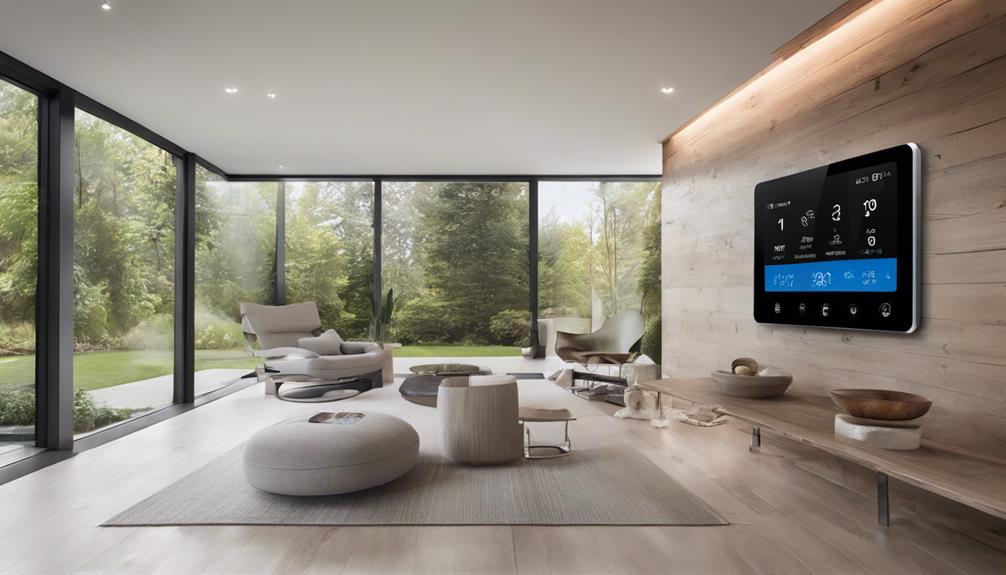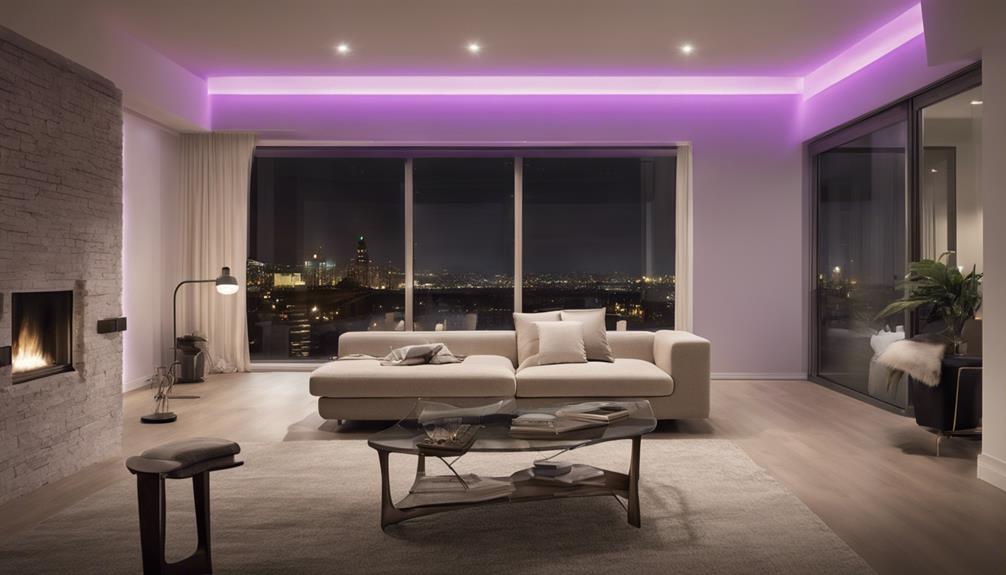

Smart lighting control systems make it easier to customize your home’s lighting with convenience and automation. The best options, like the Philips Hue Smart Light System, offer seamless integration with smart homes, while others such as the Lutron Caseta Kit excel in dimming precision. A key tradeoff across these systems is between ease of setup and advanced customization. Some solutions prioritize affordability, while others focus on sophisticated control features. Continue reading to see a detailed breakdown of these top picks and find the perfect fit for your home.

Get home appliances delivered free with Prime
- Fast, free delivery on millions of items
- Prime Video, Amazon Music and more included
- Member-only deals all year
Complete the kit


Key Takeaways
- The top products balance ease of installation with reliable performance, avoiding overly complex setups that can frustrate beginners.
- Most best-in-class options support app control, but only a few integrate deeply with popular smart home ecosystems like Alexa, Google Assistant, or Apple HomeKit.
- Remote control capability remains a critical feature for accessibility, with range and compatibility often dictating versatility.
- Price varies significantly; the most affordable options tend to have limited features, but premium models offer advanced automation and customization.
- Compatibility with existing bulbs and fixtures is essential; some systems require specific hardware or hub setups, which can impact total costs.



More Details on Our Top Picks
BN-LINK Wireless Remote Control Outlet Switch for Lights, Fans, and Small Appliances, 100ft Range, White
This wireless outlet switch excels in providing reliable remote control for lamps, fans, and small appliances from up to 100 feet away. Its strong signal penetrates walls and doors, outperforming basic infrared remotes that require line-of-sight. Compared with the Philips Hue Dimmer Switch, which needs a Hue Bridge and controls only Hue lights, the BN-LINK offers broader compatibility and easier setup for diverse devices. The main tradeoff is its limited capacity: it handles only 120V and 10A, restricting use with high-power tools or appliances like shop vacs. This option is perfect for renters or anyone seeking a straightforward, no-fuss remote control solution for everyday electronics.
Pros:- Easy to install with included remote batteries
- Strong signal that works through walls and doors
- Multiple outlets can be paired for expanded control
- Remains off after power outages to protect appliances
Cons:- Not compatible with high-power appliances like shop vacs
- Limited to 120V and 10A capacity
Best for: Homeowners or renters seeking a simple, reliable remote control for lights and small appliances without smart home integration.
Not ideal for: Users needing smart automation or control over high-power devices, such as power tools or heavy-duty appliances.
- Range:100 ft
- Power Rating:120V, 10A, 1200W
- Color:White
- Certification:ETL & FCC
Our verdict“Ideal for those who want simple remote control over household devices without smart features.”
Life-Bulb Smart Control System | Controls 1.5 Inch, 6 Inch, and 10 Inch 12V Lights (Sold Separately) | Works Phone App – iOS or Android | Lifetime Replacement Warranty
This dedicated control system is designed specifically for Life-Bulb 12V LED pool lights, offering straightforward management of color, modes, and brightness via a dedicated app. Unlike the Philips Hue system, which requires a Hue Bridge for full automation, the Life-Bulb controller connects directly between your 120V power source and the pool lights, simplifying installation. It’s a smart choice for pool owners who want quick, app-based control over lighting effects without the complexity of full smart home setups. The main tradeoff is its narrow focus: it only controls specific LED pool lights, limiting its use outside that niche and lacking integration with broader smart home ecosystems. This product suits pool owners who prioritize direct, reliable light control during outdoor gatherings or relaxing evenings.
Pros:- Simplifies control of compatible pool lights
- Seamless app integration for color and mode adjustments
- Waterproof design suitable for outdoor use
- Works with multiple sizes of LED lights
Cons:- Limited to specific LED lights, not general lighting
- No integration with other smart home devices
- Requires separate 12V LED lights
Best for: Pool owners seeking an easy-to-install, app-controlled lighting system for specific LED pool lights without full home automation integration.
Not ideal for: Homeowners wanting an all-in-one smart lighting system or those with existing automation systems like Pentair or EasyTouch.
- Light Type:LED
- Additional Features:Waterproof
- Wattage:100 watts
- Bulb Shape:Floodlight
- Size:R11
- Control Method:App
Our verdict“Best for pool owners wanting dedicated, easy app control for their LED pool lighting setup.”
Philips Smart Lighting Smart Home Remote Control, 1 Pack
This remote offers a convenient way to control Philips WiZ-compatible smart lights within 50 feet, featuring nine buttons for on/off, dimming, and scene selection. Its reliability stands out because it operates without Wi-Fi, making it more dependable during network outages compared to WiZ app controls. However, it’s limited to the WiZ ecosystem, unlike the Philips Hue system which requires a Hue Bridge and supports a broader range of products. The main drawback is its lack of compatibility with Philips Hue lights or other ecosystems, and it depends on the WiZ app for customization, which may be less flexible. This remote makes sense for users who prefer simple, on-the-spot control of WiZ lights without needing a full smart home setup.
Pros:- Simple to use with dedicated buttons
- Reliable control up to 50 feet without Wi-Fi
- Easy setup via the WiZ app
- Compact, portable design
Cons:- Limited to WiZ ecosystem only
- Not compatible with Philips Hue products
- Requires WiZ app for customization
Best for: Homeowners with WiZ-compatible lights seeking easy, reliable manual control without relying on Wi-Fi or complicated setups.
Not ideal for: Users invested in Philips Hue or other smart home ecosystems that require advanced automation or broader device control.
- Range:50 ft
- Number of Buttons:9
- Connectivity:WiZ
- Compatibility:WiZ products only
Our verdict“Great for WiZ light users wanting straightforward, reliable remote control in a small space.”
Philips Hue Smart Dimmer Switch Remote, 1-Pack, White
The Philips Hue Dimmer Switch provides a sleek, battery-powered remote for controlling Hue lights, supporting dimming, brightening, and scene selection. Its ease of mounting on walls or use as a handheld makes it versatile for different spaces. Compared with the Philips Hue app, which offers extensive customization but requires a Hue Bridge, this remote offers quick, physical access to key lighting functions. The main tradeoff is its dependence on the Hue Bridge for full automation and the restriction to Hue bulbs only. Nonetheless, for Hue owners seeking a tactile control option, it provides a seamless experience. This product is ideal for Hue users who want a dedicated remote for quick, on-the-fly adjustments.
Pros:- Easy to install and mount with multiple options
- Supports automation via Hue Bridge
- Customizable via Hue app for scenes and presets
- Portable and can be used as a remote or wall switch
Cons:- Requires Hue Bridge for automation features
- Limited to controlling Hue lights only
- Additional accessories sold separately
Best for: Homeowners with Hue lights who desire a simple, physical remote for quick scene and brightness adjustments.
Not ideal for: Users wanting control over non-Hue lights or complete smart automation without a Hue Bridge.
- Model:V2
- Unit Count:1
- Color:White
- Requires:Hue Bridge
Our verdict“Perfect for Hue owners seeking a dedicated, tactile remote for quick lighting adjustments.”
Lutron Caseta Smart Lamp Dimmer Kit with Plug-in Dimmer and Pico Remote
The Lutron Caseta Lamp Dimmer Kit offers wireless control of lamps via the included Pico remote or smartphone app, with the added flexibility of switching between dimmer and on/off modes. Its compatibility with Alexa, Apple Home, Google Assistant, and Ring enhances its versatility, making it suitable for various smart home setups. Compared to the Philips Hue Dimmer Switch, which controls Hue lights only, the Caseta kit can manage multiple lamps across different systems, but it requires a Lutron Hub for full functionality. The main tradeoff involves additional hardware — the hub — and its limitation to controlling two lamps. This pick makes the most sense for users who want a flexible, multi-platform lamp control solution.
Pros:- Wireless remote for convenient lamp control
- Compatible with multiple smart home platforms
- Switch mode for versatile lighting control
- Easy to install with plug-in design
Cons:- Requires a Lutron Smart Hub for app and voice control
- Limited to controlling up to two lamps
- Additional accessories sold separately
Best for: Homeowners wanting to control multiple lamps wirelessly with broad ecosystem compatibility and flexible mounting options.
Not ideal for: Users seeking control over fixed ceiling lighting or those unwilling to invest in a smart hub.
- Compatibility:Alexa, Apple Home, Google, Ring
- Control:Wireless remote and app
- Switch Mode:Yes
- Maximum Lamps:2
Our verdict“Ideal for multi-platform lamp control, especially in spaces with existing Lutron systems or smart hubs.”
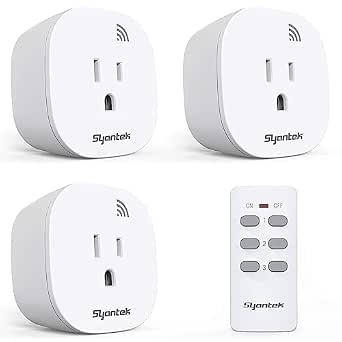
Syantek Wireless Remote Control Outlet Kit, 3 Outlets + 1 Remote, 100 ft Range, FCC Certified, ETL Listed
This wireless remote control outlet kit stands out for its straightforward setup and reliable RF range, making it ideal for controlling household appliances from across the room. Compared to the Life-Bulb smart system, which requires a phone app and more complex installation, Syantek offers instant control with a dedicated remote—perfect for users who prefer physical buttons over digital apps. The 100-foot RF range ensures convenient operation without having to get close to the outlets, but this system is limited to indoor use and needs programming to manage multiple outlets effectively. The remote’s small size makes it easy to lose if not stored carefully, which could be frustrating. This pick makes sense for anyone seeking a simple, expandable remote solution without smart home hub dependency.Pros:- Long 100 ft RF range for flexible control
- Compact, space-saving design
- Programmable and expandable for multiple outlets
Cons:- Limited to indoor use, restricting versatility
- Requires programming for managing multiple outlets, which can be cumbersome
Best for: Elderly users or mobility-impaired individuals needing easy, remote control of basic appliances.
Not ideal for: Tech-savvy users wanting advanced scheduling or voice control, as this system lacks smart integration features.
- Range:100 ft
- Number of Outlets:3
- Number of Remotes:1
- Certification:FCC Certified, ETL Listed
Our verdict“This system is ideal for users seeking simple, remote control of household appliances without the complexity of smart home integration.”
Wireless Remote Control Outlet, 200FT RF Range Remote Light Switch
This wireless outlet with five outlets and a 200-foot remote range makes it a standout for managing multiple devices from across large rooms or open spaces. Unlike the Syantek kit, which provides only three outlets and a shorter range, this model offers greater flexibility for controlling heavier appliances or multiple lamps simultaneously. Its compact design allows it to fit behind furniture or in tight spaces, and it is certified safe for household use—an important consideration for reliability. However, setting up requires pairing and programming each outlet, which can be a hurdle for less tech-savvy users, and the unit’s expandability depends on purchasing additional kits. This product suits buyers who need broad control over several devices without a smart home hub.Pros:- Extended 200 ft RF remote range for large spaces
- Multiple outlets for managing several devices at once
- Compact and space-efficient design
- Certified safe for household use
Cons:- Requires initial pairing and programming for setup
- Limited to 5 outlets per unit, potentially needing additional kits for more devices
Best for: Homeowners or renters with multiple lamps and appliances that require remote control across large living areas.
Not ideal for: Those looking for smart home integration with voice assistants or automation, as this system is purely RF-based and lacks app connectivity.
- Number of Outlets:5
- Remote Range:200 feet
- Maximum Load:15A/1875W
- Safety Certifications:ETL & FCC
- Compatibility:Lamps, heavy-duty appliances
- Design:Space-saving, compact
Our verdict“This control system excels for users needing expansive, remote management of several household devices without smart home connectivity.”

How We Picked
I evaluated these smart lighting control systems based on their ease of use, integration capabilities, build quality, and overall value. Systems that offered seamless setup and reliable app control ranked higher, as these factors directly impact user experience. I also considered compatibility with popular smart home platforms and the flexibility of remote or physical controls. Cost-effectiveness played a role but was balanced against feature richness; premium options were included when they provided clear advantages. The final ranking reflects the best combination of performance, versatility, and user friendliness for different types of buyers.Factors to Consider When Choosing Smart Lighting Control Systems
Selecting the right smart lighting control system involves understanding your home setup, automation needs, and budget. Beyond basic features, consider how well the system integrates with your existing smart devices, ease of installation, and control options. Think about whether you prefer remote controls, voice commands, or app-based scheduling. Compatibility with your current bulbs and fixtures can save money, but some systems require specific hardware. Also, assess the scalability—can the system grow with your smart home ambitions? These factors ensure you choose a solution that fits your lifestyle and future plans.Compatibility with Smart Home Ecosystems
It’s vital to verify whether the lighting system works seamlessly with your preferred smart home platforms like Alexa, Google Assistant, or Apple HomeKit. Compatibility ensures you can control your lights through voice commands, routines, or integrated apps. Some systems are more open, supporting multiple ecosystems, while others are more restrictive. Choosing a compatible system prevents future frustration and additional costs for adapters or hubs.
Ease of Installation and Setup
Ease of setup is a common pain point. Systems that are plug-and-play or come with detailed instructions reduce the risk of errors and save time. Beware of solutions that require complex wiring or extensive configuration, especially if you’re not comfortable with electrical work. Wireless options generally simplify installation, but check whether they need a central hub or bridge for operation, which can add to the initial setup complexity.
Control Options and Accessibility
Consider how you’ll control your lights daily—via smartphone app, physical remote, voice commands, or wall switches. Systems with multiple control points tend to be more versatile, but they also vary in responsiveness and range. For accessibility, remote controls with sufficient range and easy-to-use buttons are beneficial, especially for those with mobility issues or for hard-to-reach fixtures.
Cost and Long-Term Value
Price varies widely; budget options may lack features like automation or remote control, while premium systems offer extensive customization. Think about whether you need a complete overhaul or a simple upgrade. Investing in a slightly more expensive system can be worthwhile if it offers better integration, durability, and future scalability. Watch out for hidden costs, such as hub requirements or compatible bulbs, which can increase total expenditure.
Scalability and Future Expansion
Choose a system that can grow with your smart home ambitions. Some solutions support multiple zones, rooms, or integration with other smart devices, allowing you to expand control as needed. Avoid systems with limited scalability if you plan to add more smart features later. Compatibility with standard wiring and open protocols can make future upgrades smoother and more cost-effective.
Frequently Asked Questions
Can I use these systems with existing smart home devices?
Many smart lighting control systems are designed to work with popular platforms like Alexa, Google Assistant, or Apple HomeKit, allowing you to integrate with your current smart home setup. However, compatibility varies, so it’s essential to check whether the system supports your preferred ecosystem. Systems that support multiple platforms tend to be more flexible, enabling voice control and automation routines across devices. Confirming compatibility before purchase can prevent frustration and additional hardware costs later.
Do I need a hub or bridge for these systems?
Some smart lighting control options operate without a hub, offering direct Wi-Fi or Bluetooth control, which simplifies installation and reduces costs. Others require a hub or bridge to connect multiple devices or expand control capabilities, especially for larger setups. Hubs can enhance reliability and provide centralized management, but they also add a layer of complexity and expense. Consider your current setup and future expansion plans when deciding whether a hub-based or hubless system makes more sense for you.
Are these systems suitable for renters or temporary setups?
Wireless remote-controlled systems are generally ideal for renters or temporary arrangements since they don’t require wiring modifications and can be removed easily. Battery-powered remotes and plug-in modules offer flexibility and portability, but their range and reliability should be verified. Systems that rely on Wi-Fi or app control can work well in rental units if the Wi-Fi is stable, but physical controls like remotes or switches might be more practical for quick, non-permanent setups.
How secure are these smart lighting systems from hacking?
Security varies across brands, but most reputable systems use encrypted communication protocols to protect against unauthorized access. Keep in mind that Wi-Fi-connected devices are potentially vulnerable if your home network isn’t secure. Regular firmware updates, strong passwords, and network segmentation can enhance security. Choosing systems with good security reviews and support can help minimize risks while enjoying the convenience of smart lighting.
What should I look for in a remote control for my smart lighting system?
A good remote control should have an intuitive layout, sufficient range, and compatibility with your chosen system. Look for remotes with clearly labeled buttons for different zones or scenes, and check if they support multiple devices. Rechargeable or long-lasting batteries add convenience. Physical remotes are especially useful if you prefer tactile controls or want to operate lights without opening an app—just ensure they match your system’s connectivity standards.
Conclusion
If you want a system that offers the best overall experience with seamless app control, integration, and reliable performance, the Philips Hue Smart System stands out as the top choice. For buyers on a budget seeking straightforward remote control, the BN-LINK Wireless Outlet Switch provides affordability with decent functionality. Those looking for a premium setup with advanced dimming and automation features should consider the Lutron Caseta Kit, which excels in scalability and precision. Beginners or renters should prioritize wireless, plug-and-play options, while homeowners seeking long-term flexibility may find value in systems supporting extensive ecosystem integration. Tailor your choice to your current setup, future plans, and specific needs for the most satisfying smart lighting experience.
NFL season / tailgating Picks
team gear
As an affiliate, we earn on qualifying purchases.