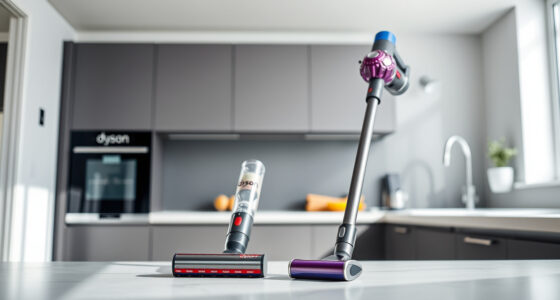
HEPA filters in vacuum cleaners trap tiny particles as small as 0.3 microns, including common allergens like pollen, pet dander, and dust mites. When you vacuum, these filters capture allergens from surfaces and prevent them from recirculating into your indoor air. This reduces airborne irritants and helps improve your air quality immediately. With regular use, HEPA filters support a healthier environment and fewer allergy symptoms—continue to explore how they make a difference in your space.

Get home appliances delivered free — and shop member deals
- Fast, free delivery on millions of items
- Access to Prime Big Deal Days deals on October 6–7
- Prime Video, Amazon Music and more included
Key Takeaways
- HEPA filters trap tiny particles as small as 0.3 microns, including common allergens like pollen, pet dander, and dust mites.
- They prevent allergens from recirculating into indoor air by capturing them during vacuuming.
- HEPA filters reduce airborne irritants that trigger allergies and asthma symptoms immediately after use.
- Regular vacuuming with HEPA filters minimizes allergen buildup on surfaces and prevents stirring up allergens.
- They support long-term allergen control, creating a cleaner indoor environment and improving overall air quality.
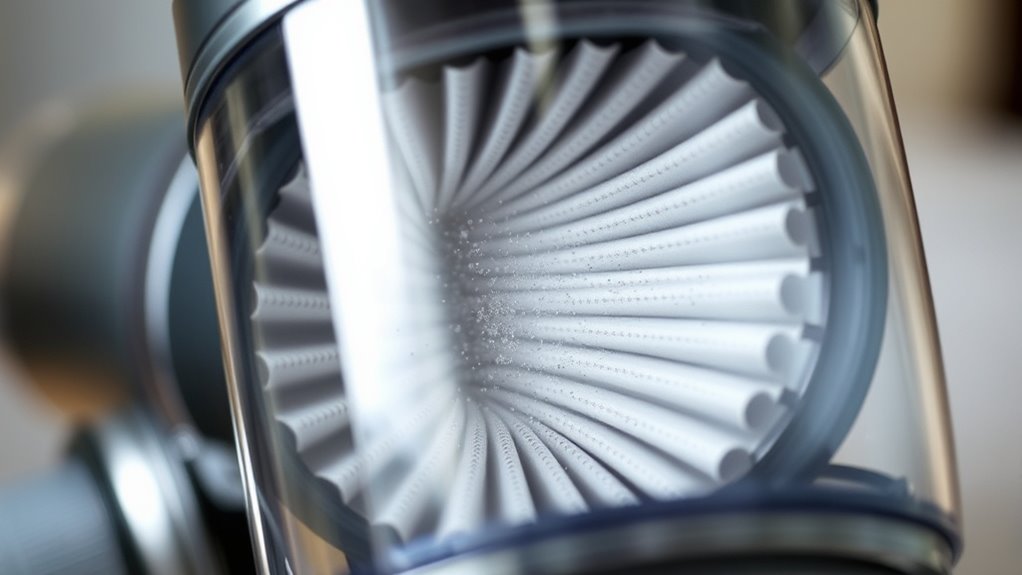
HEPA filters in vacuum cleaners are essential for improving indoor air quality, especially if you suffer from allergies or asthma. These filters are designed to capture tiny particles that standard vacuum filters often miss, making them a powerful tool for air filtration and allergen removal. When you vacuum with a HEPA-equipped machine, you’re actively reducing the amount of airborne irritants that can trigger allergy symptoms or asthma attacks. This is because HEPA filters are capable of trapping particles as small as 0.3 microns, including pollen, pet dander, dust mites, mold spores, and other common allergens that settle on your floors and furniture. By removing these from your environment, you create a cleaner, healthier space where you can breathe more easily.
HEPA filters trap tiny airborne allergens, improving air quality and easing allergy and asthma symptoms.
The benefits of air filtration with HEPA filters go beyond just trapping visible dirt. They are designed to prevent these tiny allergens from being recirculated back into the air. When your vacuum pulls in contaminated air, the HEPA filter captures the particles and holds them tightly, allowing only clean air to escape. This process markedly reduces the amount of airborne allergens lingering in your home, which can be particularly helpful for allergy sufferers. You’ll notice a difference in your indoor air quality almost immediately after switching to a vacuum with a HEPA filter, as it actively reduces the presence of irritants that cause sneezing, congestion, or itchy eyes.
Using a vacuum with a HEPA filter also supports ongoing allergen control. Regular vacuuming with proper filtration prevents buildup of dust and dander, which are common culprits for allergy flare-ups. You don’t have to worry about stirring up dust and allergens into the air as much, because the HEPA filter traps them before they get a chance to escape into your breathing zone. This is especially important in homes with pets, where pet dander can be a persistent allergen. With consistent use, a HEPA-filtered vacuum helps maintain a cleaner environment, reducing the frequency and severity of allergy symptoms over time.
In essence, investing in a vacuum cleaner with a HEPA filter is a smart move if you want to improve air filtration and allergen removal in your home. It’s not just about cleaning carpets or floors; it’s about creating a healthier indoor environment. The combination of powerful allergen capture and minimized recirculation means you’ll breathe easier, sleep better, and experience fewer allergy-related frustrations. With these filters working diligently, you get a simple yet effective way to combat airborne allergens and enjoy a cleaner, more comfortable living space.
As an affiliate, we earn on qualifying purchases.
Frequently Asked Questions
Do HEPA Filters Need Regular Replacement to Stay Effective?
Yes, HEPA filters need regular replacement to stay effective. You should follow the filter maintenance and replacement schedule recommended by your vacuum cleaner’s manufacturer, typically every 6 to 12 months. Regularly changing the filter ensures it continues trapping allergens efficiently. Neglecting this can reduce your vacuum’s performance and allergen control, so make it a habit to check and replace the filter as advised to maintain ideal air quality.
Can HEPA Filters Capture Viruses and Bacteria?
Think of HEPA filters like a medieval castle’s moat, blocking invaders. They can capture viruses and bacteria through virus filtration and bacteria removal, but aren’t foolproof. While they markedly reduce airborne pathogens, tiny viruses might slip through if the filter isn’t in top condition or if the particle size is extremely small. Regular replacement boosts their ability, helping you breathe cleaner, safer air at home.
Are HEPA Filters Compatible With All Vacuum Cleaner Models?
Hepa filters aren’t compatible with all vacuum cleaner models, so you should check vacuum compatibility before purchasing. Many modern vacuums feature filter integration designed specifically for HEPA filters, ensuring proper fit and maximum performance. If your vacuum isn’t designed for HEPA filters, you might need to upgrade or choose a model with built-in filter compatibility. Always verify compatibility to effectively reduce allergens and maintain your vacuum’s efficiency.
How Long Do HEPA Filters Typically Last Before Replacement?
Think of your HEPA filter as a loyal guardian, standing watch over your air quality. Typically, it lasts about 6 to 12 months before needing replacement. The filter lifespan depends on usage and air quality, so check your vacuum’s recommendations. Regular replacement keeps your home’s air clean and your vacuum performing at its best, ensuring your environment stays fresh and allergen-free.
Do HEPA Filters Increase Vacuum Cleaner Noise Levels?
HEPA filters can slightly increase your vacuum cleaner’s noise levels, especially if they’re clogged or not well-maintained. Regular filter maintenance helps keep noise concerns minimal, ensuring your vacuum runs smoothly. When filters are clean and properly fitted, they don’t considerably impact noise. So, to enjoy quiet operation, check and replace your HEPA filter as needed and keep up with routine maintenance.
Conclusion
By using a HEPA filter in your vacuum cleaner, you markedly reduce airborne allergens and improve your home’s air quality. Did you know that HEPA filters can trap 99.97% of particles as small as 0.3 microns? That’s incredibly effective at catching pollen, pet dander, and dust mites. So, if allergy relief matters to you, investing in a HEPA-equipped vacuum could make a noticeable difference in your daily comfort and health.
Fall yard work Picks
leaf blowers
As an affiliate, we earn on qualifying purchases.