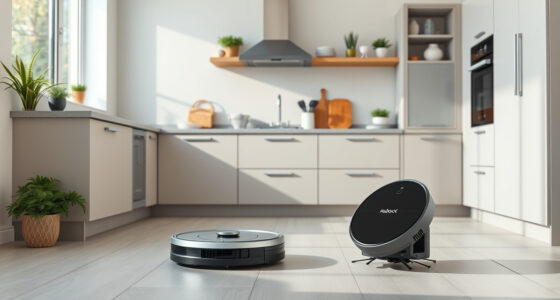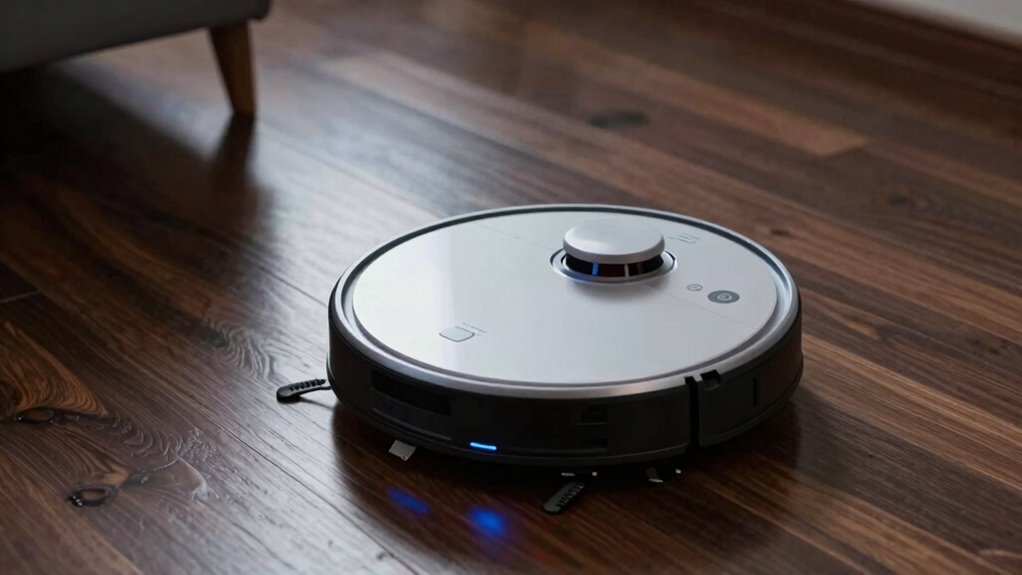

Dark floors can confuse your robot vacuum’s sensors, causing navigation problems and missed spots. To fix this, regularly clean the sensors with a soft cloth and verify they’re properly aligned. Some models allow calibration or firmware updates, which can improve obstacle detection. Using light-colored mats temporarily can also help. Staying on top of maintenance ensures your vacuum works well on dark surfaces. Keep going to discover more tips on optimizing your vacuum’s sensor performance.

Get home appliances delivered free with Prime
- Fast, free delivery on millions of items
- Prime Video, Amazon Music and more included
- Member-only deals all year
Key Takeaways
- Clean sensors regularly with a soft cloth to prevent dirt buildup that affects dark floor detection.
- Perform calibration routines if your robot vacuum supports them, ensuring sensors are properly aligned.
- Use light-colored mats or rugs temporarily on dark floors to improve obstacle detection.
- Keep firmware updated to benefit from software improvements for better navigation on dark surfaces.
- Follow maintenance tips like periodic calibration checks and cleaning to maintain optimal sensor performance.
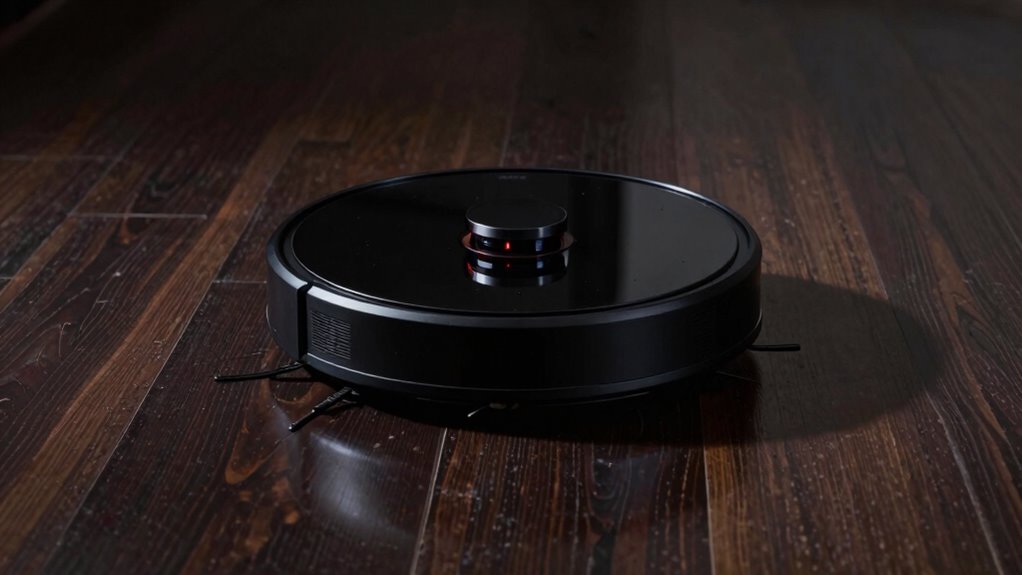
Many robot vacuum owners have recently reported sensor issues that disrupt cleaning performance. If you’ve noticed your device struggling to navigate dark floors or missing spots, it’s likely due to sensor calibration problems affecting obstacle detection. Your vacuum’s sensors are designed to interpret the environment accurately, but dark surfaces can confuse these sensors, leading to missed debris and inefficient cleaning. Fortunately, you can often fix this problem without replacing hardware or calling in support.
Sensor calibration issues can cause dark floor navigation problems; regular cleaning and updates improve obstacle detection.
First, understand that sensor calibration is essential for your robot’s obstacle detection. Over time, sensors can become misaligned or dirty, causing them to misread their surroundings. When cleaning dark floors, the sensors may fail to detect obstacles properly because the low reflectivity of dark surfaces doesn’t bounce back enough signal for accurate readings. As a result, your vacuum might bump into furniture or stop prematurely, leaving areas uncleaned. Regularly cleaning the sensors with a soft cloth helps maintain proper calibration and guarantees they function at their best. If cleaning doesn’t resolve the issue, consider resetting the sensors or performing a calibration routine if your model supports it.
Obstacle detection relies heavily on the sensors’ ability to interpret their environment correctly. When sensors malfunction or aren’t calibrated properly, the vacuum can’t distinguish between the floor and obstacles, causing it to either stop, bump into objects repeatedly, or avoid large sections altogether. Dark floors can worsen this problem because they absorb more light, making it harder for optical sensors or infrared beams to reflect signals back. To improve obstacle detection, you might need to adjust the settings within the app or firmware, if available. Some models have calibration modes that allow you to recalibrate the sensors manually, which can greatly improve obstacle detection accuracy on dark surfaces. Additionally, understanding the sensor calibration process can help you troubleshoot and enhance your vacuum’s performance more effectively.
In addition, confirm your vacuum’s software is up to date. Manufacturers often release firmware updates that enhance sensor performance and obstacle detection algorithms, especially in challenging environments like dark floors. If your device continues to struggle, try placing light-colored mats or rugs temporarily on dark areas to help sensors better detect obstacles until you can perform a full calibration. Properly calibrated sensors will help your vacuum distinguish obstacles from the floor, preventing unnecessary collisions and missed spots. Remember, consistent maintenance and updates are key to keeping your robot vacuum functioning smoothly across various floor types, dark or light.
robot vacuum sensor cleaning kit
As an affiliate, we earn on qualifying purchases.
As an affiliate, we earn on qualifying purchases.
Frequently Asked Questions
Can Sensor Issues Cause Robot Vacuums to Stop Mid-Clean?
Yes, sensor issues can cause your robot vacuum to stop mid-clean. When sensors aren’t properly calibrated, they may misjudge obstacles or dark floors, triggering the obstacle avoidance system and making the vacuum halt. To fix this, regularly calibrate your sensors and clean any dirt or debris that might interfere with their functionality. Proper maintenance guarantees your vacuum navigates smoothly without unnecessary stops.
Are Certain Dark Floor Materials More Problematic for Sensors?
Dark floor materials can be a nightmare for your robot vacuum’s sensors, making it nearly impossible for them to see clearly. This dramatically affects sensor visibility, causing your vacuum to get confused or stop mid-clean. The problem is especially bad with very dark or glossy surfaces, which reflect less light. To fix this, consider using sensor-friendly mats or switching to a vacuum with advanced sensors that handle dark floors better.
How Often Should I Clean the Robot’s Sensors for Optimal Performance?
You should clean your robot’s sensors weekly to maintain ideal performance. Dust accumulation can interfere with sensor calibration, causing navigation issues, especially on dark floors. Gently wipe the sensors with a soft, dry cloth to remove dust and debris. Regular cleaning ensures accurate detection of dark surfaces, preventing the sensor issues you’ve experienced. Consistent maintenance keeps your robot vacuum working efficiently and prolongs its lifespan.
Do All Robot Vacuums Have the Same Sensor Technology?
Not all robot vacuums use the same sensor technology, so their navigation systems vary like different maps guiding explorers. Some rely on optical sensors, others on infrared or ultrasonic sensors, each with unique strengths. This variety affects how well they detect dark floors or obstacles. You should check your vacuum’s specifications to understand its sensor type, ensuring peak performance and fewer navigation mishaps on your darker surfaces.
Can Adjusting the Cleaning Schedule Improve Sensor Detection on Dark Floors?
Yes, adjusting your cleaning schedule can improve sensor detection on dark floors. By scheduling cleaning during times when the floors are less dark or clearer, you give your robot vacuum a chance to calibrate its sensors better. Regular sensor calibration combined with tweaking your cleaning schedule helps prevent sensor misreads, ensuring your vacuum navigates dark floors more effectively and reduces the chances of it getting stuck or missing spots.
Conclusion
Think of your robot vacuum as a loyal explorer steering through a shadowy forest. When its sensors struggle to see dark floors, it’s like the explorer stumbling over unseen roots. But with a simple fix, you’re shining a light on the path, guiding it smoothly through the darkness. Now, your vacuum can confidently do its job, transforming the shadowy woods into a clear trail. With a little tweak, your home’s mystery becomes a well-lit adventure.
Fall yard work Picks
leaf blowers
As an affiliate, we earn on qualifying purchases.