
TL;DR

Get home appliances delivered free — and shop member deals
- Fast, free delivery on millions of items
- Access to Prime Big Deal Days deals on October 6–7
- Prime Video, Amazon Music and more included
Home Assistant is changing the name of its optional Home Assistant Cloud service to Home Assistant Link. The service’s features and pricing remain the same, with backend improvements planned; founder Paulus Schoutsen says the name change reflects the project’s emphasis on local control, while the team works to make Home Assistant easier for new users.
Home Assistant is renaming its optional remote-access service from Home Assistant Cloud to Home Assistant Link, a change founder Paulus Schoutsen says reflects the project’s preference for smart-home systems that work locally rather than depend on outside servers. The service’s features and pricing are staying the same, while the company also pursues changes to make Home Assistant simpler for new users.
The rename is mostly symbolic, according to The Verge’s report based on an interview with Schoutsen. Home Assistant Link will retain the existing service’s functions, with backend work intended to improve speed and reliability. The subscription costs $6.50 a month or $65 a year.
Home Assistant runs on hardware in a user’s home and controls devices locally. Without a remote-access option, users generally cannot reach their setup from outside their home network. Link provides that access and can also enable internet-dependent features including Alexa and Google voice control, speech-to-text, text-to-speech and encrypted backups. The service is optional: users can use other methods to set up comparable access and features.
Schoutsen said the name had confused some prospective users into thinking the platform itself ran in the cloud. Link is operated by Nabu Casa, Home Assistant’s commercial partner. Schoutsen said traffic is encrypted and the service cannot access users’ data. According to the report, 60 percent of Link’s profit goes to the nonprofit Open Home Foundation, which runs Home Assistant.
A Paid Option, Not a Cloud Requirement
The name change addresses a mismatch between Home Assistant’s criticism of cloud-dependent smart-home products and its own service carrying “Cloud” in its name. The distinction the project is making is that Link is an optional way to connect remotely, not a requirement for the local platform to operate. That matters to users who want access away from home without making basic device control depend on a company’s servers.
The issue has practical consequences beyond privacy. Schoutsen pointed to products that lost functions when their manufacturers ended cloud support, including early Nest thermostats and the June Oven. These examples were his argument for local control; the report does not establish that Link eliminates every risk associated with internet-connected devices. Its remote-access and online features still rely on internet services.
Home Assistant also faces a usability challenge. Schoutsen estimated that it is installed in 2.7 million homes, but said it remains far smaller than platforms from Amazon, Google, Samsung and Apple. Making setup and everyday use less demanding could help it reach people who value control and flexibility but do not want to configure a complex system themselves.
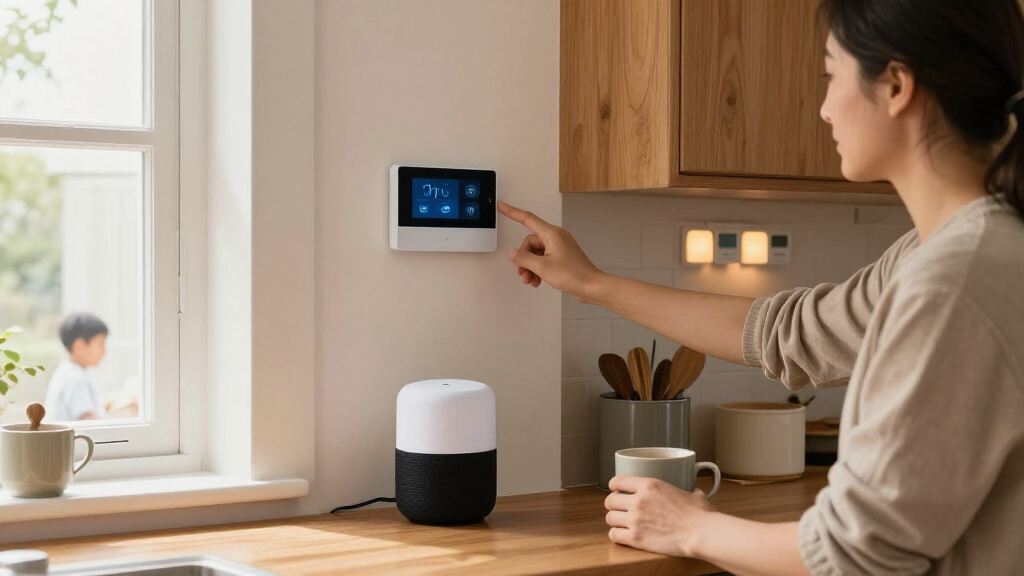
Home Assistant local control device
As an affiliate, we earn on qualifying purchases.
As an affiliate, we earn on qualifying purchases.
Local Control and Easier Setup
Home Assistant is an open-source smart-home platform designed to run on local hardware. That approach gives users more control over integrations and device behavior, but it can require more setup than mainstream alternatives. Schoutsen described the trade-off as a wide range of possibilities that can make the user experience complicated.
The team’s stated goal is to make the platform easier without removing advanced options. Plans described in the report include simpler dashboards, more intuitive setup and generative AI to reduce complexity. The team also intends to integrate the community-built HACS store, where users find integrations, into Home Assistant. Schoutsen said that integration was planned for the month after the interview; the report does not confirm that it has since launched.
Schoutsen also said a more user-friendly successor to the Home Assistant Green hub is planned for the following year. The report provides no confirmed release date or final product specifications. Separately, Nabu Casa is developing a “No Device Left Behind” program intended to connect existing or legacy equipment, though the supplied report excerpt does not give full details of its scope.
““Big tech ruined the cloud, so we’re out.””
— Paulus Schoutsen, Home Assistant founder, speaking to The Verge
Details Still Awaited
The announcement does not specify when the Link backend improvements will be completed or provide measured performance changes. The report also does not detail how Link’s data-handling model is independently assessed; its assurances about access to encrypted traffic come from Schoutsen.
Dates and specifications for the planned hub, the HACS integration and the “No Device Left Behind” program remain limited. The reported 2.7 million homes is Schoutsen’s estimate, and the report does not state how it was calculated or give a directly comparable count for other platforms. It is also unclear how many Home Assistant users currently pay for the remote-access service.
Planned Usability Changes
Home Assistant’s next steps, as described by Schoutsen, include bringing HACS into the main platform, improving setup and dashboards, and developing an easier-to-use hub for a planned launch the following year. Nabu Casa is also working on its device-connection initiative and a database of products that are not fully dependent on cloud services.
For users, the immediate change is the service name: existing functions remain available through Home Assistant Link. The wider test will be whether the planned improvements reduce the learning curve without weakening local control or limiting the platform’s advanced capabilities.
Key Questions
What is Home Assistant Link?
Home Assistant Link is the new name for Home Assistant Cloud, an optional paid service for remotely accessing a Home Assistant setup and using selected internet-dependent features.
Does the rename change the service’s features or price?
The report says the features remain the same, apart from planned backend improvements to speed and reliability. The listed price is $6.50 monthly or $65 annually.
Does Home Assistant require Link to control smart-home devices?
No. Home Assistant runs on local hardware and controls devices locally. Link offers a convenient way to reach the system from outside the home, but the service is optional.
What changes are planned to make Home Assistant easier to use?
Schoutsen described work on simpler dashboards and setup, integration of the HACS community store, generative AI tools and a more user-friendly hub. Some of these are plans, not confirmed completed releases.
Source: rss
Cold & flu season Picks
humidifiers
As an affiliate, we earn on qualifying purchases.