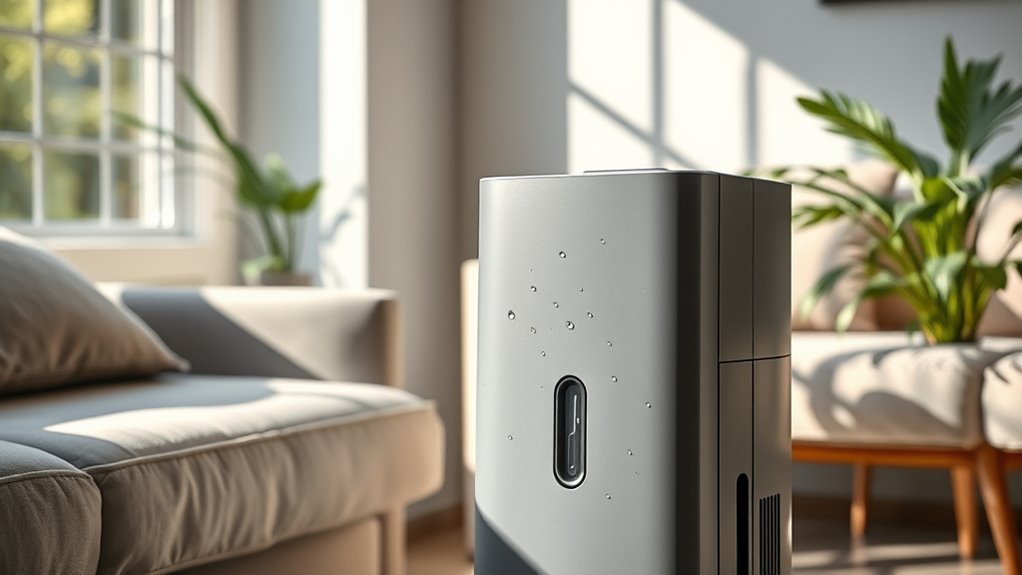

Dehumidifiers improve your indoor comfort by removing excess moisture that makes the air feel sticky and clammy. By maintaining ideal humidity levels between 30% and 50%, they help prevent mold, odors, and dust mites that can trigger allergies and respiratory issues. Less humidity also means a cooler, more pleasant environment and less strain on your air conditioning system. To discover more about how these devices create healthier, more comfortable living spaces, keep exploring the benefits they offer.
Key Takeaways
- Dehumidifiers reduce excess moisture, preventing clammy feelings and making indoor air feel cooler and more comfortable.
- They eliminate dampness and condensation, decreasing odors and mold growth that can cause discomfort.
- Lower humidity levels improve overall air quality, reducing allergens like mold spores and dust mites that affect comfort.
- By maintaining optimal humidity (30-50%), dehumidifiers help prevent health issues like allergies and respiratory problems.
- Using a dehumidifier creates a more consistent, pleasant indoor environment, especially in humid areas like basements and bathrooms.
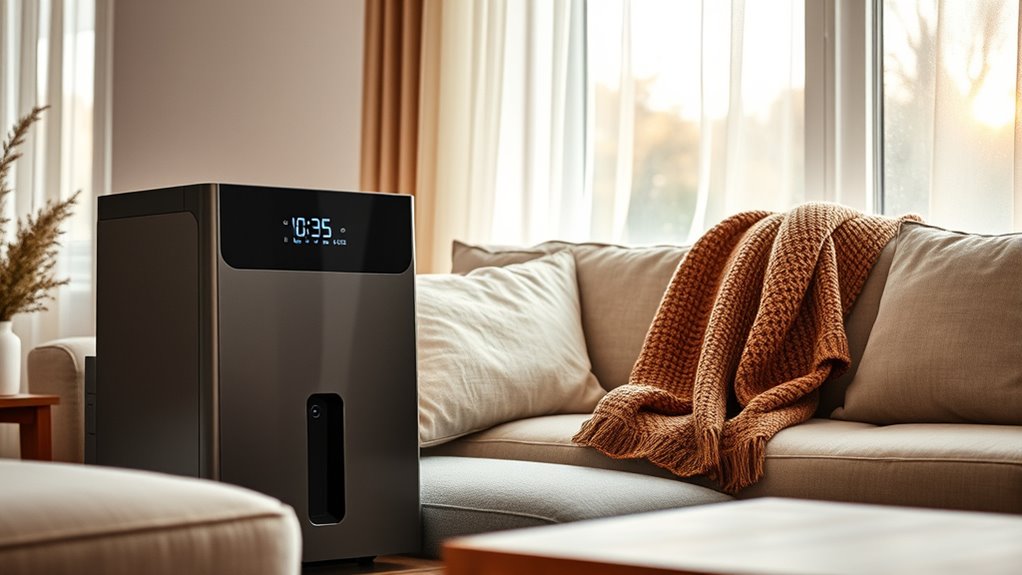
Maintaining a comfortable indoor environment often depends on controlling humidity levels, and dehumidifiers play a crucial role in achieving this balance. When your home’s air is too moist, it can cause discomfort, musty odors, and even damage your belongings. By effectively reducing excess moisture, dehumidifiers help you create a healthier, more comfortable living space. Proper humidity control not only makes the air feel cooler and more pleasant but also prevents the growth of mold and mildew, which thrive in damp environments. Mold prevention is especially important because mold spores can trigger allergies, asthma, and other respiratory issues, making your home less safe for everyone. When you use a dehumidifier, you’re actively managing indoor humidity levels, which reduces the likelihood of mold developing on walls, ceilings, and furniture. This not only preserves your home’s integrity but also improves overall air quality. Controlling indoor humidity helps create a safer, more comfortable environment by reducing health risks associated with mold and dust mites.
A key benefit of using a dehumidifier is that it helps you maintain the ideal indoor humidity level, typically between 30% and 50%. When humidity exceeds this range, you may notice a clammy feeling, condensation on windows, or dampness in your basement. These are signs that the air is too moist, and a dehumidifier can step in to extract that excess moisture. As a result, you’ll notice immediate improvements in comfort—your skin feels less sticky, and your home feels cooler without needing to turn down the thermostat. Plus, controlling humidity helps protect your belongings, from wooden furniture to electronics, which can be damaged by persistent dampness.
Using a dehumidifier also reduces the need for frequent cleaning caused by mold and dust mites, which thrive in humid conditions. This means less time spent on maintenance and fewer health concerns related to indoor allergens. In addition to comfort, dehumidifiers contribute to energy efficiency. Less humidity means your air conditioning system doesn’t have to work as hard to cool the space, saving you money on energy bills. They’re especially useful in areas prone to high humidity, such as basements, laundry rooms, and bathrooms, where moisture tends to accumulate quickly.
Frequently Asked Questions
How Often Should I Run My Dehumidifier for Optimal Comfort?
You should run your dehumidifier daily until the humidity levels reach around 40-50%, then reduce usage to maintain that range. Keep the unit placed in a central location for effective humidity control. Check the humidity levels regularly and adjust the settings as needed. Running it consistently during humid seasons or in damp areas ensures ideal comfort, preventing mold and musty odors.
Can Dehumidifiers Help Reduce Indoor Mold Growth?
Yes, dehumidifiers can help reduce indoor mold growth by actively controlling moisture levels. When you run your dehumidifier, it pulls excess moisture from the air, making your space less hospitable to mold. This moisture control is vital for mold prevention, especially in damp areas like basements or bathrooms. Regular use guarantees the environment stays dry, preventing mold from taking hold and improving overall indoor air quality.
Are There Energy-Efficient Dehumidifier Models Available?
Yes, there are energy-efficient dehumidifier models available. You can find units with energy-saving features like adjustable humidistat controls, auto shut-off, and efficient compressors that reduce power consumption. Look for eco-friendly models that use environmentally safe refrigerants and have ENERGY STAR certification. These options help you maintain a comfortable indoor environment while saving energy and reducing your carbon footprint. Choosing the right model guarantees effective moisture control without high energy costs.
How Loud Are Typical Dehumidifiers During Operation?
You’ll find that typical dehumidifiers produce moderate noise levels during operation, often comparable to a fan or background TV. Operating sounds vary depending on the model, with quieter units emitting around 40-50 decibels and louder ones reaching up to 60 decibels. If noise levels are a concern, look for dehumidifiers specifically designed for low noise, which operate more quietly and won’t disrupt your daily activities or sleep.
Can a Dehumidifier Improve Air Quality for Allergy Sufferers?
Think of your dehumidifier as a vigilant guardian, clearing the air of airborne allergens like dust mites and mold spores. By maintaining ideal humidity levels, it prevents these irritants from thriving, easing allergy symptoms. You’ll notice less sneezing, coughing, and congestion, making your indoor environment healthier and more comfortable. With consistent humidity control, your space becomes a refuge, especially for allergy sufferers seeking relief from persistent airborne allergens.
Conclusion
Now that you understand how dehumidifiers can enhance your indoor comfort, imagine what could happen if you ignore this simple solution. The air might seem fine today, but unseen moisture could be building up, quietly causing problems. Will you wait until discomfort or damage strikes, or will you take action now? The choice is yours—don’t let hidden humidity continue to undermine your comfort. The key to a healthier, more comfortable home might be just a dehumidifier away.