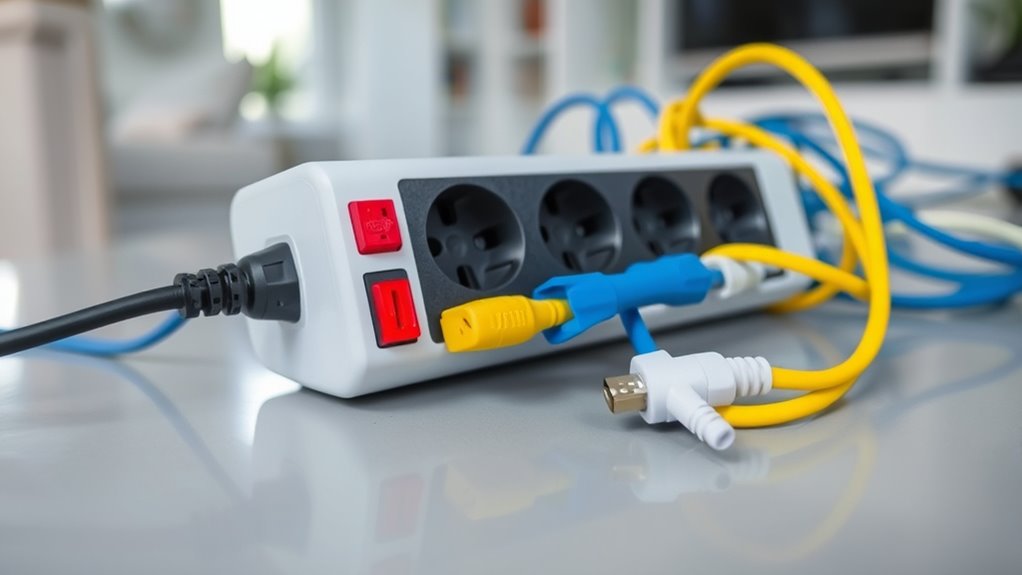

To understand surge protectors and power strips, recognize that surge protectors shield your electronics from voltage spikes, while power strips mainly expand outlet capacity. Not all power strips offer surge protection, so check the labels. Choose a device with a high joule rating for sensitive electronics and avoid overloading. Proper use, safety habits, and regular inspections help prevent damage and hazards. Continue exploring to learn more about selecting and using these devices effectively in your home.
Key Takeaways
- Surge protectors shield appliances from voltage spikes, while power strips expand outlet capacity; check labels to identify surge protection features.
- High joule ratings indicate better surge absorption, suitable for sensitive electronics like computers and TVs.
- Avoid overloading devices and daisy-chaining power strips to prevent overheating and electrical hazards.
- Regularly inspect cords and replace damaged surge protectors to ensure ongoing safety and protection.
- Proper device selection and safe usage practices enhance household electrical safety and protect appliances from damage.
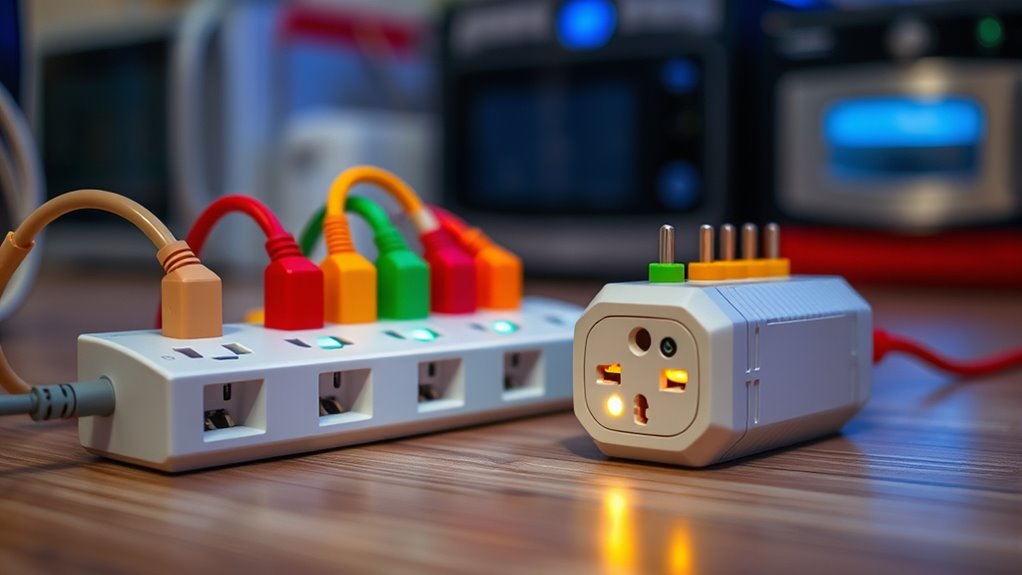
Have you ever wondered how to protect your appliances from unexpected power surges or how to organize multiple devices safely? If so, understanding surge protectors and power strips is essential. These devices play a key role in household safety by preventing damage to your electronics and ensuring your home runs smoothly. When choosing a surge protector or power strip, it’s vital to consider appliance compatibility. Not all devices are created equal, and some require specific features to operate safely and efficiently.
Protect your electronics by choosing the right surge protector or power strip for your appliances.
A surge protector is designed to guard your appliances against sudden voltage spikes caused by lightning, power outages, or other electrical disturbances. By diverting excess electricity away from your devices, it minimizes the risk of damage and extends the lifespan of your electronics. Power strips, on the other hand, offer a practical way to expand your outlet capacity, allowing you to connect multiple devices simultaneously. However, not all power strips provide surge protection, so it’s important to read labels carefully.
When selecting a surge protector, look for one with a high joule rating, which indicates its ability to absorb energy from power surges. A higher rating generally offers better protection for sensitive appliances like computers, TVs, and audio systems. Equally important is checking the device’s compatibility with your appliances. Some electronics, especially those with motors or heating elements, can generate electrical noise or require specific surge suppression features. Ensuring the surge protector matches your appliance’s needs helps prevent potential damage and enhances safety.
Proper use is crucial for household safety. Never overload a power strip or surge protector, as this can cause overheating or electrical fires. Make sure the total wattage of connected devices doesn’t exceed the limit specified on the device. Also, avoid daisy-chaining multiple power strips, which can lead to dangerous overloads. Instead, use a single, appropriately rated surge protector or power strip for each group of devices. Regularly inspect your surge protectors for signs of wear, such as frayed cords or scorch marks, and replace them if necessary. Additionally, understanding the power handling capacity of electric bikes can be useful when considering electrical safety in your home, especially if you have high-powered or specialized equipment.
In the end, understanding the differences between surge protectors and power strips and their importance in household safety can save you money and prevent accidents. By selecting devices that are compatible with your appliances and using them properly, you protect your electronics, maintain a safer environment, and ensure your home’s electrical system functions reliably. Taking the time to choose the right equipment and following safety practices is a smart investment in your home’s overall safety and the longevity of your appliances.
Frequently Asked Questions
Can Surge Protectors Prevent All Power Surges?
No, surge protectors can’t prevent all power surges, especially large ones caused by lightning or severe voltage fluctuations. They help by regulating voltage and protecting against minor surges, but during a circuit overload or intense voltage spike, they might fail. To guarantee better protection, use surge protectors with advanced voltage regulation features and avoid overloading circuits, which increases the risk of damaging your appliances during power surges.
Are Power Strips Safe for High-Power Appliances?
Power strips can be safe for high-power appliances if they have the right electrical safety features and are compatible with your appliance’s power requirements. Always check the power strip’s maximum wattage and verify it matches your appliance’s needs. Using an under-rated power strip can be dangerous, so choose one designed for high loads. Proper electrical safety and appliance compatibility help prevent overheating, fires, or damage to your devices.
How Often Should I Replace a Surge Protector?
Think of your surge protector like a trusty shield—over time, its protection weakens. You should replace it every 3 to 5 years, depending on its usage and signs of wear. The surge protector lifespan shortens if it’s been hit by a power surge or shows visible damage. Regularly inspecting for frayed cords, scorch marks, or malfunctioning outlets helps determine the right replacement frequency, ensuring your devices stay safe.
Do All Power Strips Include Surge Protection?
Not all power strips include surge protection. When choosing among different power strip types, check the product labels and specifications to see if surge protection is built in. Electrical wiring in your home affects safety, so a power strip with surge protection offers added security for your devices. Always select a power strip with surge protection if you want to guard against voltage spikes, and verify its features before plugging in expensive appliances.
Can I Connect Multiple Surge Protectors Together?
They say don’t put all your eggs in one basket, and that applies here. You shouldn’t connect multiple surge protectors together, like daisy chaining or stacking them. Doing so can overload the system, increase fire risk, and reduce protection effectiveness. Instead, use one high-quality surge protector designed for your needs, ensuring safe and reliable power for your appliances without risking damage or safety hazards.
Conclusion
Now that you know the difference between surge protectors and power strips, imagine plugging in your essential appliances, feeling confident they’re protected. But what happens when a power surge strikes unexpectedly? Will your devices stay safe or suffer damage? The choice you make today could mean the difference between peace of mind and costly repairs. Stay vigilant, and keep those vital appliances shielded—because in the world of electricity, surprises can happen when you least expect them.