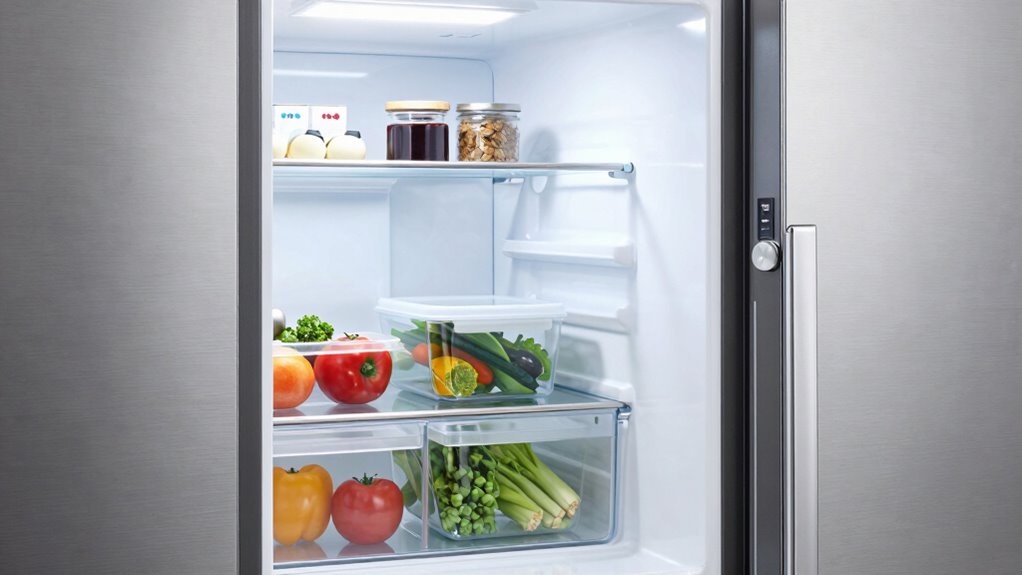
To cut energy waste and keep your food fresh, set your fridge between 35°F and 38°F. Use a thermometer for accuracy and avoid overloading or underfilling the fridge, which can both waste energy. Regularly check door seals and minimize open times. Proper temperatures prevent spoiled food and costly repairs. Keep your fridge operating efficiently by following these tips—keep going, and you’ll discover even more ways to save money and improve performance.
Key Takeaways
- Set your fridge temperature between 35°F and 38°F to optimize energy use and food preservation.
- Use a thermometer to regularly verify and adjust your fridge’s temperature for accuracy.
- Avoid overloading or underfilling the fridge; keep it around 75% full for efficient cooling.
- Ensure door seals are clean and functioning properly to prevent warm air from entering.
- Minimize door openings and maintain proper maintenance to reduce unnecessary energy consumption.
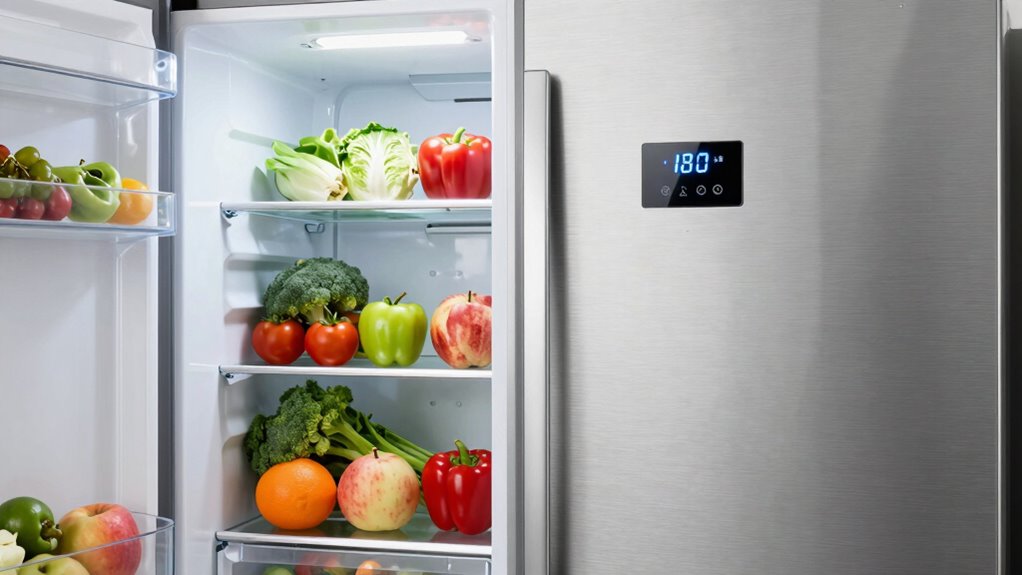
Maintaining the correct temperature in your fridge is essential for keeping food fresh and preventing spoilage. When your fridge isn’t set properly, it can lead to food waste, higher energy bills, and even health risks. The key is to find the right balance that maximizes energy efficiency while ensuring your food stays safe and fresh. Most experts recommend setting your fridge between 35°F and 38°F (1.7°C to 3.3°C). At this range, your appliance uses less energy because it doesn’t have to work as hard to maintain a colder environment, which directly benefits your electricity bill. Plus, a properly cooled fridge helps preserve the quality of your food by slowing down the growth of bacteria and mold, which extends the shelf life of perishable items.
Keeping your fridge at 35–38°F preserves food, saves energy, and prevents spoilage.
If your fridge runs too cold, you might notice frozen vegetables or bottles of drinks turning into ice, which wastes energy and can damage your food’s texture and flavor. On the other hand, if the temperature is too high, you risk allowing harmful bacteria to multiply, risking foodborne illnesses. Regularly checking and adjusting your fridge’s temperature is a simple but effective way to optimize both energy efficiency and food preservation. Use a thermometer to verify the actual temperature inside your fridge, as the built-in dial isn’t always accurate. Once you confirm your settings, keep the thermometer in the middle of the fridge to monitor consistent temperatures.
Another way to improve energy efficiency is to avoid overloading your fridge. When it’s packed too full, air can’t circulate properly, causing certain areas to warm up and forcing your appliance to work harder to maintain the correct temperature. Conversely, a nearly empty fridge also consumes more energy because the compressor runs longer to reach and sustain the target temperature. Aim to keep your fridge about three-quarters full, filling empty space with bottles of water or other items to aid in heat distribution. Additionally, understanding small appliance efficiency can help you choose energy-saving models that further reduce your utility costs.
Remember to keep the door seals clean and check for leaks regularly. A faulty gasket allows warm air inside, making your fridge work overtime and wasting energy. Opening the door less frequently also helps maintain a stable temperature, reducing unnecessary energy consumption. Implementing these adjustments not only helps you save money but also ensures your food stays fresh longer, maintaining ideal food preservation. By paying attention to your fridge’s temperature settings and overall operation, you can enjoy fresher food, lower utility bills, and a more efficient appliance.

TempPro Refrigerator Thermometer 2 Pack with Large Backlit LCD Display, Waterproof Freezer Fridge Thermometer with Max/Min Record, Easy Battery Replacement for Room, Cooler (Previously ThermoPro)
【Backlit Display for Clear Visibility】The oversized LCD screen with bright backlight ensures easy readability, even in dark freezers…
As an affiliate, we earn on qualifying purchases.
As an affiliate, we earn on qualifying purchases.
Frequently Asked Questions
How Often Should I Check My Fridge’s Temperature?
You should check your fridge’s temperature at least once a month to guarantee maximum performance. During these checks, verify the thermostat calibration and inspect the door seal for leaks. Keep your fridge running efficiently by adjusting the temperature settings if needed, ensuring food stays fresh and energy isn’t wasted. Regularly monitoring these factors helps prevent costly repairs and extends the lifespan of your appliance.
What Tools Do I Need to Measure Fridge Temperature Accurately?
To measure your fridge’s temperature accurately, you need a reliable digital or analog thermometer. Place the thermometer in the center of the fridge, away from the door and walls, to get an accurate reading—this is called proper thermometer placement. Use calibration techniques, like comparing the thermometer’s reading with a known accurate device, to make certain your measurements are precise. Regular checks help keep your fridge running efficiently and save you money.
Can Setting the Fridge Too Cold Cause Food Spoilage?
Setting your fridge too cold can cause food spoilage, as overcooling leads to frost buildup and uneven temperatures. Did you know that improperly calibrated thermostats waste up to 10% of energy? When your thermostat isn’t calibrated correctly, it may turn the compressor on unnecessarily, causing frost buildup and dry spots. Keep your fridge at 37-40°F to prevent spoilage and guarantee ideal performance.
Are There Energy-Saving Benefits to Adjusting Fridge Temperature?
Yes, adjusting your fridge temperature can improve energy efficiency and save you money. Keeping it at the recommended 37-40°F (3-4°C) uses less energy while keeping your food fresh. Avoid setting it too cold, which wastes power. By maintaining the right temperature, you reduce energy consumption and lower your utility bills, making your fridge more cost-effective and environmentally friendly. Small adjustments can lead to significant savings over time.
How Do I Reset My Fridge’s Temperature After a Power Outage?
When power pulses out, promptly reset your fridge’s temperature to prevent perishables from spoiling. Locate the control panel or dial, and adjust the settings to the recommended 37°F (3°C) for the fridge and 0°F (-18°C) for the freezer. This simple step guarantees proper fridge repair and accurate temperature calibration, protecting your food and saving money. Remember, resetting after outages is essential for efficient, effective appliance performance.
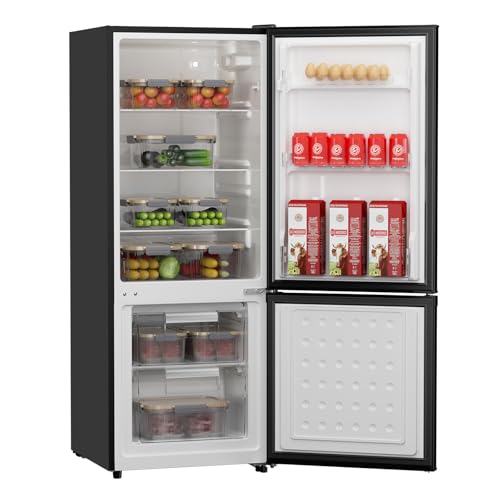
Upstreman 7.1 Cu.Ft Refrigerator with Bottom Freezer, Apartment Fridge with Freezer, Energy-efficient, Large Capacity, Adjustable Thermostat, Refrigerator for Apartment, Kitchen, Dorm(BM71)
7.1 Cu.Ft Large Capacity Fridge: This space-saving double-door (21.46"W x 55.91"H x 21.46"D) refrigerator packs serious storage. Top…
As an affiliate, we earn on qualifying purchases.
As an affiliate, we earn on qualifying purchases.
Conclusion
By adjusting your fridge’s temperature settings today, you might just save money you didn’t realize was slipping away—like finding spare change in a pocket you forgot about. Small tweaks can make a big difference, and sometimes, the simplest changes reveal hidden savings you never expected. So, as you check those settings, remember that even minor adjustments can unexpectedly lead to a more efficient, money-saving routine—proving that sometimes, what you need is just a small change to unleash bigger benefits.

50 Feet D-Shape Rubber Weather Stripping Door Seal Strip, Fingwerk Self-Adhesive Backing Door Weatherstripping for Door Frame Insulation Large Gap, Easy Cut to Size with Tailor Scissors(Black)
【PACKAGE INCLUDES】Total length 50 feet, with a pair of tailor scissors. Width: 0.35inch/(7/20inch)/9mm; Thickness: 0.23inch/(23/100inch)/6mm; Suitable for gaps…
As an affiliate, we earn on qualifying purchases.
As an affiliate, we earn on qualifying purchases.

Inkbird ITC-308 Digital Temperature Controller 2-Stage Outlet Thermostat Heating and Cooling Mode Carboy Homebrew Fermenter Greenhouse Terrarium 110V 10A 1100W
【Easy to use】 Supports °C/°F display.
As an affiliate, we earn on qualifying purchases.
As an affiliate, we earn on qualifying purchases.