
Induction cooktops emit electromagnetic interference (EMI) that can disrupt nearby electronic devices and sensitive equipment. To minimize issues, keep electronics at least 60 cm away, use compatible cookware, and install EMI filters or shielding. Smart design features and advanced materials further reduce emissions. By understanding how EMI occurs and applying proper mitigation strategies, you can enjoy safe, efficient cooking without interference—there’s more to explore to protect your devices and health.
Key Takeaways
- EMI from induction cooktops is caused by high-frequency magnetic fields that may interfere with nearby electronic devices.
- Keeping sensitive electronics at least 60 cm away reduces interference risks from stray electromagnetic fields.
- Using shielding, proper grounding, and EMI filters on power lines helps mitigate electromagnetic interference.
- Advanced materials like EMI foils, coatings, and smart filtering technologies enhance interference suppression.
- Designing cooktops with optimized coil geometry and adaptive frequency control minimizes stray emissions and improves EMC compliance.
Understanding the Nature of EMI From Induction Cooktops
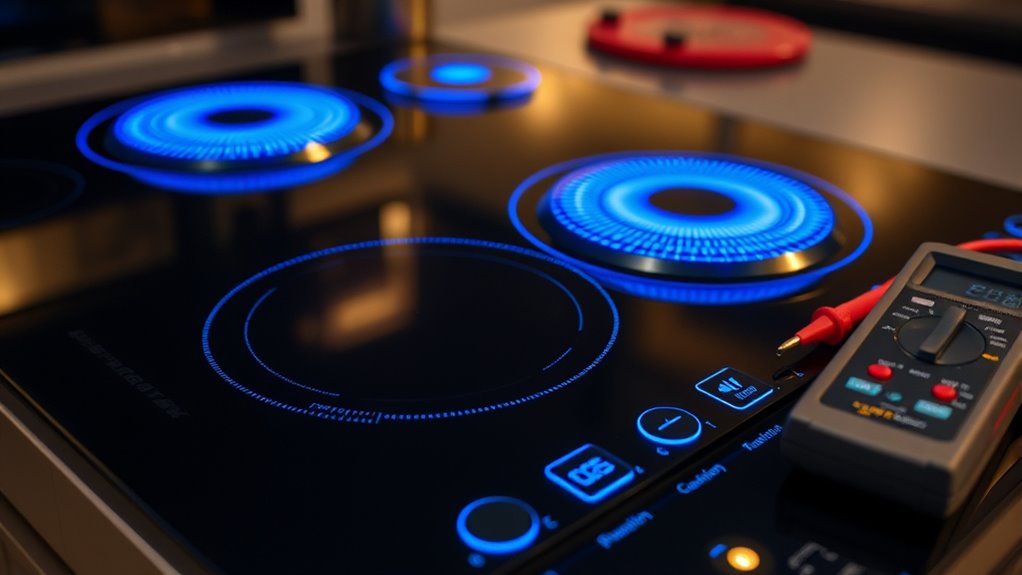
Induction cooktops generate electromagnetic interference (EMI) primarily through their alternating magnetic fields. These fields, typically between 20 kHz and 50 kHz, are created by a coil beneath the cooking surface that uses high-frequency alternating current. When the cookware fully covers the coil, the magnetic fields largely cancel out, reducing stray emissions. However, if the pot is smaller or off-center, stray magnetic fields increase, raising EMI levels. The EMI results from eddy currents in ferromagnetic cookware, which produce secondary magnetic fields that oppose the original. Factors like pot size, material, and placement influence the strength of EMI. Human contact and grounding conditions can also modify electromagnetic exposure, especially when stray fields are more prominent due to improper cookware placement. Proper cookware selection and placement can significantly reduce EMI and improve appliance performance.
How Electromagnetic Fields Affect Electronic Devices and Assistive Technologies
Electromagnetic fields generated by induction cooktops can directly impact electronic devices and assistive technologies nearby. These fields induce unwanted currents and voltages in circuits, causing malfunctions or performance issues. Sensitive devices like computers, communication equipment, hearing aids, cochlear implants, and mobility devices are especially vulnerable. EMI can lead to signal distortion, intermittent operation, or total device failure, depending on the interference level and shielding effectiveness. Magnetic fields decrease sharply with distance, so keeping devices farther away reduces risks. Modern shielding and conductive screens help lower susceptibility by blocking static and alternating fields. For users relying on assistive technologies, proximity and device construction are critical—more shielding and distance mean less interference, ensuring better device performance and safety. Understanding the nature of electromagnetic fields helps in designing effective mitigation strategies to protect sensitive equipment. Additionally, awareness of environmental factors like water proximity can influence electromagnetic behavior and interference, emphasizing the importance of proper device placement. Considering the seasonal variations in electromagnetic activity can also be important for maintaining optimal device operation, especially in outdoor or variable environments.
Factors Influencing EMI Levels in Household Environments

Your proximity to the cooktop, the materials and thickness of your cookware, and the design features of the appliance all influence EMI levels in your home. Using thicker or non-metallic cookware can reduce stray magnetic fields, while maintaining a safe distance minimizes exposure. Additionally, modern cooktop designs incorporate shielding and safety features that help limit electromagnetic interference. Implementing electromagnetic compatibility measures in household appliances can further reduce the risk of electromagnetic disturbances affecting other electronic devices.
Cookware Material & Thickness
Have you ever wondered how the choice of cookware material and its thickness can impact electromagnetic interference (EMI) in your household? If you use ferromagnetic materials like cast iron, enameled steel, or certain stainless steels, they generate heat efficiently through electromagnetic induction. Non-ferromagnetic materials like copper or aluminum won’t heat properly unless layered with ferromagnetic bases. Thicker cookware bases increase electrical resistance, enhancing heat but potentially causing uneven magnetic field distribution, which can raise stray EMI emissions. Conversely, thin cookware may leak more magnetic fields, increasing interference. The base’s composition and thickness influence the skin effect, concentrating currents on the surface for better energy transfer. Properly designed cookware ensures ideal coupling, reduces stray fields, and minimizes EMI impact on your household environment. Additionally, understanding automated technology can help in designing cookware with optimized electromagnetic shielding to further reduce interference. Being aware of electromagnetic compatibility standards can also guide manufacturers in producing cookware that minimizes household EMI concerns.
Distance & Placement
The distance between your induction cooktop and nearby objects considerably influences EMI levels in your household. As you increase the space, magnetic field strength drops sharply. For example:
- Standing 30 cm or more above the cooktop reduces electromagnetic exposure below safety thresholds.
- Magnetic fields are strongest directly over the active zone and weaken quickly laterally.
- Metal objects or cabinetry close to the cooktop can reflect or absorb fields, increasing interference.
- Keeping a clearance of at least 5–10 cm from conductive surfaces minimizes unintentional EMI and magnetic field exposure.
- Proper placement can also optimize the electromagnetic compatibility of your household electronics, as electromagnetic interference may indirectly affect electronic devices in the vicinity.
Cooktop Design Features
Design features of an induction cooktop play a crucial role in determining EMI levels in household environments. The coil’s design and operating frequency directly impact electromagnetic emissions. Tighter coil coupling and optimized geometry can minimize stray fields, while higher switching frequencies improve heating but may increase EMI. The skin effect in cookware influences resistance and EMI patterns, especially with ferromagnetic materials like cast iron or certain stainless steels. Electronic circuits with high-frequency switching generate conducted and radiated EMI, but integrated filters—using inductors and capacitors—help suppress these signals. Additionally, the cooktop’s housing and ceramic surface act as shields, reducing radiated emissions. Proper grounding, shielding, and material choices further limit EMI, ensuring compliance and minimizing household interference. Electromagnetic interference mitigation techniques, such as careful circuit design and shielding, are essential for reducing EMI levels and maintaining household safety.
Comparing EMI EMIssions From Different Cooking Technologies
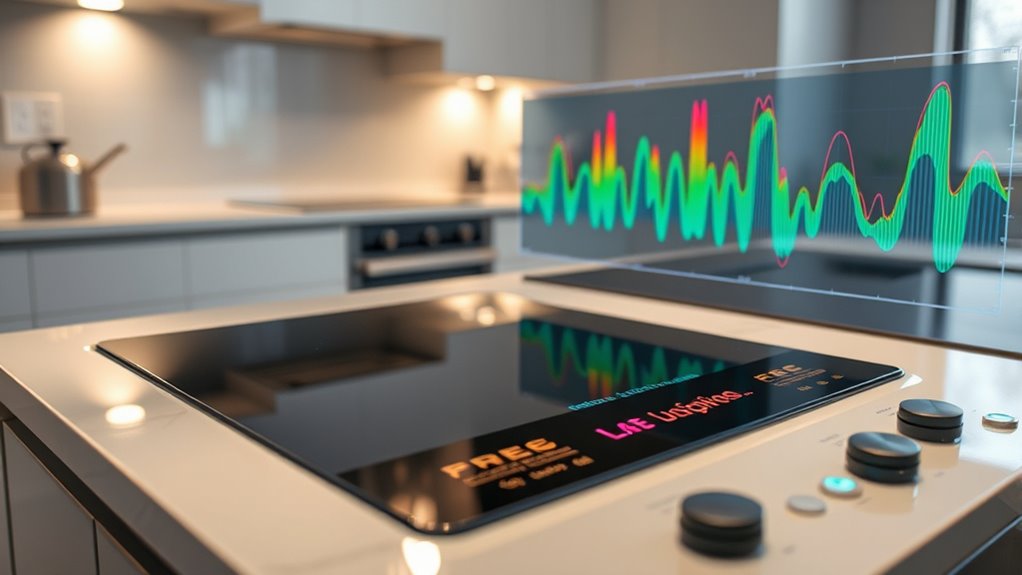
When comparing electromagnetic interference (EMI) emissions from different cooking technologies, induction cooktops stand out due to their intermediate-frequency magnetic fields generated during operation. You’ll notice these fields operate between 20-100 kHz, similar to compact fluorescent lights. Unlike gas stoves, induction cooktops produce measurable EMI, but it’s low-level, non-ionizing, and unlikely to cause biological harm. Here are some key differences:
Induction cooktops emit low-level, non-ionizing EMI at 20-100 kHz, unlike gas stoves which produce no electromagnetic interference.
- Gas stovetops don’t generate EMI but produce pollutants like NOx and CO.
- Electric resistance and infrared cooktops emit minimal EMI, mainly at 50/60 Hz power frequencies.
- Induction cooktops generate higher-frequency EMI, but emissions are localized and diminish with distance.
- Proper design and shielding in induction models help reduce interference, unlike traditional gas or resistance options.
- Electromagnetic compatibility standards and testing are essential to ensure that induction appliances do not interfere with other electronic devices.
- Cybersecurity vulnerabilities during outages underscore the importance of protective measures for electronic devices and systems related to modern appliances.
Health and Safety Implications of Induction Cooktop EMFs
Although induction cooktops generate measurable electromagnetic fields (EMFs), these emissions are generally considered safe based on current scientific standards. The EMF strength peaks within about 30 centimeters of the burner, but typical exposures often stay below recommended limits, such as 6 microteslas (µT). Real-world use can sometimes result in exposures five times higher, especially with multiple burners operating or improper cookware placement. These EMFs are intermediate frequency, non-ionizing, and similar to other household devices like CFLs. Extensive research and reviews by health agencies, including WHO and the European Commission, find no credible evidence linking induction EMFs to cancer or long-term health issues. While vulnerable populations like pregnant women and children should maintain some distance, induction cooktop EMFs are considered safe for general use. Additionally, understanding the nutritional properties of ingredients like chia seeds can contribute to overall health awareness. Moreover, ongoing studies continue to monitor EMF exposure levels to ensure safety standards are maintained.
Practical Strategies to Minimize EMI Interference
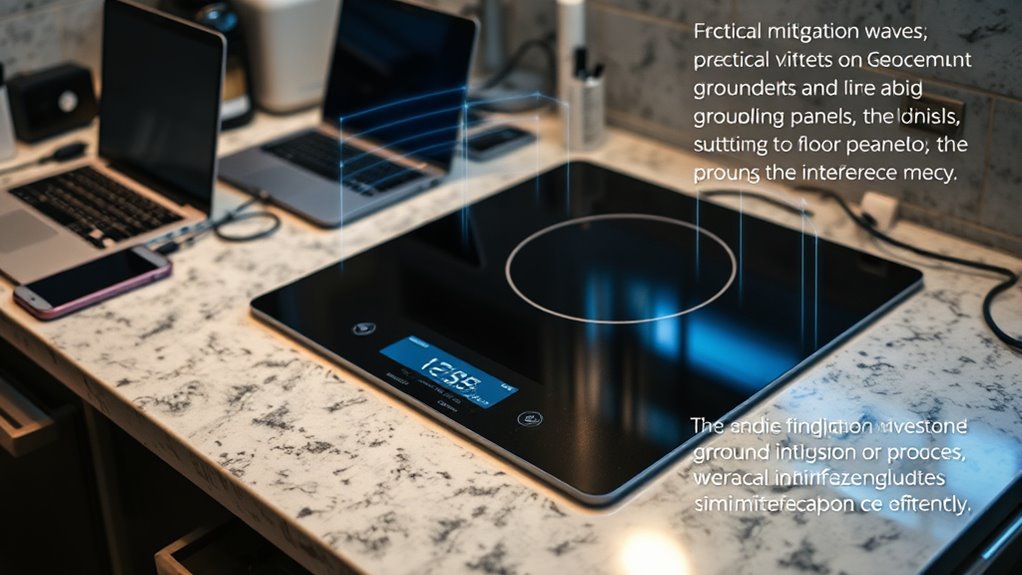
To effectively reduce EMI interference from induction cooktops, implementing source reduction techniques is essential. Start by adding EMI filters and noise suppressors to motors and variable frequency drives to limit electromagnetic emissions. Avoid using wireless devices nearby or switch them to airplane mode to prevent additional interference. Use surge suppressors and lightning protection devices to handle transient spikes. Additionally, select components designed for low electromagnetic emissions, and optimize the operating frequency of the induction coil to control magnetic field stray emissions. Incorporating digital literacy strategies can also help users better understand and mitigate electromagnetic interference in smart home environments. Understanding the cost factors involved in managing EMI can aid in selecting the most effective mitigation measures. Here are some practical strategies:
- Install EMI filters on power lines and employ shielded cables with grounding.
- Use metal enclosures grounded properly around electronics.
- Keep cables short and route power and signal lines separately.
- Regularly verify grounding integrity and connect multiple ground points.
Selecting Cookware and Appliances to Reduce EMI Risks
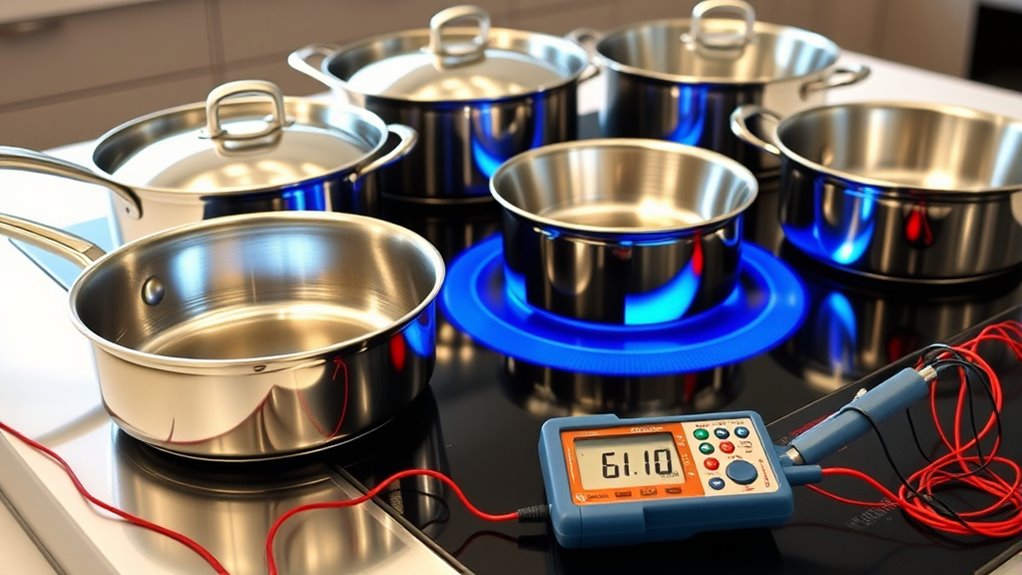
To reduce EMI risks, choose induction-compatible cookware made from ferromagnetic materials like cast iron or magnetic stainless steel. Keep sensitive electronics, such as audio or medical devices, shielded or placed at a safe distance from the cooktop. Ensuring proper appliance placement and using devices with built-in EMI filtering can further minimize interference. Additionally, being aware of best appliance practices can help optimize performance and safety. Being informed about city dynamics and local environment considerations can also contribute to safer appliance operation and reduce unintended interference.
Use Compatible Induction Pots
Choosing the right induction cookware is essential for minimizing electromagnetic interference (EMI) and ensuring ideal performance. When selecting pots, focus on materials that attract magnets, like cast iron, enameled steel, or stainless steel with a magnetic base. Proper cookware improves magnetic coupling, reduces stray EMI, and guarantees efficient heating. Using appropriate cookware materials can significantly decrease EMI issues and enhance overall appliance performance. Additionally, selecting cookware with good electrical conductivity helps optimize energy transfer and minimize electromagnetic disturbances.
Consider these tips:
- Use cookware with ferromagnetic materials for better magnetic attraction.
- Ensure stainless steel pots have a magnetic base.
- Opt for flat-bottomed cookware for consistent contact.
- Regularly check for warping or uneven bottoms, which can increase EMI.
Opt for Shielded Electronics
Electronics and appliances can be shielded effectively by enclosing them with conductive or magnetic materials that block electromagnetic interference (EMI). This prevents EMI from leaking out or entering sensitive circuits. When choosing devices, look for those with built-in shielding features like metal casings, conductive coatings, or shields designed to reduce emissions. These shields reflect and absorb EMI, improving device performance and minimizing interference with nearby electronics. Shielded appliances are especially important in environments with multiple devices operating simultaneously. Proper shielding enhances signal integrity and reduces the risk of electromagnetic disturbances. Additionally, understanding meditation may help you develop a mindful approach to managing electromagnetic exposure and maintaining mental clarity. Employing well-shielded devices can also help prevent privacy concerns related to unintended data transmission. By selecting electronics with effective shielding, you ensure both your appliances’ reliable operation and less EMI-related disruption in your home or workspace.
Maintain Safe Device Distance
Maintaining an appropriate distance between your induction cooktop and sensitive medical devices or electronics considerably reduces EMI risks. Keeping devices at least 60 cm (2 ft) away helps minimize electromagnetic interference. Even a small gap of 5-10 cm (2-4 in) can notably cut magnetic field exposure, but 60 cm remains the recommended safety buffer. EMI effects drop sharply as the distance increases, so positioning appliances thoughtfully is essential. Additionally, considering the integration of security features and proper placement can further help mitigate potential electromagnetic interference issues.
To reduce risks:
- Keep cardiac devices, like pacemakers, at least 60 cm from the cooktop.
- Use induction-compatible cookware centered over the coil.
- Place electronics away from the cooktop, especially near seating areas.
- Avoid metal counters or utensils that can amplify electromagnetic fields.
Future Developments and Innovations in EMI Mitigation

Future developments in EMI mitigation for induction cooktops focus on innovative materials, advanced circuit designs, and smarter control systems. You’ll see the use of novel magnetic and conductive composites, like nanomaterials such as graphene and carbon nanotubes, integrated into cooktop layers to block high-frequency interference. Multilayer shielding foils and flexible EMI films will conform to different geometries, enhancing interference suppression without adding bulk. Ceramic-based EMI barrier coatings will maintain thermal resistance while reducing electromagnetic leakage. Smart features include real-time EMI sensors, adaptive frequency modulation, and dynamic control algorithms that adjust coil currents to minimize harmonics. Additionally, improved filtering techniques, spread-spectrum technology, and better grounding will reduce emissions. These advancements aim to guarantee compliance, safety, and seamless integration within the evolving landscape of smart home and IoT environments.
Frequently Asked Questions
Can Induction Cooktop EMI Affect Pacemakers or Other Medical Implants?
Yes, induction cooktop EMI can affect pacemakers or other medical implants. When you’re close to the cooktop, especially with unipolar pacemakers or sensitive models, electromagnetic fields may interfere, causing pacing issues or device malfunction. To stay safe, keep a minimum of 60 cm away, position pots properly, and avoid prolonged contact with metal utensils. Always consult your healthcare provider before using induction cooktops if you have a medical implant.
Is There a Way to Test EMI Levels in My Kitchen?
You can test EMI levels in your kitchen by using a portable spectrum analyzer or EMI detector designed for household use. Place the device near your induction cooktop while it’s operating at different power levels, and record the electromagnetic signals it detects. Focus on the frequency ranges specified for your appliance, and compare your readings to standard limits. This helps you identify if interference exceeds safe or recommended levels.
Do Different Cookware Materials Influence EMI EMIssions?
Think of cookware materials as the gatekeepers of electromagnetic waves. Your choice greatly influences EMI emissions—ferromagnetic materials like cast iron or certain stainless steels absorb magnetic fields effectively, reducing stray emissions. Non-ferromagnetic options like aluminum or copper, however, reflect and radiate more, increasing EMI. Thicker, well-constructed, and properly contacting cookware minimizes leakage, so pick wisely for both cooking efficiency and electromagnetic harmony in your kitchen.
Are There Regulations Governing EMI EMIssions From Household Appliances?
You should know that regulations like CISPR 14-1, IEC 55014-1, EN 55032, and FCC Part 15 govern EMI emissions from household appliances. These standards set limits and testing requirements to guarantee devices don’t cause harmful interference. When manufacturing or buying appliances, check for compliance marks like CE, UL, or FCC to confirm they meet these regulations, helping you avoid interference issues and ensuring safe, reliable operation in your home.
How Do I Know if My Hearing Aids Are Affected by Induction Cooktops?
Imagine sitting near your induction cooktop, feeling a faint buzz in your hearing aids. If you notice crackling sounds, sudden feedback, or reduced clarity when the cooktop’s on, your devices are likely affected. Switch your hearing aids off telecoil mode or move farther away to see if sounds improve. Consulting an audiologist can also help confirm interference, ensuring you enjoy cooking without disrupted hearing.
Conclusion
So, now you know induction cooktops might be secretly conspiring with your gadgets, causing interference and chaos. But fear not—by choosing the right cookware and staying aware, you can keep the electromagnetic mischief at bay. After all, who knew your kitchen’s new shiny miracle could double as a techno-villain? Just remember, a little caution turns your high-tech haven into a safe, organized space—without needing a degree in wizardry or a shielded bunker.