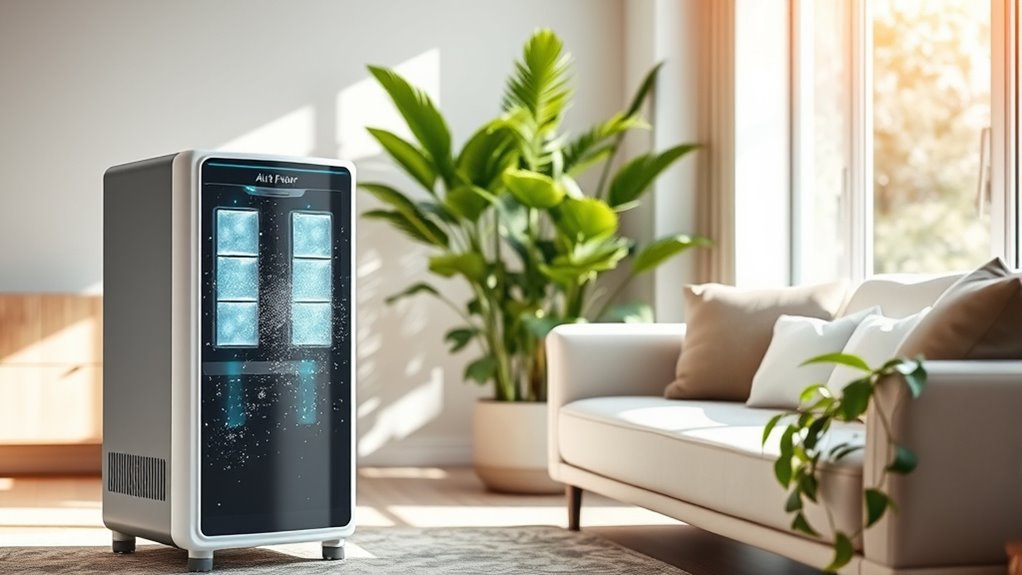

Air purifiers with HEPA and activated carbon filters quickly improve your indoor air quality by capturing tiny particles like dust, pollen, pet dander, and mold spores while removing odors and airborne chemicals. They create a healthier environment, especially if you suffer from allergies or asthma. Proper maintenance and filter replacement guarantee the best performance over time. Keep going to discover more about how these features can make your space cleaner and more comfortable.

Get home appliances delivered free with Prime
- Fast, free delivery on millions of items
- Prime Video, Amazon Music and more included
- Member-only deals all year
Key Takeaways
- HEPA filters effectively trap tiny particles like pollen, pet dander, and dust mites, improving allergy and asthma symptoms.
- Activated carbon filters absorb odors, VOCs, and airborne chemicals for a fresher, healthier indoor environment.
- Combining both filters provides comprehensive removal of particulate matter and gaseous pollutants.
- Regular filter maintenance ensures optimal air purification and prolongs device lifespan.
- Using air purifiers with these filters results in cleaner, healthier indoor air and enhanced overall comfort.

Air purifiers equipped with activated carbon and HEPA filters offer a powerful way to improve indoor air quality. These devices are especially effective at reducing common indoor allergens that can trigger allergies or asthma. When you run an air purifier with these filters, you quickly notice cleaner air, fewer sneezing fits, and less congestion. HEPA filters are designed to trap tiny particles like pollen, pet dander, mold spores, and dust mites—some of the main culprits behind indoor allergy symptoms. Meanwhile, activated carbon filters absorb odors, volatile organic compounds (VOCs), and other airborne chemicals that can make your indoor environment feel stale or unhealthy.
To keep these benefits ongoing, filter maintenance is essential. Over time, the filters collect a significant amount of particles and contaminants, which can reduce their efficiency. You’ll want to check the manufacturer’s recommended schedule for replacing or cleaning the filters. Regular maintenance ensures that your air purifier continues to perform at its best, effectively capturing indoor allergens and pollutants without overloading the filters. When filters are clogged or dirty, airflow decreases, and the purifier works harder to clean the air, which can lead to higher energy use and less effective filtration. Keeping up with filter maintenance not only prolongs the life of your device but also guarantees you’re consistently breathing cleaner, healthier air.
Replacing filters at the right intervals is straightforward, but don’t delay it. A clogged filter won’t trap new particles effectively, defeating the purpose of having an air purifier in your home. Many models feature indicator lights that alert you when it’s time for a replacement, making maintenance easier. Additionally, some filters are washable or reusable, which can save you money over time. Always follow the manufacturer’s guidelines for cleaning or replacing filters to optimize performance and avoid potential damage to your device. Proper filter maintenance and adherence to replacement schedules are crucial for maintaining optimal performance of air purifiers.
Products Worth Considering

LEVOIT Vital 100S-P Smart Air Purifier with Washable Pre-Filter

Levoit Core 600S-P Smart Air Purifier for Large Rooms

Blueair Blue Pure 211i Max Air Purifier
As an affiliate, we earn on qualifying purchases.
Frequently Asked Questions
How Often Should I Replace the Filters in My Air Purifier?
You should replace your air purifier filters every 6 to 12 months, depending on your filter lifespan and usage. Check your device’s replacement schedule and monitor the filter for signs of dirt or reduced airflow. Regular replacements guarantee peak performance and air quality. If you have pets or allergies, consider replacing filters more frequently. Always follow the manufacturer’s recommendations for the best results and cleaner indoor air.
Can Air Purifiers Remove Odors From Specific Sources Like Pets or Cooking?
Yes, your air purifier can remove odors from specific sources like pets or cooking. It uses source-specific filtering, with activated carbon filters that excel at odor elimination. When you turn it on, it traps and neutralizes the smell particles directly from the source, making your space fresher. To maximize effectiveness, guarantee your filters are clean and replaced regularly, especially if odors persist.
Are There Any Health Risks Associated With Using Activated Carbon Filters?
Think of activated carbon filters as sponges soaking up harmful substances, but beware—there’s a small chance of toxicity concerns if they become saturated or damaged. While generally safe, chemical exposure from improperly maintained filters might pose health risks. Regularly replacing filters and following manufacturer instructions helps minimize these risks, ensuring you breathe clean air without worry. Proper upkeep keeps your environment safe and your air pure.
What Size Room Is Best Suited for a HEPA and Activated Carbon Air Purifier?
You should choose a HEPA and activated carbon air purifier based on your room size and filter capacity. For small rooms under 200 square feet, a compact model works well. Medium-sized rooms between 200-500 square feet need a unit with higher filter capacity. For larger spaces, like open-plan areas, opt for a purifier designed for 500+ square feet, ensuring maximum air cleaning performance.
Do Air Purifiers Eliminate Airborne Viruses and Bacteria Effectively?
Yes, air purifiers with HEPA filters effectively remove airborne viruses and bacteria, providing virus filtration and bacteria removal. HEPA filters trap particles as small as 0.3 microns, capturing many viruses and bacteria that float in your indoor air. While they substantially reduce airborne pathogens, they don’t eliminate all viruses and bacteria. For maximum protection, combine air purifiers with good ventilation and other hygiene practices.
Conclusion
In brief, choosing an air purifier with activated carbon and HEPA filters can notably improve your indoor air quality. These filters effectively remove pollutants like dust, allergens, and odors, making your environment healthier. Did you know that HEPA filters can remove up to 99.97% of airborne particles? Investing in this combination not only enhances your well-being but also creates a cleaner, fresher space you can truly enjoy every day.