To improve indoor air quality, start by adding houseplants like snake plants and pothos, which naturally filter toxins and boost humidity. Pair this with proper ventilation by regularly opening windows or using exhaust fans to guarantee fresh air circulates and stale air exits. Mechanical systems like HRVs or ERVs can help in sealed homes. Maintaining humidity between 30-50% also enhances comfort and health. Keep exploring for more simple tips to create a healthier indoor environment.
Key Takeaways
- Incorporate air-purifying houseplants like snake plants and pothos to naturally filter indoor toxins.
- Ensure proper ventilation with natural airflow or exhaust fans to dilute indoor pollutants.
- Use mechanical systems such as HRVs or ERVs to continuously exchange indoor and outdoor air.
- Maintain indoor humidity levels between 30% and 50% to support plant health and reduce allergens.
- Regularly refresh indoor air by opening windows or using ventilation to prevent stale air buildup.
Have you ever wondered how clean the air inside your home really is? It’s a common concern, especially when you notice lingering odors, dust, or allergy symptoms. Improving indoor air quality isn’t just about opening windows or using sprays; it involves a combination of strategies that make your environment healthier. One effective way to do this is by incorporating houseplants and proper ventilation into your space. These methods work together to reduce pollutants, control humidity, and create a fresher atmosphere.
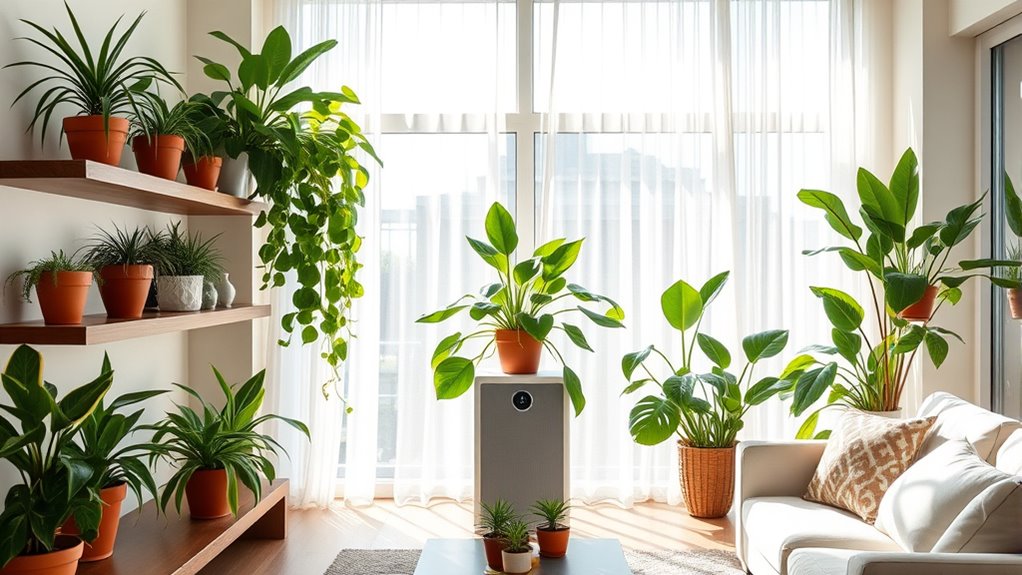
When you add houseplants to your home, you gain more than just aesthetic appeal. Many plants, like snake plants or pothos, actively filter out airborne toxins such as formaldehyde and benzene. This natural filtration offers several air purifier benefits that help in reducing indoor pollutants without the noise or maintenance associated with mechanical air purifiers. Plus, houseplants can boost humidity levels naturally, which is essential in dry indoor environments. Proper humidity control prevents the air from becoming too dry, which can cause respiratory discomfort, dry skin, or static electricity. By maintaining ideal humidity—ideally between 30% and 50%—your home feels more comfortable, and the air feels cleaner overall.
Adding houseplants naturally filters toxins and boosts humidity, making your home healthier and more comfortable.
Ventilation plays an equally important role in improving indoor air quality. When you open windows or use exhaust fans, you allow fresh outdoor air to circulate inside, diluting accumulated indoor pollutants. Good airflow helps remove indoor allergens like dust, pet dander, and mold spores, which can linger and cause health issues. If your home lacks natural ventilation, consider installing exhaust fans in kitchens and bathrooms to help expel moisture and odors. Mechanical ventilation systems, like HRVs or ERVs, can also be beneficial, especially in tightly sealed homes, by continuously exchanging indoor air with fresh outdoor air. This constant exchange not only improves air quality but also helps manage humidity levels, preventing mold growth and reducing the risk of respiratory problems. Additionally, choosing air-purifying plants with proven toxin-removing properties can further enhance this synergy.
Combining houseplants with good ventilation creates a synergistic effect. Plants absorb certain toxins and add humidity, while proper airflow ensures these benefits are sustained by removing stale air. This approach offers a natural, budget-friendly way to enhance your indoor environment. So, next time you’re concerned about indoor air quality, think about how your choices can make a difference—adding a few green friends and ensuring your home is well-ventilated can greatly improve the air you breathe every day.
Frequently Asked Questions
Which Houseplants Are Safest for Pets and Children?
You should choose pet safe plants and child friendly greenery like spider plants, Boston ferns, and areca palms. These options are non-toxic and safe for your loved ones. Keep them in accessible spots, and you’ll enjoy cleaner air without worry. Always verify plant safety with trusted sources, and avoid toxic varieties like lilies or pothos. Your indoor space stays healthy and safe for everyone with these smart choices.
How Often Should I Change My Home’s Air Filters?
You should change your home’s air filters every 90 days for ideal filter replacement, but this can vary based on your filter’s air filter lifespan and household factors. If you have pets, allergies, or live in a polluted area, consider replacing filters more frequently, around every 60 days. Regularly checking your filters ensures they’re effectively trapping dust, allergens, and pollutants, keeping your indoor air fresh and healthy.
Can Outdoor Air Pollution Affect Indoor Air Quality?
Did you know outdoor pollution can reduce indoor air quality by up to 50%? Yes, outdoor pollution definitely affects indoor air, especially when pollutants seep through windows and doors. You can combat this with proper indoor filtration and ventilation. Ventilating regularly helps dilute outdoor pollutants, but using high-quality air purifiers guarantees indoor air stays clean. Stay vigilant and protect your indoor environment from outdoor pollutants for healthier living.
Are There Specific Ventilation Systems Recommended for Allergy Sufferers?
Yes, allergy sufferers should consider HEPA air purifiers, which effectively remove allergens like pollen and dust. Look for models with humidity control features to prevent mold growth and reduce irritants. You might also explore ventilation systems with advanced filtration or dehumidifiers to maintain ideal humidity levels. These options work together to create a cleaner, more comfortable indoor environment, helping you breathe easier and minimizing allergy symptoms.
How Can I Measure Indoor Air Quality Effectively at Home?
Imagine your home’s air as a clear mountain stream, pure but sometimes clouded. To measure indoor air quality effectively, you can use air quality sensors that detect pollutants and allergens. DIY testing kits are also available for quick assessments. Place sensors in common rooms, and monitor readings regularly. This way, you gain a clear picture of your indoor environment and can take action to improve it.
Conclusion
By incorporating houseplants and boosting ventilation, you transform your home into a gust of fresh air—literally. Think of your space as a busy city street; without proper airflow, pollution builds up, making it harder to breathe. I once struggled with allergies until I added a few lush plants and opened my windows daily. Now, my home feels like a vibrant park after rain—clean, inviting, and full of life. Small changes can turn your indoor air into a sanctuary.