
To monitor air quality with smart devices, you can install indoor sensors that detect pollutants like dust, VOCs, and mold, syncing them with your smartphone for instant updates and alerts. For outdoor monitoring, place sensors in your yard or neighborhood to track pollutants such as PM2.5 and ozone, with results displayed via apps. Integrating these devices into your routine helps you make smarter choices to improve your environment—keep exploring to learn more.
Key Takeaways
- Install indoor air quality sensors that detect pollutants like dust, VOCs, and mold, and connect them to your smartphone or home automation system.
- Place outdoor air quality sensors strategically in your yard or neighborhood to monitor particulate matter and other pollutants in real time.
- Use compatible apps to view real-time AQI data, set threshold alerts, and receive notifications when pollution levels rise indoors or outdoors.
- Integrate multiple sensors into a smart system to automate actions like ventilating or activating air purifiers when pollutant levels increase.
- Regularly review historical data from your sensors to identify pollution patterns and make informed decisions to improve air quality.
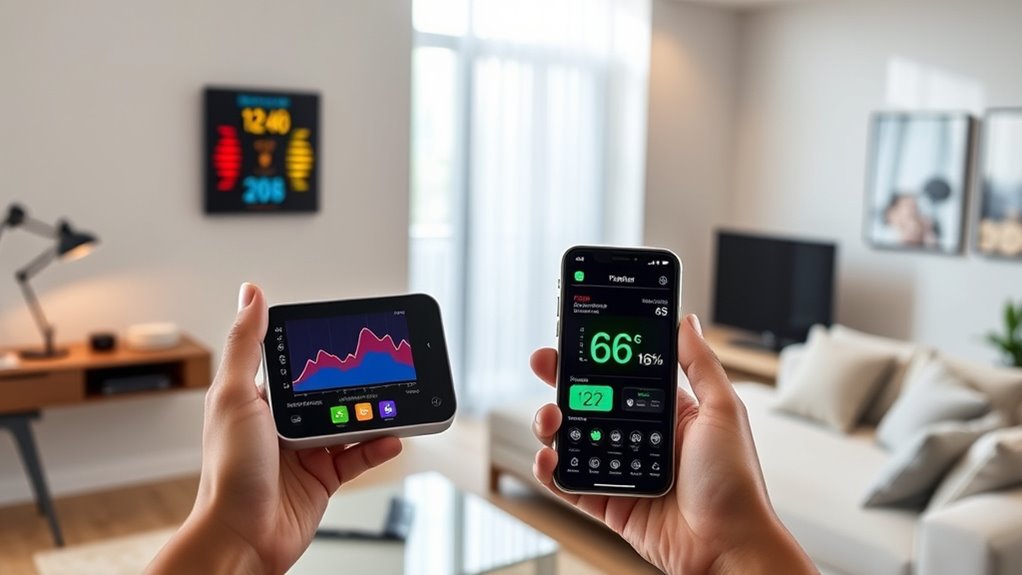
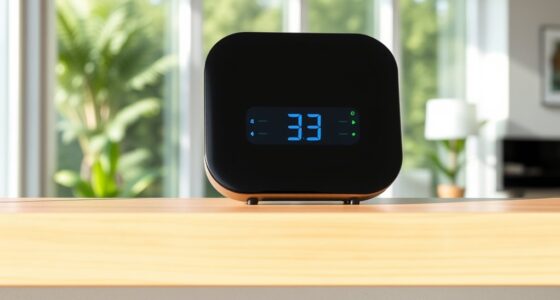
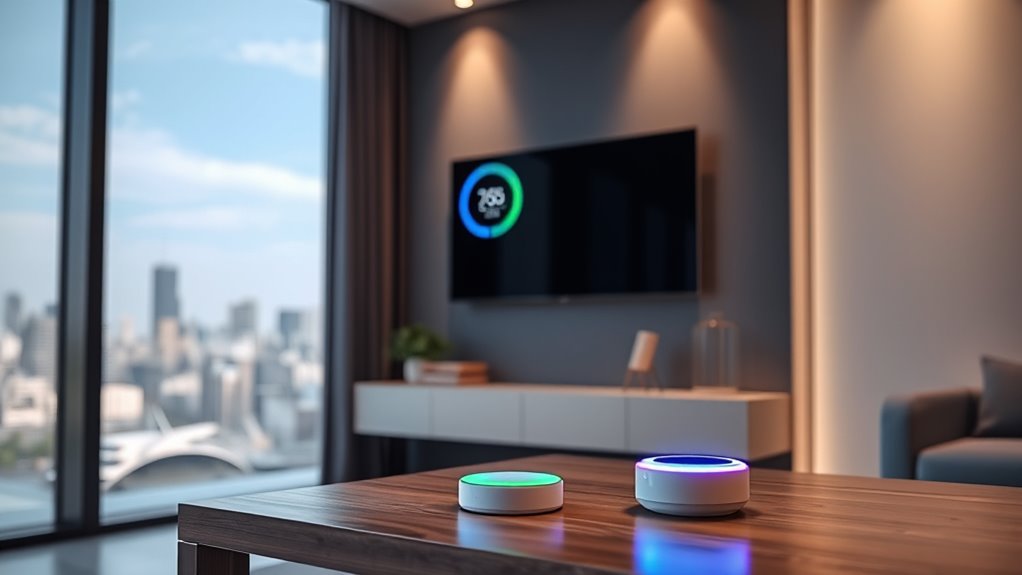
With increasing concerns about air pollution, smart devices have become essential tools for monitoring air quality in real time. These devices allow you to track pollutants both inside and outside your home or workplace, giving you a clearer picture of the air you breathe. Indoor pollutants like dust, pet dander, volatile organic compounds (VOCs), and even mold can considerably impact your health, especially if you spend a lot of time indoors. Using smart sensors designed for indoor air quality, you can detect these pollutants and identify sources of contamination. Many smart air quality monitors connect to your smartphone or home automation system, providing instant updates and alerts when pollutant levels rise beyond safe thresholds. This immediate feedback helps you take quick action, whether it’s increasing ventilation, using air purifiers, or addressing specific sources of pollution inside your space. Understanding the psychological impact of clean air and a healthy environment can motivate consistent monitoring and improvement efforts. To effectively monitor outdoor air quality, outdoor sensors are your best allies. These sensors are strategically placed in your yard or neighborhood to measure pollutants like particulate matter (PM2.5 and PM10), nitrogen dioxide, ozone, and carbon monoxide. They often sync with smartphone apps that display real-time air quality indexes (AQI), making it easy to understand the current conditions outside. With this info, you can plan outdoor activities better, avoid high pollution times, or decide when to keep windows closed to prevent outdoor pollutants from entering your home. Many outdoor sensors also provide historical data, so you can observe pollution patterns over days or weeks, giving you insights into how weather, traffic, and other factors influence air quality in your area. Integrating indoor and outdoor sensors into your daily routine is straightforward. Most smart systems allow you to set notifications for specific pollutant thresholds, so you’re promptly informed if levels spike. For example, if indoor VOCs increase after cooking or cleaning, your device can alert you, prompting you to ventilate the space. Similarly, outdoor sensors can notify you when pollution levels are hazardous, encouraging you to limit outdoor activities or wear protective masks. These real-time insights empower you to make smarter decisions about your environment, reducing exposure to harmful pollutants. They also help you identify sources of indoor pollution quickly and effectively, making your space healthier and safer.
Frequently Asked Questions
How Accurate Are Smart Air Quality Monitors Compared to Professional Equipment?
Smart air quality monitors are generally quite accurate, but their precision depends on proper sensor calibration and device placement. You should regularly calibrate your device to guarantee reliable readings. Also, place it in an ideal location, away from direct sunlight or vents, to avoid skewed data. While professional equipment might be more precise, smart monitors are sufficient for everyday awareness and can help you make informed decisions about your indoor environment.
Can Smart Devices Detect Specific Pollutants Like VOCS or Radon?
Did you know that VOC detection is possible with some smart devices? These gadgets can measure specific pollutants like VOCs and radon, but their accuracy varies. While they provide useful real-time data, they might not replace professional testing for precise radon measurement or detailed VOC analysis. So, if you’re concerned about these pollutants, consider using smart monitors as an early warning, but rely on experts for all-encompassing assessments.
How Often Should I Calibrate My Smart Air Quality Monitor?
You should calibrate your smart air quality monitor at least once every six months to guarantee accurate readings. Regular sensor calibration is essential for maintaining device performance, especially if you notice inconsistent data or after relocating the device. Proper device maintenance, including calibration, helps detect pollutants accurately and prolongs the lifespan of your monitor. Always follow the manufacturer’s instructions for calibration intervals and procedures to keep your air quality data reliable.
Do Smart Air Quality Devices Work Effectively in Outdoor Environments?
Smart air quality devices can work effectively outdoors if they’re designed for durability and sensitivity. Outdoor durability ensures your device withstands weather, wind, and water, while sensor sensitivity captures accurate air quality data amid environmental changes. You’ll want to select a device explicitly built for outdoor use, ensuring it remains reliable and responsive. With proper protection and calibration, your smart device can monitor outdoor air quality accurately, providing real-time insights you can trust.
Are There Privacy Concerns With Data Collection From Smart Air Quality Monitors?
You might have privacy concerns with data collection from smart air quality monitors. These devices often gather location and environmental data, which raises data privacy issues. To protect yourself, make certain the device provider clearly states their data collection policies and obtains your user consent beforehand. By staying informed and reviewing privacy settings, you can minimize risks and enjoy the benefits of monitoring air quality without compromising your privacy.
Conclusion
Now that you know how to monitor your air quality with smart devices, imagine what you could uncover about your home environment. Could hidden pollutants be affecting your health more than you realize? As technology advances, the insights these devices provide become even more powerful—and more urgent. Are you prepared to take control and protect your space? The next step might just change the way you breathe forever. Stay vigilant—you never know what’s lurking in the air.