
To maintain good indoor air quality in your kitchen, use exhaust fans or range hoods when cooking to remove pollutants like smoke and grease particles. Keep windows open for better ventilation, and consider using air purifiers with HEPA filters for extra air cleaning. Regularly clean appliances and burners to prevent emissions, and control humidity levels with dehumidifiers or humidifiers. Exploring these strategies further will help you create a safer, healthier cooking environment.

Get home appliances delivered free with Prime
- Fast, free delivery on millions of items
- Prime Video, Amazon Music and more included
- Member-only deals all year
Key Takeaways
- Use properly rated range hoods or exhaust fans during cooking to effectively remove airborne pollutants.
- Increase ventilation by opening windows and doors to promote cross-ventilation and dilute indoor pollutants.
- Regularly clean appliances and range hoods to prevent grease buildup and reduce emissions.
- Incorporate air purifiers with HEPA filters to capture fine particles and allergens in the kitchen.
- Control indoor humidity levels with dehumidifiers or humidifiers to prevent mold growth and maintain air quality.
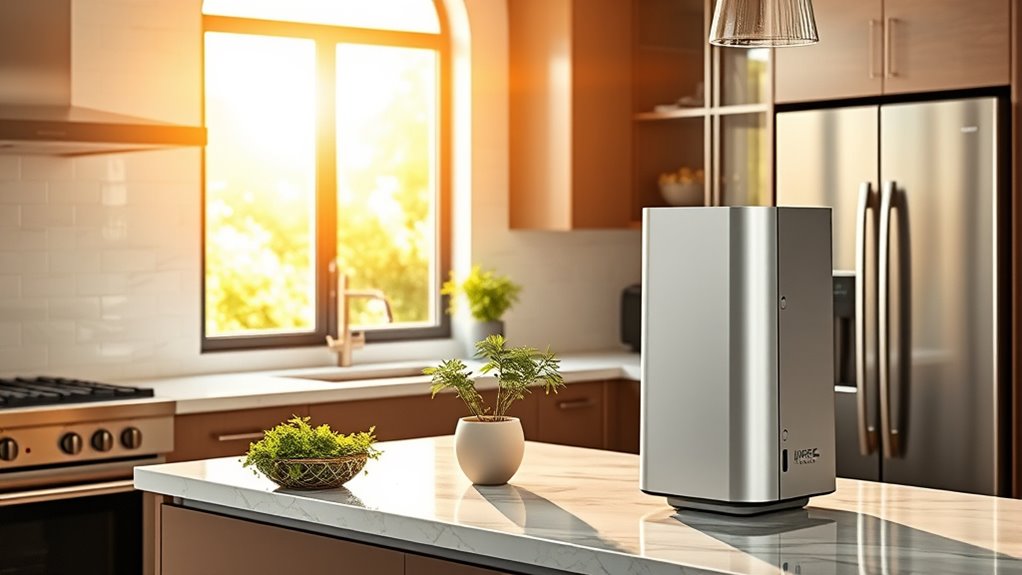
Have you ever considered how the air in your kitchen affects your health? It’s easy to overlook, but the quality of the air you breathe while cooking can substantially impact your well-being. Kitchen air often contains various pollutant sources—like smoke, grease particles, and fumes from appliances—that can compromise your health over time. The key to maintaining good indoor air quality lies in effective ventilation techniques that help remove these pollutants and bring in fresh air.
Your kitchen air quality directly impacts your health; proper ventilation and pollutant management are essential.
Starting with ventilation, it’s essential to understand that not all methods are created equal. Simple range hoods or exhaust fans are your first line of defense. When you cook, these devices pull airborne pollutants away from your breathing zone and vent them outside. Make sure your range hood is properly rated for your stove size, and always turn it on when cooking, especially when frying or grilling. If you don’t have a dedicated exhaust system, opening windows and doors can create cross-ventilation, allowing fresh air to circulate and dilute indoor pollutants. Using a ceiling fan can also help circulate air, but it doesn’t replace the need for proper exhaust ventilation.
You should also be mindful of pollutant sources within your kitchen. Gas stoves, for example, release nitrogen dioxide and carbon monoxide, which can cause respiratory problems and other health issues. Using electric cooktops can considerably reduce these indoor pollutant levels. If you must use gas, ensure your burners are well-maintained and properly adjusted to minimize emissions. Cooking at high temperatures increases the amount of grease particles and smoke in the air, so using lower heat settings when possible can help. Regularly cleaning your appliances and range hoods prevents the buildup of grease, which, when burned, releases harmful particles into the air. Additionally, advances in air filtration technology have made it easier to effectively remove fine particles and pollutants from indoor spaces.
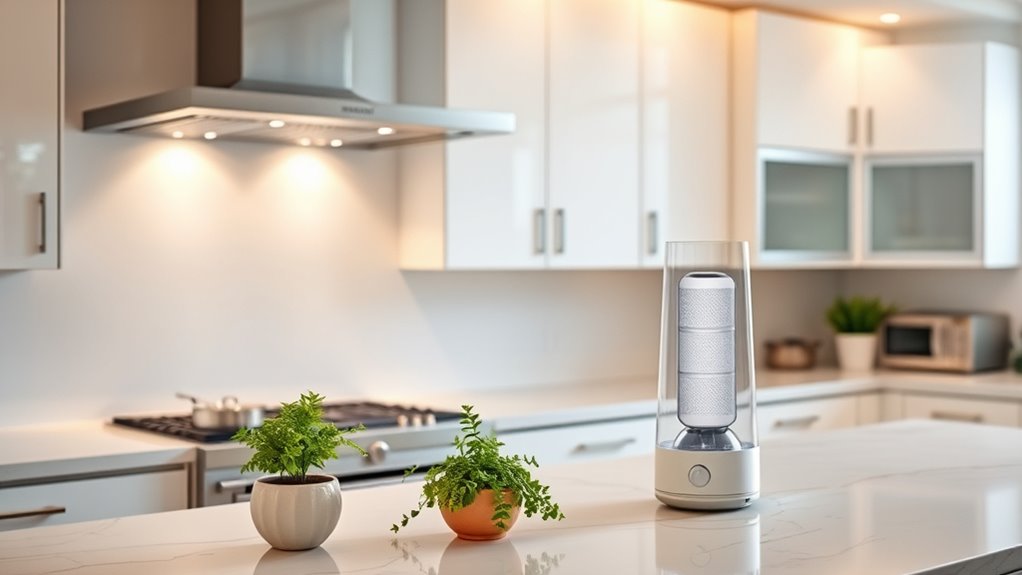
Additionally, consider installing air purifiers equipped with HEPA filters to capture airborne particles that ventilation alone might miss. These devices can help remove fine particles and allergens, improving the overall air quality. Remember that indoor humidity levels also matter—too high can promote mold growth, while too low can cause dryness and irritation. Using a dehumidifier or humidifier helps maintain ideal humidity, indirectly supporting better air quality.
In essence, maintaining indoor air quality in your kitchen isn’t just about cooking; it’s about actively managing pollutant sources and employing effective ventilation techniques. Regularly using exhaust fans, opening windows, and investing in air purifiers all work together to ensure that the air you breathe during meal prep is clean and safe. Taking these steps not only improves your immediate comfort but also contributes to your long-term health.
range hood with high CFM for kitchen
As an affiliate, we earn on qualifying purchases.
As an affiliate, we earn on qualifying purchases.
Frequently Asked Questions
How Often Should I Replace My Kitchen Air Filters?
You should replace your kitchen air filter every 3 to 6 months, depending on its air filter lifespan and your usage. Regular replacement guarantees maximum air quality and prevents buildup of dust and cooking fumes. Check your filter’s manufacturer recommendations for the ideal replacement schedule, and inspect it periodically. If you notice reduced airflow or lingering odors, it’s time for a replacement, even if it’s before the scheduled date.
Can Plants Improve Indoor Air Quality in the Kitchen?
Sure, plants can boost your kitchen’s air quality, but don’t expect a miracle. While varieties like snake plants, pothos, and peace lilies offer some air purification, they won’t replace proper ventilation or filters. You’ll still need to open windows and run vents. Think of plants as helpful decorations, not substitutes—adding a touch of green while subtly aiding your indoor air quality efforts.
Are Air Purifiers Effective Against Cooking Odors?
Yes, air purifiers are effective against cooking odors when properly maintained. Regular air purifier maintenance, like replacing filters and cleaning components, guarantees peak performance. They work by absorbing and filtering out odors, but for stronger smells, combining them with odor absorption methods like venting or using activated charcoal can boost effectiveness. Keep up with maintenance to keep your kitchen smelling fresh and your indoor air quality high.
What Safety Precautions Are Needed When Using Kitchen Ventilation Systems?
When using kitchen ventilation systems, you must prioritize safety. Keep fire safety in mind by never leaving a stove unattended and ensuring your hood’s filters are clean to prevent grease buildup. Simultaneously, protect electrical safety by inspecting cords and outlets regularly, avoiding overloading circuits. Properly install and maintain your ventilation system to prevent potential hazards, creating a safer environment where fresh air flows without risking fires or electrical issues.
How Does Humidity Affect Indoor Air Quality in the Kitchen?
Humidity levels directly impact your kitchen’s air quality. High humidity can lead to mold growth, which worsens air quality and poses health risks. By practicing humidity control—using exhaust fans and dehumidifiers—you prevent excess moisture. This not only keeps the air fresh but also helps with mold prevention. Maintaining ideal humidity ensures a healthier environment, making your kitchen safer and more comfortable for everyone.
Conclusion
Think of your kitchen as the heartbeat of your home—its air the lifeblood that keeps everything thriving. By maintaining good indoor air quality, you’re nurturing a space where health and happiness flourish, like sunlight gently warming a garden. When you prioritize clean, fresh air, you’re not just clearing out pollutants; you’re planting seeds of comfort and safety for those you love. Because in your kitchen, every breath you take is a gift—cherish it.
NFL season / tailgating Picks
team gear
As an affiliate, we earn on qualifying purchases.