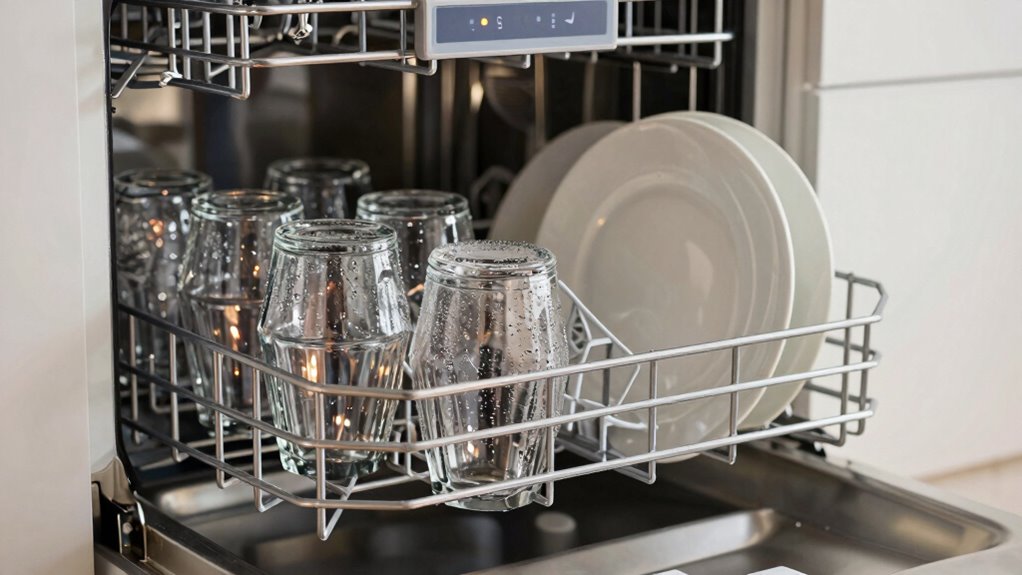

If your dishwasher isn’t drying properly, the heated dry setting is your best bet. Turning it on uses heat to evaporate moisture, leaving your dishes dry and ready to put away. Skipping this step might save energy but can reduce drying effectiveness. For ideal results, make certain you’re using it correctly and pairing it with good loading techniques and maintenance. Want to learn more ways to improve your dishwasher’s drying performance? Keep exploring for helpful tips.
Key Takeaways
- Enable the heated dry setting to use heat for effective moisture evaporation.
- Use high-quality detergents with drying additives and rinse aids for better drying results.
- Properly load dishes, spacing items to allow airflow and heat exposure during drying.
- Regularly clean filters and spray arms to ensure optimal water circulation and drying efficiency.
- Run the dishwasher during off-peak hours and with full loads to maximize energy and drying performance.
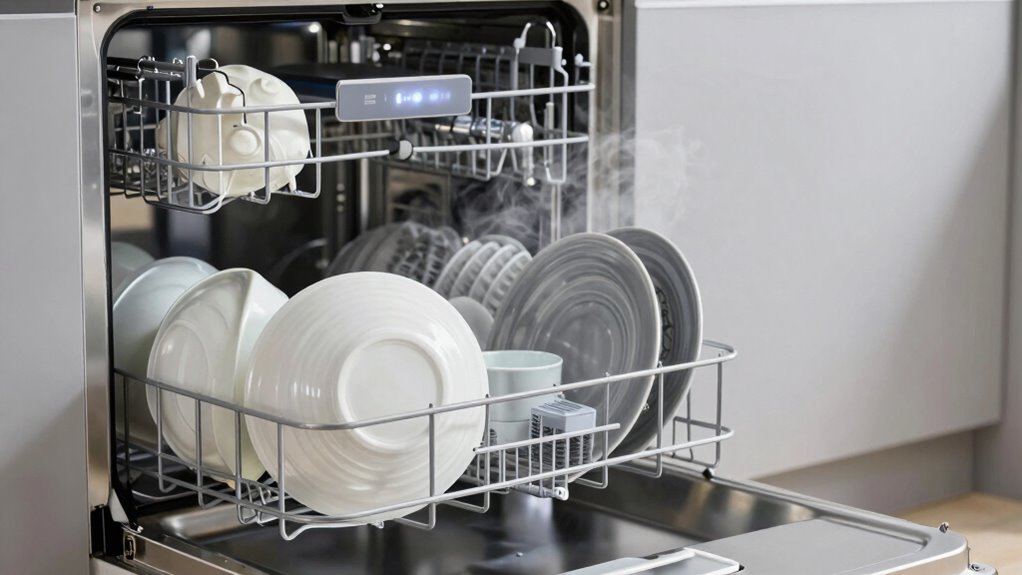
If your dishwasher isn’t drying dishes properly, it can be frustrating and inconvenient. You might find yourself re-washing items or dealing with water spots that leave your dishes looking dull. Fortunately, sometimes the solution is as simple as adjusting the right setting or paying attention to how you load your dishwasher. One game-changing setting you should consider is the heated dry option, which many dishwashers offer. Turning this on ensures that heat is used to evaporate remaining moisture, leaving your dishes dry and ready to put away. If you’ve been skipping this step to save energy, remember that there are energy saving tips that can help you balance efficiency with performance. For example, only use heated dry when necessary and combine it with other energy-saving practices, such as running the dishwasher during off-peak hours or only when you have a full load.
Use the heated dry setting and load dishes properly for quicker, more effective drying.
Another key factor affecting drying performance is your choice of detergent. Opt for high-quality detergents designed to improve drying results—they often contain additives that help break down residues and promote better evaporation. Many modern detergents also have rinse aids built in or can be used alongside rinse aid products, which reduce water spots and speed up drying. When selecting a detergent, avoid those with overly foamy formulas, as they can interfere with proper rinsing and drying. Using the right detergent choices ensures that your dishes come out cleaner and drier, saving you time and effort in the long run. Additionally, energy-efficient dishwasher features can further enhance drying performance and overall appliance efficiency.
In addition to adjusting the drying setting and choosing the right detergent, how you load your dishwasher makes a significant difference. Make sure that dishes are spaced properly, with no overcrowding blocking the airflow. Position items with open surfaces facing the drying element or spray arms to maximize heat exposure. Also, avoid overloading with bulky or awkwardly shaped items that trap moisture. Implementing these small changes can improve drying efficiency without requiring significant effort or expense.
Finally, consider cleaning your dishwasher’s filter and spray arms regularly. Build-up from food debris or mineral deposits can hinder water circulation and heat distribution, reducing drying effectiveness. Keeping these components clean ensures that heat and water spray reach all areas thoroughly, making your dishes dry faster and more thoroughly. By paying attention to the drying setting, detergent choices, loading techniques, and maintenance, you can transform your dishwasher into a more efficient and effective appliance, saving energy and effort while achieving perfectly dry dishes every time.
Frequently Asked Questions
Can Using Rinse Aid Improve Drying Performance?
Yes, using rinse aid can markedly improve your dishwasher’s drying performance. It helps water slide off dishes more easily, reducing spots and streaks. When loading dishwasher racks, make certain you’re using the right detergent types and rinse aid to optimize drying. This simple addition can make a noticeable difference, especially with hard water. Just fill the rinse aid dispenser regularly for the best results, ensuring your dishes come out spotless and dry.
How Does Water Temperature Affect Drying Results?
You’ll see better drying performance when you use higher water temperature during the wash cycle. Warm water helps break down grease and soap residues, leading to faster evaporation. If your dishwasher isn’t drying well, try increasing the water temperature if your appliance allows it. Just be careful not to set it too high, as excessively hot water can damage delicate dishes and affect the dishwasher’s components over time.
Is Overloading the Dishwasher a Common Drying Issue?
Overloading your dishwasher is like trying to fit too many puzzle pieces into one box—it hinders the drying function. When you stuff the dishwasher, air can’t circulate properly during the cycle, leaving dishes damp. To fix this, load dishes loosely and avoid blocking the vents. This guarantees hot air reaches every corner during the drying phase, making your dishwasher cycle effective and dishes dry every time.
Do Different Dishware Materials Dry Better?
Different dishware materials do affect drying efficiency. For example, ceramic and glass tend to dry better because they’re non-porous and don’t trap water, while plastic and certain plastics may retain moisture longer. You should consider using a rinse aid and choosing the appropriate drying cycle to improve overall drying performance. Being mindful of dishware materials helps make sure your dishwasher dries efficiently and leaves your dishes spotless.
Can Dishwasher Vent Problems Cause Poor Drying?
Yes, vent issues can cause poor drying because they disrupt proper air circulation inside your dishwasher. When vents are blocked or malfunctioning, hot air can’t escape effectively, leaving dishes damp. Check the vent for obstructions or damage, and guarantee it opens and closes smoothly. Good air circulation is essential for thorough drying, so addressing vent problems promptly helps improve your dishwasher’s drying performance.
Conclusion
When your dishwasher isn’t drying properly, adjusting the right setting can be a game-changer—like flipping a switch that unleashes hidden potential. By checking the dry cycle options and ensuring your rinse aid is topped up, you can turn a frustrating mess into sparkling, dry dishes. Don’t let a stubborn dishwasher leave you high and dry; with a simple tweak, you’ll have dishes that come out as dry as the desert sun, ready for your next meal.