
Replacing your vacuum cleaner’s filters regularly helps keep it running efficiently and extends its lifespan. When you swap out filters as recommended, you prevent clogs that reduce suction and cause strain on the motor. Choose filters suited to your model, especially high-efficiency options like HEPA for better air quality. Proper maintenance also slows wear and tear, saving you money long-term. To discover more tips on maintaining your vacuum, keep exploring the best practices for filter care.
Key Takeaways
- Regularly replacing filters maintains optimal suction and prevents debris buildup that can damage the vacuum.
- Using high-quality, compatible filters ensures better filtration, reducing strain on the motor and extending the vacuum’s lifespan.
- Following manufacturer-recommended replacement intervals prevents filter clogging and maintains overall vacuum efficiency.
- Choosing washable or reusable filters can save money and reduce waste while keeping filters effective.
- Proper filter maintenance and timely replacements help prevent indoor air pollution and protect vacuum components from wear.
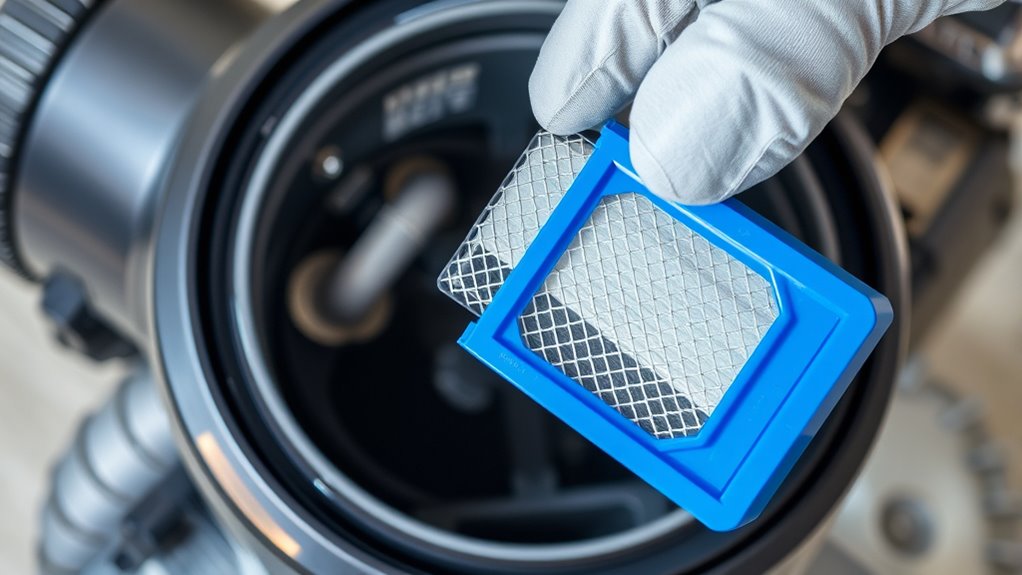
Regularly replacing your vacuum cleaner filter is essential for maintaining peak performance and ensuring your home stays clean. A clean filter plays a crucial role in improving air quality by trapping dust, allergens, and other airborne particles. Over time, however, filters become clogged with debris, reducing their efficiency and potentially allowing pollutants to recirculate into your living space. By changing your filter regularly, you help maintain a healthier environment and prolong the life of your vacuum.
Regular filter replacement keeps your vacuum performing well and your home healthier.
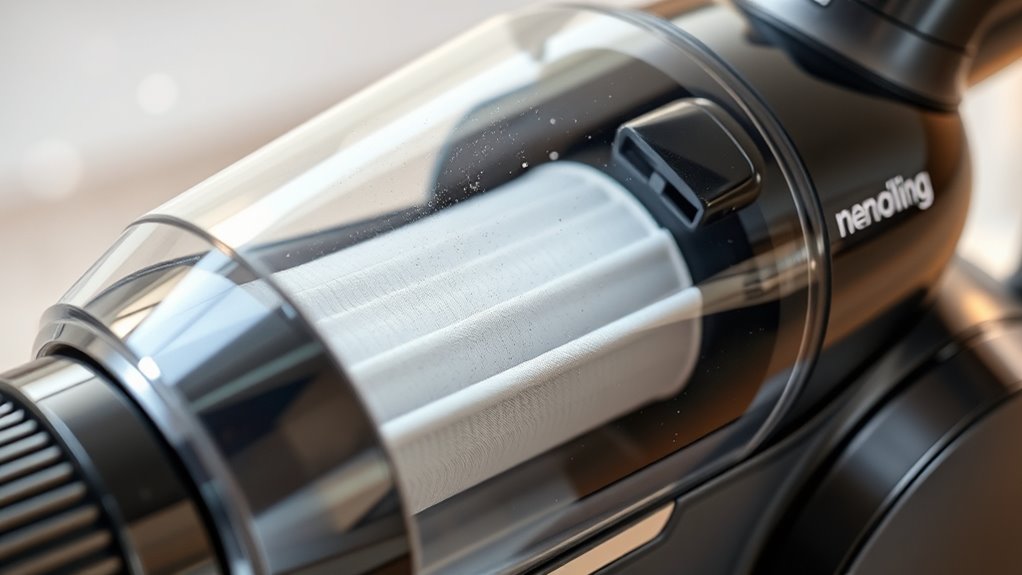
The type of filter material used in your vacuum directly impacts its effectiveness. Different vacuum models utilize various filter materials, such as foam, pleated paper, HEPA, or electrostatic filters. HEPA filters, for example, are renowned for their ability to capture tiny particles, including pollen, pet dander, and bacteria, making them ideal for allergy sufferers. Pleated paper filters increase surface area for trapping debris, while foam filters are washable and reusable, offering a cost-effective solution. Understanding the filter materials in your vacuum helps you choose the right replacement and guarantees maximum filtration efficiency.
Replacing your vacuum filter at the recommended intervals is critical for maintaining superior air quality. A dirty filter not only hampers suction power but also allows pollutants to escape back into your home environment. This can result in increased allergy symptoms, respiratory issues, and overall indoor air pollution. Regular replacements prevent these problems by ensuring your vacuum continues to effectively trap airborne contaminants. It’s especially important if you have pets, allergies, or respiratory conditions, as a clean filter considerably reduces airborne allergens.
Additionally, staying informed about filter technology advancements can help you select more effective replacements and improve your vacuum’s overall performance. When selecting a replacement filter, consider both compatibility and filter material quality. Using the correct filter designed for your vacuum model guarantees a proper fit and maximum performance. Opt for filters made from high-quality materials that offer durability and superior filtration capabilities. While some filters are washable and reusable, they still need regular cleaning and replacement according to the manufacturer’s instructions to prevent deterioration of filtering performance.
Frequently Asked Questions
How Often Should I Replace My Vacuum Filter?
You should replace your vacuum filter every 3 to 6 months, depending on the filter material and how often you vacuum. Regular replacement guarantees the filter maintains its filter lifespan and effectively traps dust and allergens. Check your vacuum’s manual for specific recommendations, but if you notice reduced suction or increased dust, it’s time for a new filter. Keeping up with replacements keeps your vacuum running smoothly and extends its overall life.
Can I Wash or Reuse Vacuum Filters?
Think of your vacuum filter as the heart of your machine; it keeps your home fresh and clean. You can wash or reuse some filters, but only if the manufacturer says it’s safe. Proper filter cleaning boosts filter durability, preventing dust buildup and maintaining suction power. Always check your vacuum’s instructions—washing the filter too often or improperly can damage it, so treat it with care to keep your vacuum running smoothly.
What Signs Indicate My Filter Needs Replacement?
You’ll know your filter needs replacement if you notice airflow obstruction, which makes vacuuming less effective. Discoloration is another sign; if your filter looks dirty or stained, it’s time for a new one. Reduced suction and an increase in dust escaping also indicate that your filter isn’t doing its job properly. Regularly check these signs to keep your vacuum running efficiently and extend its lifespan.
Are Compatible Filters Available for All Vacuum Models?
Did you know that over 80% of vacuum owners struggle to find compatible filters? Fortunately, most vacuum models have a wide range of filter options, but filter availability can vary. Compatibility concerns are common, so it’s essential to check your vacuum’s brand and model before purchasing. Many manufacturers now offer universal filters, making it easier to find a compatible replacement that keeps your vacuum running smoothly.
How Does Filter Quality Affect Vacuum Performance?
Higher quality filters improve your vacuum’s airflow efficiency by allowing air to move smoothly through the system. This boosts suction power and helps trap dust more effectively, reducing indoor allergens. When you use a good filter, your vacuum performs better, cleans more thoroughly, and maintains ideal airflow. As a result, your vacuum lasts longer and stays more effective at trapping dust, making your cleaning routine easier and more efficient.
Conclusion
Replacing your vacuum filter regularly can extend its lifespan by up to 50%, saving you money and improving performance. Not only does this keep your home cleaner, but it also guarantees your vacuum runs efficiently for longer. Did you know that a clean filter can improve suction power by as much as 20%? So, make filter replacement a habit—your vacuum will thank you, and your home will stay fresher longer.