To maintain your garbage disposal and prevent clogs, always run cold water during and after use, avoid putting grease, fibrous, or starchy foods down the drain, and regularly clean the blades with ice and salt or citrus peels to remove buildup and keep it smelling fresh. Use baking soda and vinegar occasionally for deodorizing. Proper use and routine maintenance help prevent issues, and if you want more tips, there’s plenty to discover.
Key Takeaways
- Regularly clean blades with ice and coarse salt to prevent buildup and keep the disposal sharp.
- Run cold water during and after use to flush debris and prevent clogs.
- Avoid disposing of grease, fibrous, or starchy foods that can cause blockages.
- Use natural deodorizers like citrus peels or baking soda to maintain freshness and odor control.
- Inspect for leaks or unusual noises periodically to address issues early and ensure proper functioning.
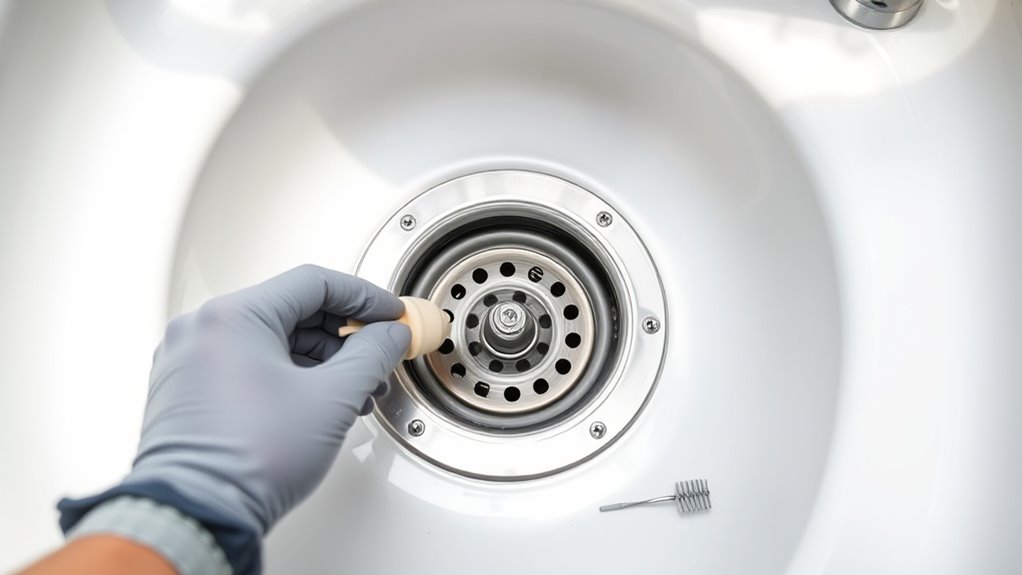
To keep your garbage disposal running smoothly and avoid costly repairs, regular maintenance is essential. One of the most effective ways to do this is by regularly cleaning the blades. Over time, food particles, grease, and debris can accumulate on the blades, dulling their effectiveness and increasing the risk of clogs. To clean the blades properly, turn off the power to the disposal, either by unplugging it or switching off the circuit breaker. Then, use tongs or pliers to remove any visible debris from the opening. Next, pour a mixture of ice cubes and coarse salt into the disposal and run it with cold water. The ice helps dislodge buildup on the blades, while the salt acts as an abrasive, scrubbing away residue. For a deeper clean, you can also grind lemon or orange peels, which not only help clean the blades but also leave your sink smelling fresh. Regular cleaning of the blades prevents buildup and keeps the blades sharp, ensuring efficient grinding and reducing strain on the motor. Additionally, maintaining proper projector contrast ratio can improve visibility during presentations or home cinema sessions, ensuring your images are vibrant and clear.
Preventing odors is another vital aspect of maintenance. Over time, food particles can accumulate in the disposal and trap foul smells. To combat this, run your disposal with cold water after each use. Additionally, periodically grinding citrus peels or baking soda can help neutralize lingering odors. Baking soda is a natural deodorizer that absorbs unpleasant smells, while citrus peels contain oils that leave a fresh scent. You can also pour a mixture of vinegar and baking soda into the disposal, let it foam for a few minutes, then rinse with cold water. This not only deodorizes but also helps break down grease and grime inside the unit. Keeping the disposal clean and odor-free requires consistent effort, especially by avoiding putting fibrous or starchy foods down the drain that can cause lingering smells or clogs.
Beyond cleaning blades and preventing odors, it’s wise to be mindful of what you put in the disposal. Avoid placing grease, coffee grounds, or large quantities of pasta, which can contribute to buildup and clogs. Running cold water during and after use helps flush debris through the pipes, reducing the chance of blockages. Regularly inspecting the area around your disposal for leaks or unusual noises can alert you to problems early, saving you money and hassle down the line.
Frequently Asked Questions
How Often Should I Run My Garbage Disposal for Optimal Maintenance?
You should run your garbage disposal for about 30 seconds to a minute after each use to promote ideal maintenance. Regular use prevents buildup and extends the disposal’s lifespan. Follow a maintenance schedule, including monthly deep cleanings with ice and vinegar, to keep it functioning smoothly. Consistent use and proper care help avoid clogs, ensuring your disposal stays efficient and lasts longer.
Can I Use Chemical Drain Cleaners on a Clogged Disposal?
You shouldn’t use chemical drain cleaners on a clogged disposal—they’re more likely to cause disposal damage than fix the problem. Instead, try unplugging it or using natural methods like baking soda and vinegar. Chemical cleaners seem like a quick fix, but they can corrode parts and make clogs worse. So, skip the harsh chemicals and keep your disposal healthy by avoiding those dangerous, damage-causing substances.
What Are Natural Alternatives to Cleaning My Disposal?
You can try eco-friendly cleaning by pouring baking soda solutions down your disposal, followed by vinegar. Let it sit for a few minutes to break down grease and debris, then flush with hot water. This natural method is safe, effective, and free of harsh chemicals, helping keep your disposal clean and odor-free without risking damage or using toxic cleaners. Regular maintenance with baking soda solutions helps prevent future clogs.
How Do I Safely Reset My Garbage Disposal?
To safely reset your garbage disposal, first guarantee disposal safety by turning off the power, either unplugging it or turning off the circuit breaker. Locate the reset button on the bottom of the unit and press it firmly. If it doesn’t reset, wait a few minutes and try again. Always follow the reset procedure carefully to prevent damage, and never put your hands inside the disposal.
What Signs Indicate My Disposal Needs Professional Repair?
If your disposal shows symptoms like persistent noise, bad odors, or frequent jams, it’s time to contemplate professional repair. Repair indicators include the unit not running at all, leaking beneath it, or if it’s stuck and won’t spin. Ignoring these signals can lead to bigger problems, so don’t hesitate to call a professional when you notice these disposal symptoms. Prompt repair keeps your garbage disposal functioning smoothly.
Conclusion
By regularly maintaining your garbage disposal, you’re keeping it running smoothly like a well-oiled machine. Think of it as giving your kitchen a little spa day—flushing away debris, sharpening blades, and preventing nasty clogs from taking hold. With a few simple habits, you’ll enjoy a fresh, odor-free sink that hums happily every day. Keep up this routine, and your disposal will serve you reliably, turning everyday waste into nothing more than a distant memory.